
On September 29, 2026, OpenAI used its DevDay stage to answer a question developers had been asking for months: when do we get frontier intelligence without the frontier bill? The answer was GPT-6.1 Sol, a new reasoning model that sits in the GPT-6 family right below the flagship GPT-6 Astra — and undercuts it on price by 80 percent. OpenAI describes GPT-6.1 Sol as an upgrade to the earlier GPT-6 Sol, tuned for the workloads where teams actually burn money: agentic coding, computer use, and professional work that chains dozens of model calls together.
Two weeks on, GPT-6.1 Sol is one of the most searched AI model releases of the autumn, and for good reason. At $2 per million input tokens and $10 per million output tokens, it delivers benchmark results within touching distance of GPT-6 Astra — a model that costs $10 and $50 for the same tokens. In this guide, we break down what GPT-6.1 Sol is, what it really costs (including the catch in the long-prompt tier), how it scores against Astra, Claude Opus 5.5, and Meta’s new Muse Wonder, where you can actually use it, and whether your team should switch. If you are new to the GPT-6 generation, start with our GPT-6 explainer for the full family background.
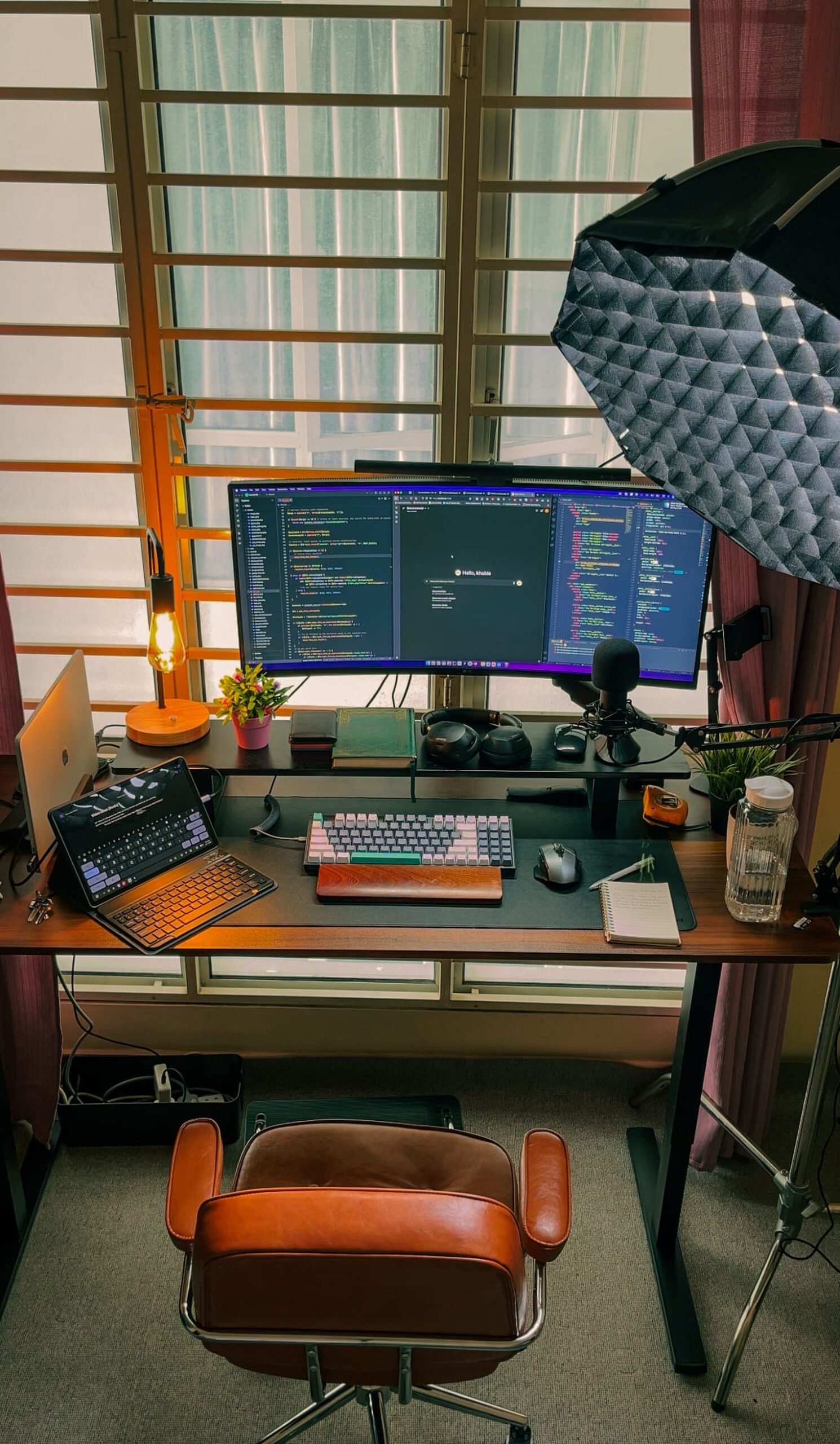
Table of Contents
- What Is GPT-6.1 Sol?
- GPT-6.1 Sol Pricing: The One-Fifth Story
- GPT-6.1 Sol Benchmarks: How Close to Astra?
- GPT-6.1 Sol Coding and Computer-Use Scores
- GPT-6.1 Sol vs GPT-6 Sol: The Upgrade Path
- Key Features and Specifications
- GPT-6.1 Sol Specs at a Glance
- GPT-6.1 Sol vs the Competition
- Where You Can Use GPT-6.1 Sol Today
- Who Should Switch to GPT-6.1 Sol?
- GPT-6.1 Sol Limitations: An Honest Read
- How to Get Started with GPT-6.1 Sol
- GPT-6.1 Sol FAQs
- The Bottom Line on GPT-6.1 Sol
Photo: code on a laptop screen in a dark workspace. Credit: Pexels.
What Is GPT-6.1 Sol?
GPT-6.1 Sol is OpenAI’s high-efficiency frontier reasoning model, launched on September 29, 2026, as part of the GPT-6 family. Think of the family as a ladder: at the top sits GPT-6 Astra, the most capable (and most expensive) model OpenAI has shipped. At the bottom sits GPT-6 Luna, the ultra-cheap tier for simple tasks. GPT-6.1 Sol is the rung just below Astra — a model trained to land within striking distance of the flagship on demanding work, while costing roughly one-fifth as much to run.
OpenAI positioned GPT-6.1 Sol squarely at the agent economy. The pitch is simple: the most exciting AI products of 2026 are not single chat replies but persistent agents — coding assistants that work through a whole ticket, browser agents that click through real workflows, research systems that read hundreds of pages. Those agents make dozens or hundreds of model calls per task, and at Astra’s $10/$50 rates the maths breaks down fast. Sol was built so that always-on agent loops stay affordable, with a cached-input price of just $0.10 per million tokens — a rate that matters enormously when an agent resends its system prompt, tool definitions, and conversation history on every step.
The timing was not accidental either. Just a day before the Sol announcement, OpenAI cancelled the planned GPT-6.1 Astra release after it failed internal scope and authorisation tests — an unusually public safety reversal. The model therefore arrived carrying extra weight: it was both the value play and the reassurance play, shipping with what OpenAI describes as strong safeguards while landing the price cut developers wanted.
Photo: a modern coding workspace with code on screen. Credit: Pexels.
GPT-6.1 Sol Pricing: The One-Fifth Story
Pricing is the headline, so let us make it concrete. Here are the standard list rates, per million tokens, for the GPT-6 family and its closest rivals:
| Model | Input (per 1M) | Output (per 1M) | Cached input (per 1M) |
|---|---|---|---|
| GPT-6.1 Sol | $2.00 | $10.00 | $0.10 |
| GPT-6 Astra | $10.00 | $50.00 | $1.00 |
| GPT-6 Luna | $0.10 | $0.50 | $0.01 |
| Claude Opus 5.5 | $4.00 | $20.00 | $0.25 |
| Meta Muse Wonder | $4.00 | $20.00 | $0.20 |
The “one-fifth” framing is exact on the headline rates: $2 is one-fifth of $10, and $10 is one-fifth of $50. But the row that will save real money is the cached-input row. At $0.10 per million cached tokens — a 95 percent discount on standard input — GPT-6.1 Sol undercuts Astra’s $1.00 cache read by a factor of ten. For agent loops that replay long histories, that difference compounds fast. Independent analysis of Artificial Analysis’s per-task cost figures tells the same story: about $0.72 per index task on GPT-6.1 Sol versus $3.26 on Astra, a ratio that lands near the “roughly one-seventh of the cost per task” claim attached to OpenAI’s own computer-use benchmarks.
The long-prompt catch. There is one pricing wrinkle worth knowing before you budget. On Sol, any request carrying more than 272,000 input tokens is priced at twice the input and cache rates and 1.5 times the output rate for the entire request. So one oversized turn inside an agent loop costs materially more than the headline rate suggests. Keep prompts under that threshold, or price the overflow deliberately.
Two more cost notes: Batch and Flex API tiers run 50 percent below Standard, while Fast mode costs twice Standard and the new Ultrafast mode costs six times Standard — speed is a surcharge, not a free upgrade. Regional processing, where offered, adds a 10 percent premium.

GPT-6.1 Sol Benchmarks: How Close to Astra?
This is where the story gets interesting — and where you should keep one caveat in mind. Almost all launch benchmarks for Sol come from OpenAI itself, so treat them as the vendor’s best case rather than settled fact. With that said, the numbers OpenAI chose to publish are unusually candid: they show Sol near Astra, not equal to it, and they say exactly where the gaps are.
On software engineering, the gap is thinnest. OpenAI reports that GPT-6.1 Sol matches Astra on DeepSWE v1.1, the company’s deep software-engineering evaluation — a genuine headline result, because coding is the workload Sol was built for. On professional knowledge work, the picture is tighter than you might expect for a model at one-fifth the price: Sol recorded a length-adjusted 64.2 on HealthBench Professional against Astra’s 64.7, and 78.8 percent on SEC-Bench Pro against Astra’s 85.4 percent. On ExploitGym, a security-flavoured evaluation, Sol scored 35.1 percent to Astra’s 42.4 percent.
Independent measurements from Artificial Analysis add useful texture. On the Intelligence Index, Sol scores 52 at maximum reasoning effort — four points up from GPT-6 Sol’s 48 and just one point behind Astra’s 53. For context, that puts Sol level with Meta’s new Muse Wonder (also 52), ahead of GPT-6 Sol and Gemini 4 Argon (53 for Argon — so, just behind it, in fact), and below Claude Opus 5.5’s 58. The Coding Agent Index shows a similar pattern: 60 for Sol at max effort, against 57 for GPT-6 Sol and 62 for Astra. Per-task cost, though, is where Sol pulls away: $0.72 per index task versus $1.05 for GPT-6 Sol and $3.26 for Astra.
Photo: source code on a dark screen. Credit: Pexels.
GPT-6.1 Sol Coding and Computer-Use Scores
Because Sol is aimed at agents that do things, the coding and computer-use numbers deserve their own look:
- DeepSWE v1.1 (coding): matches GPT-6 Astra, per OpenAI — the strongest single claim in the launch materials, and a 6.4-point gain over GPT-6 Sol.
- OSWorld 2.0 (computer use): within 2.1 points of Astra, at roughly one-seventh of the cost per task.
- Terminal-Bench Science: $5.47 per task on Sol versus $23.21 for Claude Opus 5.5 and $23.80 for Astra — though Astra still scores highest at 68.1 percent.
- GDP.pdf (document-heavy knowledge work): beats Opus 5.5 at less than half the cost; sits near Astra at about one-fifth the cost.
- AutomationBench: 2.2 points over Opus 5.5 at roughly one-third of the cost.
The honest reading: GPT-6.1 Sol is a remarkable price-performance story for coding, computer use, and document-heavy agent work — the exact workloads OpenAI is targeting — while Astra keeps a clear lead on the hardest scientific and security-flavoured tasks. That is consistent with OpenAI’s own guidance: for the toughest scientific research, the announcement still points to Astra.
GPT-6.1 Sol vs GPT-6 Sol: The Upgrade Path
If you are already running GPT-6 Sol, the upgrade maths is friendly. GPT-6 Sol was mostly a price move; GPT-6.1 Sol is the capability move at the same price. Artificial Analysis measured a four-point Intelligence Index gain (48 to 52), with the biggest jumps on Terminal-Bench 4.0 (up 12 points), its omniscience accuracy evaluation (up 8), and document and reasoning evaluations. Per-task cost fell 31 percent, from $1.05 to $0.72, even though Sol spends 10 to 30 percent more output tokens than its predecessor — it is simply doing more useful work per token. The cached-input discount deepened from 90 to 95 percent, landing at $0.10 per million. And factuality improved: the measured hallucination rate at max effort fell from 60 to 54 percent, while OpenAI’s own figure for factual errors on difficult prompts at low effort dropped from 11.4 to 7.7 percent.

Key Features and Specifications
Beyond raw scores, Sol ships with the tooling you would expect from a model built for agents:
- Five reasoning-effort levels — Low, Medium, High, XHigh, and Max — so you can trade thinking time against cost and latency per request.
- A 1.05-million-token context window with up to 128,000 output tokens per response, matching Astra’s context size.
- Full Responses API tool support: web search, file search, code interpreter, computer use, image generation, hosted shell, apply-patch, skills, MCP, and tool search.
- Text and image input, with text output. (No fine-tuning and no predicted outputs on this model.)
- Speed tiers: Standard, Fast (2x Standard price), and the new Ultrafast mode (6x Standard), which arrived on October 8 and targets the lowest-latency interactive workloads.
Photo: server racks in a data centre corridor. Credit: Pexels.
GPT-6.1 Sol Specs at a Glance
- API model ID: gpt-6.1-sol (snapshot: gpt-6.1-sol-2026-09-29)
- Released: September 29, 2026 (announced at OpenAI DevDay)
- Input / output: $2 / $10 per million tokens (Standard)
- Cached input: $0.10 per million tokens; cache writes $2.50 per million
- Long-prompt tier: above 272K input tokens — 2x input/cache, 1.5x output
- Context window: 1,050,000 tokens (up to ~922K max input in practice)
- Max output: 128,000 tokens per response
- Knowledge cutoff: April 30, 2026
- Availability: OpenAI API, ChatGPT Work, Codex, Azure AI Foundry, GitHub Copilot (optional preview engine); not yet in standard ChatGPT chat
GPT-6.1 Sol vs the Competition: Astra, Opus 5.5, and Muse Wonder
Sol did not launch into a vacuum. Here is how it lines up against the other frontier options as of mid-October 2026:
Versus GPT-6 Astra (its own sibling). Astra remains the capability ceiling: higher scores on the hardest science and security benchmarks, a 1.05M context window, and the same tool set. But it costs five times as much on headline rates and ten times as much on cache reads. Unless your workload lives on the hardest evaluations, Sol is the rational default — OpenAI clearly intends Astra for the top slice of difficulty and Sol for everything else.
Versus Claude Opus 5.5. Anthropic’s flagship leads the independent Intelligence Index at 58 and lists at $4/$20 — half of Astra, double of Sol. Sol beats Opus 5.5 on several of OpenAI’s published cost-adjusted measures (AutomationBench, Terminal-Bench Science cost, GDP.pdf) while trailing on raw capability. The choice here is philosophical: Anthropic’s effort controls and coding strengths versus OpenAI’s price-performance story.
Versus Meta Muse Wonder. Meta’s brand-new frontier model family (launched October 12) lists at $4/$20 with a $0.20 cache read, and its standard tier scores 52 on the Intelligence Index — identical to Sol’s 52. Wonder is built for personal and professional agentic work with features like Active Memory; Sol is the more proven quantity for coding agents today. We covered the Meta launch in detail in our Meta Muse Wonder explainer if you want the full comparison.
Versus Gemini 4 Argon. Google’s newest model is the odd one out: announced September 30 with a headline 1M-token output limit, but still restricted to trusted testers through Google’s Fairwind Program with no public API date. Sol is available to any developer with an API key today — availability is a feature, and Sol wins it outright.
Where You Can Use GPT-6.1 Sol Today
As of October 13, 2026, GPT-6.1 Sol is broadly available through developer and professional channels — but not yet in the product most consumers touch:
- OpenAI API: live now under the model ID gpt-6.1-sol, alongside the dated snapshot. This is the primary route for developers.
- ChatGPT Work and Codex: available inside OpenAI’s professional and coding products. Codex users on higher tiers also get the new Ultrafast mode, which shipped October 8.
- Microsoft Azure AI Foundry and GitHub Copilot: available as an optional preview engine, which matters for teams already committed to the Microsoft ecosystem.
- Standard ChatGPT chat: not yet. OpenAI is rolling Sol out through Work and Codex first, with plans to expand to Plus, Business, Enterprise, and Edu users. If you only use the regular ChatGPT app, you cannot select it today.
One practical tip from OpenAI’s own release cadence: the company is in the middle of a “28 days of shipping” streak, and early entries included a roughly 50 percent speed increase for default GPT-6 Astra and GPT-6.1 Sol speeds across subscription products, plus a simplification of API rate-limit tiers from five paid levels to three (Build, Launch, Grow). Expect the rough edges of a two-week-old model to keep getting sanded down through October.

Who Should Switch to GPT-6.1 Sol?
Photo: colleagues reviewing work on a laptop. Credit: Pexels.
Development teams running coding agents are the clearest winners. If your stack makes heavy API use — Codex-style assistants, CI-integrated code review, multi-step refactor agents — Sol’s DeepSWE parity with Astra at one-fifth the price is a direct budget line you can cut. The $0.10 cache read is the multiplier: long agent sessions with repeated context become dramatically cheaper.
Startups and indie builders get frontier-adjacent quality at a price that fits a seed-stage burn rate. At $2/$10, GPT-6.1 Sol is priced where GPT-6 Sol was — but with meaningfully more capability, so existing Sol users should treat the upgrade as a free lunch. If you are building decision-heavy automation, pair it with purpose-built tooling like OpenAI’s Decisions API, which returns typed verdicts instead of generated essays for high-frequency choices.
Teams doing document-heavy professional work — legal review pipelines, financial analysis, research synthesis — should test Sol against Astra on their own evaluations. The HealthBench Professional and SEC-Bench Pro numbers suggest the gap is small enough that many workloads will see no practical difference.
Who should not switch yet? Teams working at the edge of scientific research or adversarial security evaluations, where Astra still leads by a clear margin. Casual ChatGPT users, who cannot access Sol at all right now. And anyone who needs fine-tuning — Sol does not support it, so that workload stays on models that do.
GPT-6.1 Sol Limitations: An Honest Read
No launch is all upside. Here is the fine print, stated plainly:
- The benchmarks are mostly OpenAI’s own. Independent replication takes time; the Artificial Analysis numbers we cite are genuinely independent and encouraging, but the headline “matches Astra” claims come from the vendor’s test rig. Treat them as directional until third parties confirm them.
- The 272K-token pricing cliff is real. Cross it and your whole request reprices at 2x input and 1.5x output. Long-context agent loops need explicit budget guards.
- Hallucination is better, not solved. Factual errors on difficult prompts at low effort fell from 11.4 to 7.7 percent, and the max-effort hallucination rate dropped from 60 to 54 percent. Those are real improvements — and still nowhere near zero. Verification pipelines remain mandatory.
- No consumer chat access yet. If your users live in the ChatGPT app rather than the API, Sol does not help them today.
- No fine-tuning or predicted outputs. Teams with custom-trained models cannot port that workflow to Sol directly.
- It is two weeks old. Early-adopter quirks — rate-limit edges, tool-call formatting surprises, documentation gaps — are normal at this age. The rapid shipping cadence suggests they will be fixed quickly, but budget some integration patience.
How to Get Started with GPT-6.1 Sol
Getting running takes minutes if you already have OpenAI API access:
- Check your API access. GPT-6.1 Sol is available through the standard OpenAI API. Confirm your account’s usage tier (Build, Launch, or Grow under the simplified October 6 structure) supports the rate limits your workload needs.
- Point your calls at gpt-6.1-sol. Swap the model ID in your existing GPT-6 integration. For reproducibility, pin the dated snapshot gpt-6.1-sol-2026-09-29.
- Set a reasoning-effort default. Start at Medium or High for interactive work and reserve Max for the hardest tasks — effort level is now a cost lever, not just a quality one.
- Turn on prompt caching. At $0.10 per million cached tokens, caching is the single biggest cost optimisation available on this model. Structure agent prompts so the stable prefix (system instructions, tool schemas) caches cleanly.
- Guard the 272K threshold. Add a token-count check before oversized requests, or split long contexts across calls.
- Benchmark on your own tasks. Run your existing Astra workload against Sol on a representative sample before migrating. The published benchmarks are encouraging; your data is decisive.
For the full official details, see OpenAI’s official GPT-6.1 Sol announcement and the independent Artificial Analysis scores we referenced throughout.
GPT-6.1 Sol FAQs
Is GPT-6.1 Sol better than GPT-6 Astra?
Not in raw capability — Astra still leads on the hardest benchmarks. Sol is better in value: near-Astra performance on coding, computer use, and professional work at one-fifth of the price. For most production workloads, that trade is worth making.
How much does GPT-6.1 Sol cost?
$2 per million input tokens and $10 per million output tokens on the Standard tier, with cached input at just $0.10 per million. Requests over 272K input tokens reprice at 2x input and 1.5x output.
Can I use GPT-6.1 Sol in ChatGPT?
Not in the standard ChatGPT chat yet. It is available via the API, ChatGPT Work, and Codex, with expansion to Plus, Business, Enterprise, and Edu users planned.
When was GPT-6.1 Sol released?
September 29, 2026, announced at OpenAI’s DevDay. It is an upgrade to GPT-6 Sol, keeping the same price while lifting capability.
Is GPT-6.1 Sol open source?
No. Like the rest of the GPT-6 family, it is a closed model available only through OpenAI’s API and partner platforms.
The Bottom Line on GPT-6.1 Sol
GPT-6.1 Sol is the most important kind of AI launch: not the most capable model, but the one that changes what everyone else can afford to build. By delivering DeepSWE-level coding, strong computer-use scores, and a 1.05-million-token context window at one-fifth of Astra’s price — with a 95-percent cached-input discount that specifically rewards agent architectures — OpenAI has effectively repriced frontier intelligence for the agent era.
The caveats are real but manageable: vendor-run benchmarks need independent confirmation, the long-prompt pricing tier demands attention, and consumer chat access is still pending. None of them changes the core judgement. If your team burns API budget on coding agents, document pipelines, or any multi-step agentic workflow, GPT-6.1 Sol deserves a head-to-head test against whatever you run today. At these prices, the test is cheap — and that is rather the point.