
What if your next phone plan came with something no phone plan has ever included: a personal AI agent? On October 20, 2026, a San Francisco startup called Personal AI unveiled Personal AI MODEL-4 — and it is not another chatbot. It is an operating system designed to let your phone carrier sell you intelligence the same way it sells you minutes and data. Call it AI on your phone bill.
The idea sounds strange until you think about what carriers actually own. Your phone company has a billing relationship with you, a verified identity for your line, and a network that already reaches every pocket in the country. Personal AI’s pitch is that those three assets are worth more than any AI company has figured out how to use — and MODEL-4 is the software that turns them into a product. In this guide, we break down what Personal AI MODEL-4 is, how it works, the hardware and partners behind it, the economics of “token plans,” what it means for US consumers, and the honest caveats you should know before getting excited.
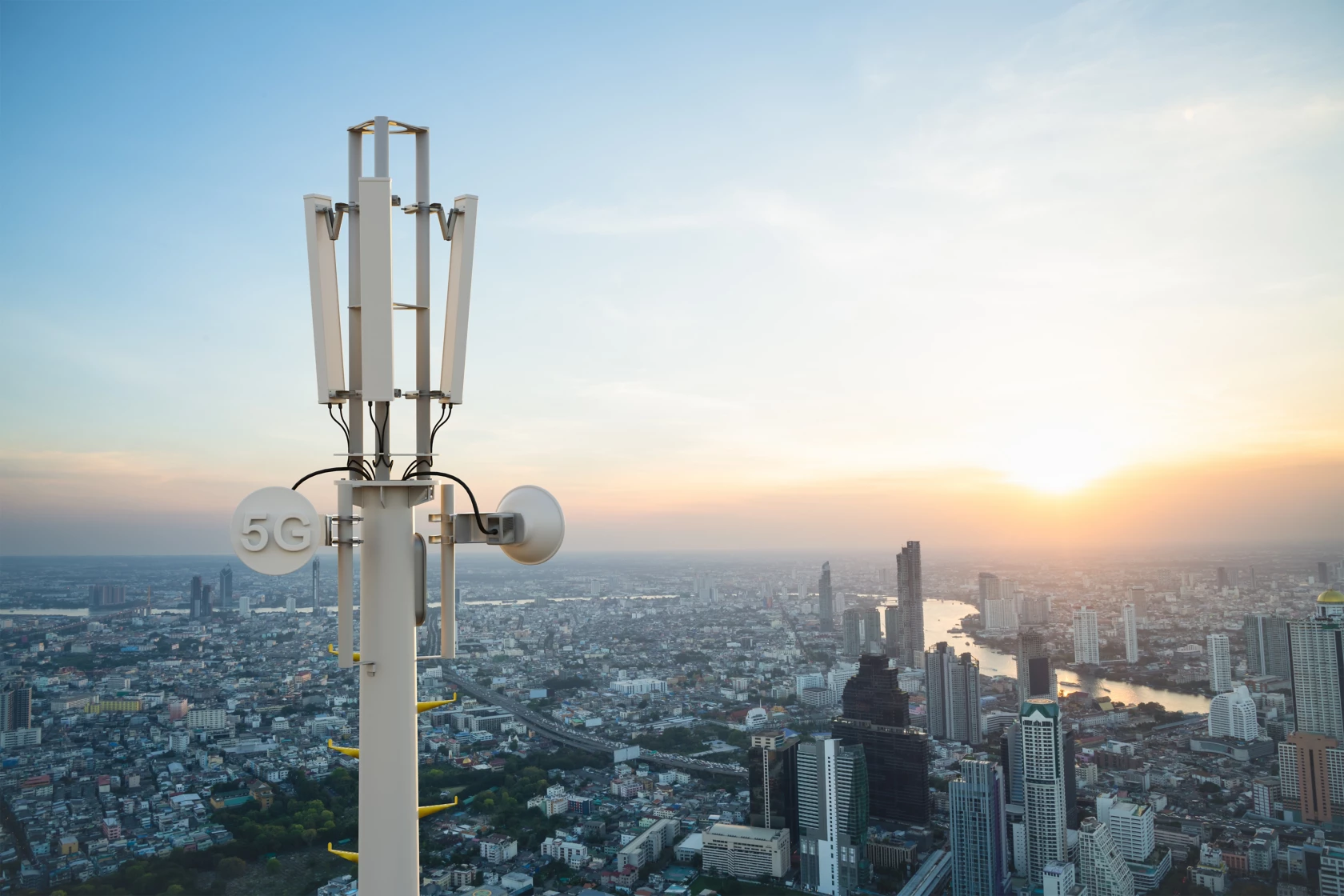
Personal AI MODEL-4 runs inside the carrier’s network — the same towers and edge data centers that carry your calls become AI infrastructure.
Table of Contents
- What Is Personal AI MODEL-4?
- Why This Launch Is a Big Deal
- How Personal AI MODEL-4 Actually Works
- The Hardware Behind the Magic
- The Speed and Cost Numbers
- AI on Your Phone Bill: The Three Token-Plan Plays
- Privacy: Your Memory Lives on the Network
- What This Means for US Consumers
- Who Built This?
- The Catch: What We Don’t Know Yet
- Where Personal AI MODEL-4 Fits in the Bigger Picture
- What to Watch Next
- The Verdict
- FAQ
What Is Personal AI MODEL-4?
Despite the name, Personal AI MODEL-4 is not a language model you can download or chat with. It is a platform — the company calls it an operating system — that lets telecommunications operators deliver what it calls personal intelligence to every subscriber line as a network service. The original announcement frames it as the missing layer between carriers and the AI economy. Think of it this way: carriers sell you talk, text, and data today. Personal AI wants them to sell you a fourth utility: intelligence.
Here is the core concept in one sentence: a persistent personal AI model tied to you and your phone line, running inside your carrier’s network, that remembers you, learns from you, and can act for you through the channels you already use — regular phone calls and text messages. No new app to download, no new account to create, no new subscription to manage. Your SIM and your phone number are the identity your agent answers to.
The announcement landed on October 20, 2026, just ahead of NVIDIA’s GTC Berlin event — deliberately timed, since the platform’s heavyweight partners include NVIDIA, Microsoft, Cisco, and several telecom-focused companies. That timing tells you something important: this is not a lone startup’s side project. It is a coordinated ecosystem play, and the ecosystem includes some of the biggest names in both chips and networks.
Why This Launch Is a Big Deal
To understand why MODEL-4 matters, you have to look at where AI money is getting stuck. Consumers will pay for AI, but the subscription fatigue is real — another $20-a-month app is a harder sell every month. Carriers, meanwhile, have the opposite problem: their core product (connectivity) is a low-margin commodity, and average revenue per user (ARPU) barely grows. Personal AI’s bet is that these two problems solve each other. The carrier already bills you every month. Adding AI to that bill — bundled into the plan, priced in tokens — is a far more natural distribution channel than yet another app store download.
There is also a technology timing story. The past year has seen small language models get genuinely good at the everyday tasks that make up most phone-plan AI usage — summarizing, scheduling, answering routine questions — while huge frontier models handle the rare hard questions. That split is exactly what Personal AI MODEL-4’s architecture exploits: cheap, fast models inside the network for roughly 95% of traffic, expensive models only when needed. It is the same efficiency logic driving the whole industry right now, applied to your phone bill.
Finally, there is the identity angle. Every AI agent today has an account-creation problem: sign up, verify your email, connect your calendar, trust a startup with their data. A carrier-side agent skips all of that. Your carrier already verified you when you bought the line. As RuntimeWire’s analysis of the launch put it, Personal AI MODEL-4 makes telecom distribution, subscriber identity, and billing part of the product strategy — the business case now depends on carriers turning those assets into a service subscribers actually use.
How Personal AI MODEL-4 Actually Works
Personal AI describes five building blocks that together make a subscriber line “intelligent.” None of them is brand-new technology on its own; the novelty is that they are packaged as a single, deployable product for carriers.
Personal AI MODEL-4’s Five Building Blocks
1. Personal memory. Every subscriber gets a persistent personal model that remembers, learns, and evolves over time. This is the philosophical core of the company: AI that builds a picture of you — your preferences, your schedule, your way of talking — rather than a general model that treats every user the same. The memory is tied to the subscriber and their line, and it compounds in value the longer you use it.
2. Network identity. Your SIM and your phone number serve as your agent’s identity. This is the detail that makes the whole concept click: there is no separate login, no app, no password. When your agent acts on your behalf — answering a call, sending a text — it does so as your number. The phone network’s existing identity system, battle-tested over decades, becomes the AI’s authentication layer.
3. On-network small language models. Tier-1 small language models run inside the operator’s network and handle about 95% of traffic, according to the company. Only the genuinely complex requests get routed to larger models. This is the economic engine of the whole design: small models are dramatically cheaper to run, and keeping them inside the carrier’s own infrastructure avoids paying cloud rent.
4. Voice and text agents. Subscribers reach their agents through the communication channels they already use — native calls and text messages. Voice is the headline use case. NVIDIA’s own telecom executive called voice “the most native application for telecom providers,” and the numbers back that up: billions of phone calls happen every day, far outnumbering search queries.
5. Token plans. Operators package and bill intelligence alongside existing talk, text, and data plans. This is the business-model innovation: AI sold like connectivity, in bundles, on the same monthly statement. More on this in a moment — it deserves its own section.

Voice is the most native application for telecom providers — Personal AI MODEL-4 lets your agent answer calls and send texts in your name.
The Hardware Behind the Magic
A launch like this lives or dies on whether the economics actually work, so Personal AI published an unusually detailed breakdown of its infrastructure — and the partner list reads like a who’s who of the network world.
NVIDIA supplies the accelerated computing layer. MODEL-4 uses Multi-Instance GPU (MIG) partitioning on NVIDIA RTX PRO 6000 Blackwell servers with 96 GB of VRAM. The isolation matters: each GPU slice can host up to 40 distilled small language model instances alongside dedicated speech-recognition and text-to-speech lanes, with predictable sub-second latency and no interference between tenants. The stack also uses NVIDIA’s NeMo Retriever Nemotron vision-language models for embeddings and reranking, vLLM-served large models with an upgrade path to NIM microservices, and Parakeet-0.6B for speech-to-text processing.
Microsoft enters through Azure Local, which extends Azure capabilities to infrastructure the operator runs inside its own network. The practical effect: subscriber memory and data can stay on-premises, under the same controls that already govern other subscriber information. Microsoft’s telecom CTO framed it as running critical AI workloads closer to where data is generated while keeping the security and management carriers expect.
Rafay provides the infrastructure orchestration — the automation that provisions and operates MODEL-4 across core and edge environments. Its CEO’s claim is striking: the partnership takes deployment time from years to weeks, which is the difference between a pilot project and an actual product carriers can sell.
Cisco brings the mobility and network infrastructure already deployed across many of the world’s largest carrier networks, and is exploring how networks can be tuned for distributed intelligence as a new class of traffic. Telegent is building what it calls the first native AI mobile network platform, unifying US carrier voice, messaging, and cellular with the communications businesses already run on — and, notably, making mobile networks programmable so carriers and MVNOs of any size can adopt MODEL-4 quickly.
Perhaps the most telling quote came from Rodrigo Diehl, a board member of Deutsche Telekom and CEO of Telekom Deutschland: “Our network will understand context and securely connect people and machines. It will decide where an AI workload is best executed: on the device, at the edge, in a sovereign data center, or in the cloud.” That sentence is the clearest statement of the vision — the network itself becomes the orchestrator of intelligence, routing each task to wherever it runs best.

On-network inference: Personal AI MODEL-4’s tier-1 small language models run inside the operator’s own data centers, handling around 95% of requests locally.
The Speed and Cost Numbers
Personal AI published three headline performance figures, built on what it calls “Intelligence Everywhere” orchestration research conducted with NVIDIA and Comcast:
- 16 milliseconds time-to-first-token — the delay before the model starts responding.
- 405 milliseconds end-to-end voice latency — the full round trip for a spoken conversation, fast enough to feel natural.
- $0.02 per million tokens — the operating cost, with operator gross margins above 90% at scale.
Two important qualifiers. First, these are company-reported numbers, not independently verified by a third party — treat them as the company’s claims, not established facts. Second, they are specifically for the on-network tier-1 workload, not for the 5% of requests that get escalated to larger models. Still, if the numbers are even in the right neighborhood, they explain the business model: at two cents per million tokens, a carrier can afford to include a generous token pool in every subscriber’s plan and still make money.
The deeper point is architectural. Traditional AI economics are brutal — every query to a giant cloud model costs real money, which is why AI subscriptions are expensive. By handling 95% of traffic with small, cheap, on-network models, Personal AI MODEL-4 changes the cost curve. The expensive intelligence is reserved for the rare moments it is actually needed. It is a sensible engineering trade, and it is the same reason the industry’s most interesting efficiency stories this year — from open-weight coding models to diffusion-based speed demons — all revolve around matching the model to the task.
AI on Your Phone Bill: The Three Token-Plan Plays
This is the part of the announcement that should make every other AI company nervous. Token plans give carriers three distinct paths to new revenue from personal intelligence, and each one attacks a different piece of the AI value chain.
Path 1: Native. A token pool is included in the subscriber’s plan and powers carrier-native agents — call handling, missed-call callbacks, messaging on the subscriber’s behalf, proactive reminders, and other everyday services. This generates consumer revenue with no third party required. Imagine your carrier’s agent answering unknown calls, summarizing them, and texting you the gist — included in your plan, not sold as an app.
Path 2: Aggregation. For requests that need deeper reasoning or live web search, the agent routes the work to leading large-language-model providers — and the carrier bills those AI platforms for access. Read that again: instead of you paying the AI company, the carrier charges the AI company for reaching you through its network. It flips the current power dynamic of the AI industry on its head.
Path 3: Agent Store. Personal agents transact directly with enterprise service agents — booking a ride, reserving a table, handling a banking task — without you opening an app, and the carrier takes a share of each transaction. This is the app-store model applied to agent-to-agent commerce, and it positions the carrier as the tollbooth for the coming wave of AI agents doing real-world work.
Personal AI projects that putting a personal agent on every line via Personal AI MODEL-4 can lift ARPU across an operator’s entire subscriber base. Whether that projection holds is unknowable today — but the logic is sound: carriers have spent two decades watching their margins get squeezed by over-the-top services. This is their bid to claw back the value layer.

Your SIM and phone number become your agent’s identity with Personal AI MODEL-4 — no new app to download, no new login to remember.
Privacy: Your Memory Lives on the Network
The obvious question: if my carrier runs an AI that remembers everything about me, who else can see it? Personal AI’s answer is structural. Because subscriber memory stays on the network — inside the operator’s own infrastructure — it falls under the privacy framework carriers already operate, including existing CPNI protections in the US or equivalent national laws elsewhere. CPNI (Customer Proprietary Network Information) is the FCC regime that already restricts how US carriers use your call records and account data; extending it to agent memory is a natural fit.
The architecture reinforces this. Running on Microsoft Azure Local keeps subscriber memory on-premises, under the same controls that govern other subscriber information. And the SIM-as-identity design means there is no sprawling third-party account graph to leak — your agent’s identity is the identity your carrier already protects.
That said, the honest version of the privacy story is more nuanced. A persistent personal model that “remembers, learns, and evolves” is a far richer dossier than call records — it will hold your preferences, your relationships, your routines. Existing telecom privacy law was written for a world of minutes and metadata, not cognitive models. Regulators in the US and Europe will almost certainly have opinions about this, and how those rules evolve is one of the open questions hanging over the whole concept.
What This Means for US Consumers
For American readers, the most relevant partner on the MODEL-4 roster is Telegent, which is building its native AI mobile network platform to unify US carrier voice, messaging, and cellular with the communications businesses already run on. Its CEO’s pitch is blunt: “The mobile number is still the most trusted identity people have, and calls and texts are still how they reach the people and businesses that matter to them.” The goal is for every subscriber to call or text an AI that already knows them — and because Telegent makes mobile networks programmable, carriers and MVNOs of any size can adopt MODEL-4 quickly.
That last point matters. The US wireless market is dominated by three big carriers, but there are dozens of MVNOs (Mobile Virtual Network Operators) — the budget brands that rent network capacity. If a small MVNO can flip on MODEL-4 in weeks and sell “your plan now includes a personal agent” as a differentiator, adoption could come from the bottom up rather than waiting for the giants to move. Watch for which US carriers or MVNOs announce pilots first — that will be the real signal this is leaving the press-release stage.
In the meantime, the practical takeaway for consumers is to recalibrate expectations. The AI features your carrier advertises over the next year or two — smarter spam-call handling, AI that summarizes your voicemails, agents that text you reminders — may increasingly be powered by this kind of on-network intelligence rather than a cloud app. The question to ask when Personal AI MODEL-4 features arrive is simple: where does the memory live, and who can see it?
Who Built This?
Personal AI is not a newcomer. The company was founded in 2020 by Suman Kanuganti, who previously founded Aira — an AI platform that assisted the blind and low-vision community, and one of the earliest real-world deployments of human-AI collaboration. That background shows: the company has been arguing for years that intelligence should be personal — built around an individual’s memory, identity, and relationships — rather than one giant model serving everyone.
Kanuganti has been making the telecom case publicly for a while. In an essay earlier this year, he argued that telcos, not tech giants, will power the next AI grid — and he had the credentials to back it up: Personal AI is NVIDIA’s top independent software vendor for telecom, and the company’s personal language models claim 10 to 30 times better cost efficiency than traditional large language models. His line that captures the whole philosophy: “Once people experience AI that remembers them, they’ll never go back to AI that doesn’t.” Personal AI MODEL-4 is that philosophy turned into a product carriers can actually buy.

The network itself becomes the orchestrator: Personal AI MODEL-4 routes each AI task to the device, the edge, a sovereign data center, or the cloud — whichever fits best.
The Catch: What We Don’t Know Yet
A responsible take on Personal AI MODEL-4 has to be honest about what the announcement doesn’t tell us. First, this is a launch announcement, not a shipped consumer product. No carrier has yet announced that MODEL-4 is live for its subscribers, and no consumer pricing has been disclosed. Everything described here is the platform’s design and the company’s claims — the proof will come when real subscribers start using it.
Second, the performance and economics figures — 16ms time-to-first-token, 405ms voice latency, $0.02 per million tokens, 90%+ margins — are company-reported and come from the company’s own research conditions. They have not been independently verified. History suggests launch benchmarks usually describe the best case; real-world deployments with millions of subscribers, congested networks, and messy edge conditions will be the true test.
Third, the most ambitious revenue path — the Agent Store, where personal agents transact with enterprise service agents — depends on an ecosystem of business-side agents that is still emerging. Booking a ride or handling a banking task through your carrier’s agent requires the ride company and the bank to have agents ready to transact. That two-sided marketplace has to be built, and marketplaces are always slower than press releases suggest.
Fourth, there is genuine regulatory uncertainty. A carrier-side AI that remembers you raises questions no existing telecom regulation fully answers — about data retention, about what “your memory” means when you switch carriers, about law-enforcement access. None of this is a dealbreaker, but it is a reason to watch how regulators in the US and EU respond.
None of these caveats invalidate the concept. They just mean the right way to read Personal AI MODEL-4 is as the opening move in a new category — intelligence as a network service — rather than a product review. The category’s success will be decided over the next two to three years, not this week.
Where Personal AI MODEL-4 Fits in the Bigger Picture
MODEL-4 is part of a larger shift in where AI actually runs — and it is worth seeing the three competing visions side by side.
Vision 1: the cloud. Giant models in hyperscale data centers, reached through apps and APIs. This is the world we live in today — and it has a growing problem: websites and platforms are starting to block AI agents from accessing their services, which complicates any agent that lives purely in the cloud.
Vision 2: the device. On-phone AI that never sends your data anywhere. Great for privacy, limited by the phone’s hardware — the hardest reasoning tasks still need bigger models.
Vision 3: the network. This is Personal AI MODEL-4’s bet — intelligence distributed across the carrier’s infrastructure, with the network deciding where each workload runs best: on the device, at the edge, in a sovereign data center, or in the cloud. It is the middle path: more powerful than on-device alone, more private and better-distributed than the cloud alone.
There is a natural kinship with the multi-agent wave too. If one lead agent can now orchestrate hundreds of subagents in the background, imagine those subagents living on the network, reachable by a phone call. The agent economy needs infrastructure, and carriers are volunteering to be it. And the efficiency story rhymes with this month’s fastest models — diffusion-based systems pushing past 1,000 tokens per second — because cheap, fast inference is what makes agent-scale economics work at all.
What to Watch Next
If you want to track whether Personal AI MODEL-4 becomes real, here are the signals that matter:
- The first carrier pilot. Which operator — US or otherwise — announces MODEL-4 availability for real subscribers? An MVNO announcement would be just as meaningful as a big-three carrier.
- Consumer pricing. How many tokens come in a plan, and what does the upsell look like? The price of the token pool will tell you whether carriers see this as a premium feature or a retention play.
- GTC Berlin fallout. The launch was timed ahead of NVIDIA’s GTC Berlin — watch for carrier or hardware announcements from the event that reference the platform.
- The Agent Store’s first partners. Which businesses build service agents that transact with carrier personal agents? Rides, reservations, and banking were named — the first signed partner in any of those categories is the milestone.
- Regulatory responses. How the FCC, and European regulators, treat persistent personal models held by carriers. This could either accelerate adoption or slow it down.
The Verdict
Personal AI MODEL-4 is the most interesting telecom-AI announcement of the year because it reframes the question. Everyone else is asking how to make AI smarter. Personal AI is asking who gets to sell it — and answering: the companies that already bill you every month. The technical design is coherent (small models on-network for the 95%, big models for the 5%), the partner roster is serious (NVIDIA, Microsoft, Cisco, Deutsche Telekom’s leadership), and the economics are at least plausible on paper.
But it is still paper. The gap between a launch announcement and a subscriber-facing product is where most telecom AI stories go to die, and MODEL-4 has to cross it: real carriers, real pricing, real users, real regulatory clearance. If it does, “intelligence” could genuinely become the fourth utility on your phone bill — alongside talk, text, and data. If it doesn’t, it will still have been the clearest articulation yet of where the agent economy is heading: not into another app, but into the network itself.
Frequently Asked Questions
Is Personal AI MODEL-4 a chatbot I can sign up for?
No. MODEL-4 is a platform sold to telecom operators, not a consumer app. You will experience it only if your carrier adopts it and offers it as part of your plan.
How is Personal AI MODEL-4 different from ChatGPT or other AI assistants?
Three differences: it is tied to your phone line and SIM rather than an app account, its memory persists and evolves around you specifically, and it runs inside your carrier’s network — reachable by ordinary calls and texts instead of a separate application.
How much will Personal AI MODEL-4 cost subscribers?
Consumer pricing has not been announced. The business model is “token plans” — a pool of AI tokens bundled with your talk, text, and data — but carriers will set the actual prices when they launch it.
Is my data safe with a carrier-run AI?
Personal AI says subscriber memory stays on the operator’s network under existing telecom privacy protections, such as CPNI rules in the US, and on-premises via Microsoft Azure Local. Regulators have not yet weighed in on persistent personal AI models specifically, so this is an area to watch.
When will Personal AI MODEL-4 be available?
No carrier launch date has been announced. The platform was unveiled on October 20, 2026; the next real milestone to watch is the first operator pilot announcement.