
Starting today, 3 November 2026, a much larger share of the text written with Claude carries an invisible mark. Anthropic is extending its Claude text watermark to four older models — Claude Mythos 5, Claude Opus 4.7, Claude Opus 4.6 and Claude Sonnet 4.6 — joining the newer models that have carried the Claude text watermark since August. You will not see anything different. There is no badge, no footnote and no strange character in the answer. Yet, for the organisations allowed to check, the words themselves now carry a statistical fingerprint that says Claude was involved.

This guide explains the Claude text watermark in plain language: what it is, how it works, which models are covered, who can actually detect it, and — just as important — what it cannot prove. There is also a catch that matters a great deal for developers: on two of the four older models, the Claude text watermark only survives if you leave three sampling settings exactly at their defaults. Change one number, and the Claude text watermark quietly disappears, with no error and no warning.
Contents
- Claude Text Watermark at a Glance
- What Is the Claude Text Watermark?
- Which Models Get the Watermark on November 3?
- How the Claude Text Watermark Works
- The Default-Settings Catch on Opus 4.6 and Sonnet 4.6
- Who Can Detect It — and Who Cannot
- What a Detection Result Proves — and What It Does Not
- Why Now: The EU AI Act and the December 2 Deadline
- What the Claude Text Watermark Means for You
- A Practical Checklist for Developers and Businesses
- Limits, Open Questions and Honest Caveats
- How It Differs From Google SynthID and Content Credentials
- Frequently Asked Questions
- The Bottom Line
Claude Text Watermark at a Glance
- What changes on 3 November 2026: Anthropic applies its invisible text watermark to the outputs of Claude Mythos 5, Claude Opus 4.7, Claude Opus 4.6 and Claude Sonnet 4.6.
- What it is: A statistical pattern woven into the model’s word choices, based on a variant of Google DeepMind’s SynthID-Text technique. Nothing is added to the text and there are no hidden characters.
- What it costs: Nothing extra. Anthropic says watermarking needs no additional tokens, does not change quality or readability, and will not raise the price of using Claude.
- Who can check it: Only organisations in Anthropic’s private detection preview — regulators, law enforcement, media organisations, fact-checkers, researchers, educational institutions, EU civil society groups and enterprises with compliance duties. Ordinary readers and paying subscribers cannot check a passage themselves.
- The big catch: On Opus 4.6 and Sonnet 4.6, the Claude text watermark applies only at default sampling settings. Changing temperature, top_p or top_k can silently switch it off.
- What it does not do: It does not identify who wrote the prompt, which organisation generated the text, or whether a human wrote it. A missing mark is not proof of human authorship.
- Why it exists: Article 50 of the EU AI Act requires generative AI outputs to be marked in a machine-readable, detectable way. Older systems placed on the market before 2 August 2026 have until 2 December 2026 to comply.
What Is the Claude Text Watermark?
The Claude text watermark is an invisible signature that Anthropic builds into Claude’s written output. Think of it less like a stamp pressed onto a page and more like a fingerprint left in the way sentences are put together. Every time Claude chooses its next word, it leans very slightly towards certain options, guided by a secret key that only Anthropic’s detector holds. Over a long enough passage, those tiny leanings add up to a pattern a detector can recognise with statistical confidence. Over a very short passage, there may not be enough words for the pattern to show up at all.
Three properties of the Claude text watermark are worth understanding before anything else. First, it is invisible by design. Readers cannot spot it by eye, because there are no symbols, odd spaces or hidden characters to look for. Second, it travels with the text. Because the signal lives in the words themselves rather than in file metadata, it can survive being copied from one place to another, and it may survive light editing. Third, it is applied at the model level, not inside one app. Whether you meet Claude in the Claude app, through Claude Code, through the API, or through a cloud partner such as Amazon Bedrock, Google Cloud or Microsoft Foundry, the output of a watermarked model carries the same kind of mark.
Anthropic’s own description of the system makes four specific promises, and they are worth quoting in spirit because they define what users should expect: watermarking has no practical impact on the quality or content of Claude’s outputs; nothing is added to the text and there are no hidden characters; watermarking does not require extra tokens and will not cost more; and the Claude text watermark carries no identifying information and cannot be traced to a specific person, organisation or conversation. That last point is the one most often misunderstood, and we return to it below.
It is also important to say what the Claude text watermark is not. It is not a label shown to readers, the way a social media platform might tag a post as AI-generated. It is not a plagiarism detector, and it is not a tool for catching students or employees. Anthropic built it as a provider obligation — a way for the company that makes the model to meet transparency rules — not as an accusation machine aimed at the people who use Claude.
Which Models Get the Watermark on November 3?
The 3 November expansion covers four older models: Claude Mythos 5, Claude Opus 4.7, Claude Opus 4.6 and Claude Sonnet 4.6. These are models that were already in wide use before Anthropic started watermarking, which is exactly why the date matters. Until now, a large share of everyday Claude output — including text produced by the two legacy models most often used for high-quality content generation — carried no mark at all. From today, that gap mostly closes.
An important honesty note: the 3 November date itself comes from a customer email Anthropic sent to organisations using those models on the Claude Platform, titled “Text watermarking is coming to more Claude models”, rather than from a public Anthropic blog post. The email was reported by The Decoder and covered by several outlets, and Anthropic’s help page on content marking, updated on 28 October, had not added the date as of 31 October. That does not make the date doubtful — multiple independent outlets now confirm the rollout is happening today — but readers should know the chain of evidence, and businesses building compliance plans on it should watch for Anthropic’s formal documentation to follow.
The rollout on Amazon Bedrock may take a few extra days, according to the same reporting. That is a practical detail, not a footnote: if your product calls Claude through Bedrock rather than through Anthropic directly, your outputs may be marked slightly later than outputs generated on Anthropic’s own platform. The same staggered pattern applied to earlier batches.
To see where 3 November sits in the wider timeline, it helps to look backwards. Anthropic began watermarking with its newest models in August 2026, when the EU AI Act’s Article 50 transparency obligations began applying on 2 August. Models launched after that date, including Claude Opus 5.5, carry the Claude text watermark from day one. A batch on 30 September added Fable 5, Sonnet 5 and Opus 4.8. Anthropic’s help page lists 16 models in total, and in its 31 October version nine already carried the text watermark on both Anthropic’s own services and through cloud partners: Fable 5.1, Fable 5, Mythos 5.1, Opus 5.5, Opus 5, Opus 4.8, Sonnet 5.5, Sonnet 5 and Haiku 5.5. Today’s four join them.
Three models still have no specific date attached: Opus 4.5, Sonnet 4.5 and Haiku 4.5. Anthropic’s support page already shows a checkmark for those three, but with no date, the checkmark describes the goal rather than today’s confirmed state. One of them is on its way out anyway: Sonnet 4.5 is due to leave the Claude API on 30 November 2026, according to Anthropic’s 30 September release notes. If you still build on any of the 4.5 models, treat their watermark status as unconfirmed until Anthropic says otherwise, and plan your migration off Sonnet 4.5 regardless.
How the Claude Text Watermark Works
The method behind the Claude text watermark is a variant of SynthID-Text, the technique Google DeepMind described in a Nature paper in October 2024. Understanding it at a high level explains both its strengths and its limits, so it is worth a short detour into the mechanics.
When a language model writes, it does not pick each word with certainty. At every step it holds a probability distribution over possible next words — some words are very likely, others are plausible but less so. A watermarking system uses a secret key to divide the vocabulary into groups and then gently biases the model’s choices towards one group at each step. The bias is small enough that the text still reads naturally, but over hundreds of words the pattern becomes statistically visible to a detector holding the same key. The detector does not read a hidden message; it estimates a probability. In effect it asks: how likely is it that this particular pattern of word choices would appear by chance in unwatermarked text?
That statistical character explains several behaviours of the Claude text watermark that surprise people. Short texts are hard to judge, because a handful of words cannot carry a reliable pattern. A passage that Claude merely proofread, tightened or translated can also carry the Claude text watermark, because Claude’s word choices shaped the final text even though a human wrote the original draft. And a heavy rewrite — paraphrasing the whole passage in fresh words — can erase the signal entirely, because the pattern lives in the specific words Claude chose, not in the ideas underneath them.
Anthropic says the Claude text watermark survives copying and minor edits, which follows naturally from the design: changing a few words here and there leaves most of the pattern intact. But the company is equally clear that a detection result is probabilistic, not absolute. A positive result means Claude likely touched the text at some point. It is not a certificate that Claude wrote every word, and Anthropic itself says a positive result is not fully conclusive.

The Default-Settings Catch on Opus 4.6 and Sonnet 4.6
Here is the part of the story that deserves the most attention from anyone building on Claude, because it turns a compliance feature into a configuration trap.
On Claude Opus 4.6 and Claude Sonnet 4.6, the Claude text watermark only activates when API calls use the exact default values for three sampling parameters: temperature, top_p and top_k. Change any one of those numbers — something developers do routinely to make output more creative, more deterministic, shorter or more varied — and the Claude text watermark disappears, silently, with no error and no warning. Anthropic’s customer email states the rule plainly: if you rely on the Claude text watermark for your own compliance, keep these settings at their defaults.
Why do only these two models have the problem? Because their watermark was retrofitted. Opus 4.6 and Sonnet 4.6 were trained before watermarking was part of the plan, so the Claude text watermark sits on top of a fixed set of weights and depends on the original sampling configuration staying stable. By contrast, the newer Claude models — Opus 5.5, Haiku 5.5 and Sonnet 5.5 among them — were trained with the Claude text watermark baked into the architecture, so the Claude text watermark survives legitimate sampling tweaks. A September 2026 research paper warned in general terms that sampling-based watermarks require an exact decoding configuration to stay correct, and the November rollout shows that warning playing out in a real product.
What has not been stated is equally important. The reporting names the bypass for Opus 4.6 and Sonnet 4.6 only. No source states whether Claude Mythos 5 and Claude Opus 4.7 share the same weakness. Until Anthropic clarifies, the safe assumption for compliance purposes is to treat all four older models as needing verification, and to test your own configuration rather than assuming the Claude text watermark is present. Anthropic has not announced a fix or a target date for removing the default-settings dependency, and retrofitting older models properly would require a major weights update that the company has not indicated it will pursue for Opus 4.6 and Sonnet 4.6.
The practical consequence is stark. A team that tunes temperature down for consistent, repeatable output — one of the most common production choices — may believe its Claude output is watermarked when it is not. A team that raises temperature for brainstorming variety has the same problem. In both cases the customer, not Anthropic, carries the compliance risk, because the email puts the responsibility on customers who rely on the Claude text watermark to keep their settings at defaults. If your compliance story depends on the Claude text watermark, your sampling settings are now part of that story, and they need to be locked down, monitored and documented like any other compliance control.
The Three Settings That Matter
- Temperature: Controls how adventurous the model’s word choices are. Lower values make output more predictable; higher values make it more varied. On Opus 4.6 and Sonnet 4.6, any move away from the default can drop the Claude text watermark.
- Top_p: Limits choices to the smallest set of words whose combined probability passes a threshold. Tuning it for tighter or looser output has the same risk.
- Top_k: Limits choices to the k most likely words. Changing it also breaks the conditions the retrofitted watermark depends on.
None of this means developers should never tune these settings. It means they should not tune them while also claiming watermark coverage on these two models. Pick one: tuned output without a watermark guarantee, or default settings with the Claude text watermark intact.
Who Can Detect It — and Who Cannot
Detection is where the Claude text watermark most clearly differs from what many people imagine. There is no public checker you can paste text into, and there is no button in the Claude app that tells you whether a passage is watermarked. Anthropic’s text detection tool is in private preview, open to a defined set of organisations: regulators, law enforcement, media organisations, fact-checkers, independent researchers, educational organisations, EU civil society groups, and enterprises that must verify watermarking for their own compliance. Anthropic says it plans to widen access over time and offers a request form for eligible organisations.
That restricted access is deliberate, and it cuts both ways. Keeping the detector and its secret key private makes the Claude text watermark harder to game: if anyone could test passages freely, bad actors could probe the system until they learned exactly how to strip the signal. But it also means ordinary readers, teachers, editors and paying subscribers cannot verify anything themselves. If you pay $20 a month for Claude, you cannot run your own writing through the detector to see whether it is marked. You have to take the system’s existence on trust, while the organisations judging a disputed passage hold the only scanner.
Do not confuse the text detector with Anthropic’s Claude Content Checker. The Content Checker is free, needs no account, and checks Content Credentials in files such as images and documents. It does not detect the text watermark. If someone points you to the Content Checker as a way to test a paragraph, they are pointing you to the wrong tool.
For US readers, one more point matters: Anthropic is applying the Claude text watermark worldwide, not only in Europe, because the company says it cannot yet scope the Claude text watermark by region. That means text generated by US users on these models is watermarked too, even though the legal driver is a European law. The same global logic does not hold for every provider — OpenAI, for example, has taken a different path with its textGrain watermark, applying it to ChatGPT and Codex in the European Union only and offering it to API developers as an opt-in feature that is off by default, with detector access likewise limited at first to approved researchers and expert organisations. The industry is converging on marking, but not on identical rules.

What a Detection Result Proves — and What It Does Not
A watermark detection result is easy to over-read, so Anthropic’s own limits deserve a clear, plain list.
What a Positive Result Means
- Claude likely processed the text at some point. That is the whole claim, and it is probabilistic rather than certain.
- The text may have been written from scratch by Claude, or it may have been written by a person and then heavily edited, proofread or translated by Claude. The Claude text watermark cannot tell those cases apart.
- The result says nothing about who prompted Claude, which organisation generated the text, or what conversation it came from. The Claude text watermark carries no identity information by design.
What a Missing Mark Does Not Mean
- It does not prove a human wrote the text. The passage may come from another AI system with a different key, from a Claude model that is not watermarked yet, from a watermarked model with non-default sampling settings, or from a passage so heavily rewritten that the signal is gone.
- It does not prove the text is original, accurate or trustworthy. A watermark is a provenance signal, not a quality signal.
- It does not clear anyone of using AI. Treating an unmarked passage as “definitely human” is exactly the error Anthropic warns against.
These limits matter most in high-stakes settings: a university checking an essay, a newsroom checking a submission, an employer checking a report, or a court weighing evidence. In all of those settings, a watermark result should be one input among others, never the sole basis for a decision about a person. The Claude text watermark was not built to accuse individual users, and its evidentiary weight is low by design. Anyone selling a service that promises to “prove” a passage is human or AI-generated from a watermark alone is promising something the technology cannot deliver.
Why Now: The EU AI Act and the December 2 Deadline
The legal engine behind the Claude text watermark is Article 50 of the EU AI Act, whose transparency obligations began applying on 2 August 2026. Article 50 requires providers of generative AI systems to ensure their outputs are marked in a machine-readable format and detectable as artificially generated or manipulated. Anthropic is among roughly 190 signatories of the EU Code of Practice on Transparency of AI-Generated Content, which it signed in July 2026; the code of practice itself is voluntary, but the underlying Article 50 obligations are legal requirements.
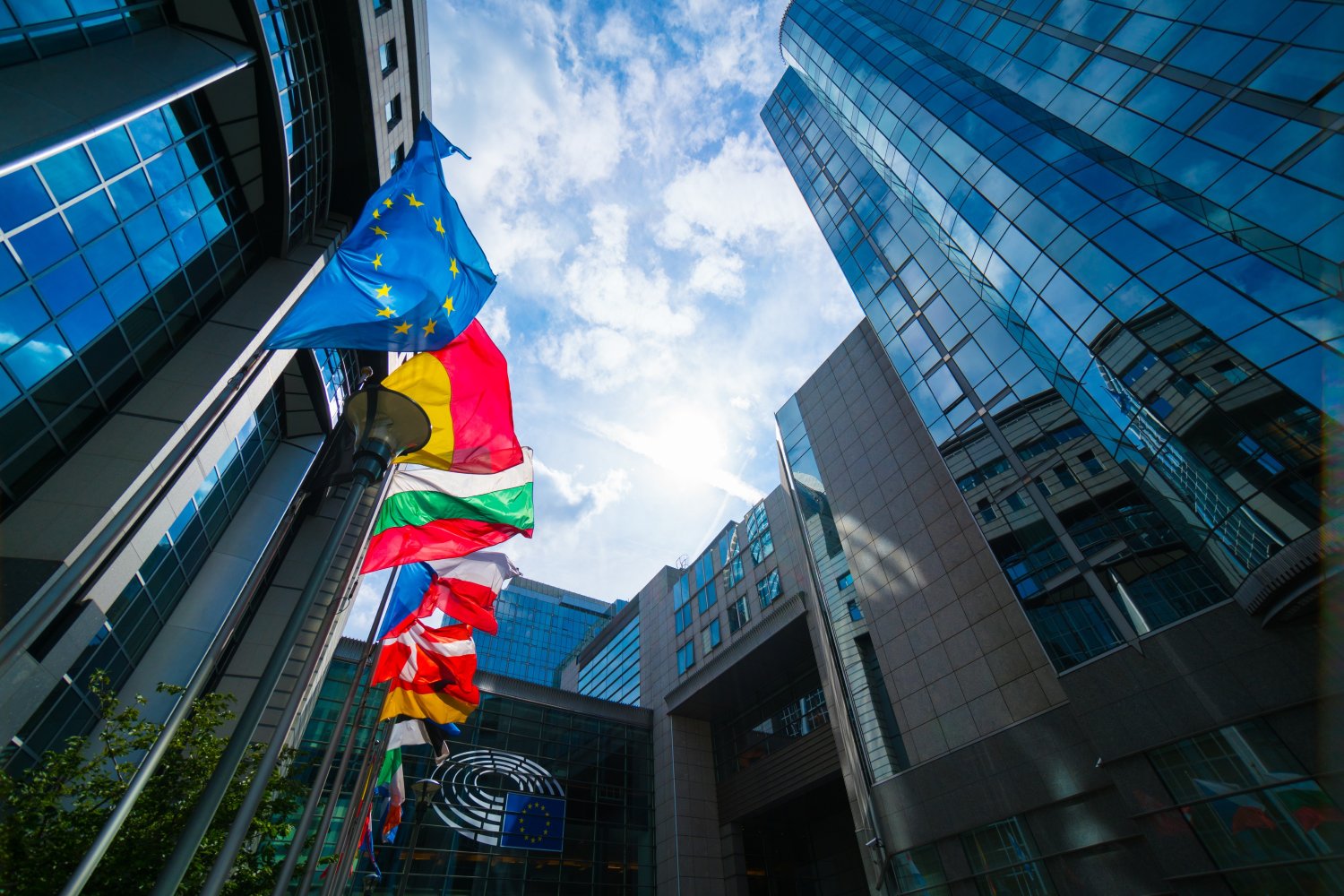
Older systems got extra time. Regulation (EU) 2026/1744, known as the Digital Omnibus, gives systems placed on the market before 2 August 2026 until 2 December 2026 to comply with the marking requirement. The 3 November batch lands about a month ahead of that deadline, just as the 30 September batch did. That timing is not an accident: providers are working through their back catalogues model by model, and the deadline explains why so much of this is happening in the autumn of 2026 rather than all at once.
The stakes attached to the wider AI Act are large — research notes cite penalties of up to €15 million or 3% of worldwide turnover for the relevant obligations — though the exact penalty exposure for a specific marking failure depends on the legal details and is a question for lawyers, not for a guide like this one. What is clear is the direction of travel. The market as a whole is moving towards marking: OpenAI’s textGrain, Anthropic’s watermark, and xAI’s planned marking of Grok API text by default from 7 November all point the same way. Within a few months, assuming a passage is unmarked simply because it came from a major model will be a poor assumption.
For US businesses, the practical takeaway is not “this is a European rule, so it does not affect us”. Because Anthropic applies the Claude text watermark globally, US-generated Claude text is marked. Because US companies sell into Europe, publish for European audiences, or run compliance programmes that borrow European standards, the mark may show up in their workflows whether they planned for it or not. And because the detection tool is restricted, US teams cannot simply check their own output — they need to manage the inputs (model choice and sampling settings) rather than verifying the outputs.
What the Claude Text Watermark Means for You
For Everyday Claude Users
For most people, nothing visible changes. Your Claude answers will read the same, cost the same, and arrive at the same speed. The mark is invisible and, for ordinary writing, irrelevant. The one scenario that deserves a thought is the personal one: a cover letter you wrote yourself and asked Claude to tighten, a wedding toast you drafted and asked Claude to polish, or an email you had Claude rephrase. If that text later passes through a detector, it may register as Claude-processed, even though the ideas and most of the words were yours. That is not a punishment — nobody is notified, and you are not flagged in the app — but it is a reason to understand what “Claude touched this” actually means before anyone treats a detection result as a verdict on your honesty.
For Writers, Students and Teachers
The Claude text watermark does not settle academic integrity questions, and teachers should not treat it as a shortcut. A student who writes an essay by hand and uses Claude only to fix grammar may produce marked text; a student who generates an essay with an unwatermarked model, or who paraphrases Claude’s output thoroughly, may produce unmarked text. Institutions that want to use detection need access to Anthropic’s private preview, a policy for what a probabilistic result can and cannot justify, and a human process around it. Without those, the mark creates risk rather than clarity: a false sense of certainty in both directions.

For Developers Building on the Claude API
Developers face the most concrete decisions. If you build on Opus 4.6 or Sonnet 4.6 and your product’s compliance story includes watermarking, you must keep temperature, top_p and top_k at their defaults and prove it — in code review, in configuration management, and in logs. If you tune those settings for product reasons, update your compliance documentation to say watermark coverage is not guaranteed on those models. If you build on newer models such as Opus 5.5, the mark survives tuning, but you should still confirm the model version in your stack, because model names and routing change. And if you call Claude through Bedrock, allow for the rollout lag and confirm when marking actually begins on your channel.
For Businesses and Compliance Teams
Compliance teams should treat the Claude text watermark as one control, not as a compliance programme. The November rollout has not been independently tested: there are no published third-party results showing how reliably the mark survives at default settings, how often it is lost under other settings, or how it performs across the four models. Until independent results or formal Anthropic documentation appear, the Claude text watermark should not be the sole basis for an EU AI Act compliance claim. Keep your own AI-use disclosures, your records of which models and settings you used, and your human review steps. Those are controls you own; the Claude text watermark is a control Anthropic owns, and you cannot inspect it yourself.
For Publishers and Media Organisations
Newsrooms, fact-checkers and researchers are among the groups eligible for the private detection preview, which makes the mark genuinely useful in this corner: a newsroom can ask whether a suspicious submission was processed by Claude, as one signal among others. But the same limits apply. A positive result does not prove a submission was fabricated, and a negative result does not clear it. Used carefully, the mark is a lead. Used carelessly, it becomes a false accusation or a false clearance, both of which damage trust more than no check at all.
A Practical Checklist for Developers and Businesses
- Inventory your models. List every Claude model your product calls, including anything routed through Bedrock, Google Cloud or Microsoft Foundry. Flag Opus 4.6 and Sonnet 4.6 for the default-settings rule, and flag Opus 4.5, Sonnet 4.5 and Haiku 4.5 as unconfirmed.
- Lock sampling settings where watermarking matters. If you rely on the mark on Opus 4.6 or Sonnet 4.6, pin temperature, top_p and top_k to defaults in configuration, not just in documentation, and alert on drift.
- Do not claim what you cannot verify. Say “outputs are watermarked by Anthropic subject to its documented conditions” rather than “all our AI text is watermarked”. The difference protects you when a tuned call or a Bedrock lag breaks the chain.
- Keep your own records. Log model, version, settings and date for generated content that matters. Your own logs are checkable; the Claude text watermark is not, for most organisations.
- Disclose AI use separately. If your audience, customers or regulators need to know AI was involved, say so in plain language. Do not outsource that disclosure to an invisible mark nobody in your audience can read.
- Apply for detection access if you qualify. Regulators, media, researchers, educators and compliance-obligated enterprises can request private preview access. Apply early, because approval takes time and the December deadline is close.
- Plan the Sonnet 4.5 exit. Sonnet 4.5 leaves the Claude API on 30 November 2026. If you still use it, migration is due regardless of watermark status.
- Watch for Anthropic’s formal documentation. The November date currently rests on a customer email. When Anthropic publishes updated model-table dates and technical guidance, update your internal notes to match.
Limits, Open Questions and Honest Caveats
Several questions about the Claude text watermark remain open, and a trustworthy guide should name them rather than paper over them.
- Does the bypass affect Mythos 5 and Opus 4.7? Unknown. Reporting states the default-settings condition for Opus 4.6 and Sonnet 4.6 only. Do not assume the other two are either safe or affected.
- How well does the mark survive real-world editing? Anthropic says it survives copying and minor edits, but no independent test data has been published for this rollout. Heavy paraphrasing removes it; the boundary between “minor” and “heavy” is not quantified in public.
- How long must a passage be to check reliably? Short texts carry too little signal for a confident result, but Anthropic has not published a minimum length for this system. Treat short-passage results with extra caution.
- When will detection open up? Anthropic says it plans to widen access over time, but has given no date for public or subscriber access. For now, assume restricted access persists.
- What happens to the 4.5 models? No specific watermark date has been published for Opus 4.5, Sonnet 4.5 and Haiku 4.5. Their status should be treated as pending, not assumed.
- Will other providers’ marks be mutually readable? No. Each provider uses its own key. Anthropic’s detector cannot recognise text from other AI systems, and theirs cannot recognise Claude’s.
There is also a broader debate worth acknowledging honestly. Critics argue that a detection system ordinary users cannot access, built on a probabilistic signal its maker admits is not fully conclusive, risks judging people by a test they cannot take. Supporters argue that restricted access is precisely what keeps the signal useful, and that the alternative — no marking at all — leaves regulators, researchers and fact-checkers with nothing. Both points have force. What is not in doubt is the direction: invisible marking is becoming the default plumbing of major AI models, and understanding its limits is now part of basic AI literacy, not a specialist concern.
How It Differs From Google SynthID and Content Credentials
Readers of this site may already know Google’s SynthID detector, which we covered separately. The two systems are related but not the same, and confusing them causes real mistakes. Google’s SynthID website is a detector tool open to everyone: you upload an image, video or audio file and it reads Google’s SynthID watermark in that file. Anthropic’s Claude text watermark is a mark inside generated text, built on a variant of the same underlying SynthID-Text idea, but its detector is restricted — you cannot upload a paragraph and get an answer. One is a public tool for checking media files; the other is a private system for checking model text. If you want to check whether an image is AI-generated, Google’s tool is the relevant one. If you want to know whether a paragraph came from Claude, there is currently no public tool that can tell you. For a fuller walkthrough of the Google tool, see our Google SynthID detector guide.
Content Credentials, the C2PA standard used for files, are a third thing again. Where Claude produces a file — an image, for example — Anthropic attaches signed provenance metadata that tools like the Claude Content Checker can read. That metadata travels with the file. The text watermark, by contrast, travels inside the words. Files get credentials; text gets a statistical pattern. Both serve transparency, but they are checked with different tools, by different people, with different limits.
For context on how Claude itself keeps evolving, our guides to Claude Sonnet 5.5 and Claude Haiku 5.5 cover the newer models that carry the Claude text watermark from launch, and our Claude Duet guide covers Anthropic’s agent product, whose outputs from watermarked models carry the mark too.
Frequently Asked Questions
Can I see the Claude text watermark in a Claude answer?
No. The Claude text watermark is invisible. There are no hidden characters, symbols or formatting changes to look for. Only a detector holding Anthropic’s secret key can estimate whether the statistical pattern is present.
Can I check whether my own text is watermarked?
Not as an ordinary user or subscriber. Detection is in private preview for regulators, media, researchers, educators, EU civil society groups and compliance-obligated enterprises. Anthropic’s free Claude Content Checker checks files, not text, so it cannot answer this question.
Can I turn the Claude text watermark off?
There is no user-facing switch to disable it. On Opus 4.6 and Sonnet 4.6, however, changing temperature, top_p or top_k away from defaults can silently prevent the mark from being applied — which is a compliance risk, not a feature to exploit.
If text has no watermark, does that prove a human wrote it?
No. Unmarked text may come from another AI system, an unwatermarked model, a watermarked model with tuned settings, or a heavily rewritten passage. Absence of a mark proves nothing about authorship.
Does the Claude text watermark identify me?
No. Anthropic states the Claude text watermark carries no identifying information and cannot be traced to a specific person, organisation or conversation. It indicates only that Claude likely processed the text.
Does watermarking change Claude’s price or quality?
According to Anthropic, no. Watermarking needs no extra tokens, does not change quality or readability, and does not cost more. If your bill changes, something else changed.
Does this affect users in the United States?
Yes. Anthropic applies the mark worldwide because it cannot yet scope it by region, so US-generated text from covered models is watermarked too, even though the legal driver is the EU AI Act.
The Bottom Line
The 3 November expansion of the Claude text watermark is a quiet change with loud implications. Quiet, because nothing in your Claude experience looks or feels different. Loud, because from today a much larger share of Claude’s output — including text from the older workhorse models Opus 4.6 and Sonnet 4.6 — carries a machine-readable trace, and because the rules for keeping that trace intact are stricter than most developers realise.
The sensible response depends on who you are. If you simply use Claude to write, learn and work, carry on — but remember that a passage Claude polished may register as Claude-processed, and that no mark, present or absent, is a verdict on a person’s honesty. If you build on Claude, audit your models and your sampling settings today, especially on Opus 4.6 and Sonnet 4.6, and stop claiming watermark coverage you cannot guarantee. If you run compliance, treat the mark as one control among several, keep your own records, and do not let an invisible, privately-checked signal become the sole foundation of an EU AI Act claim before the 2 December deadline.
Transparency tools only build trust when their limits are stated as plainly as their powers. Anthropic has stated the limits unusually clearly: probabilistic, identity-free, privately checked, and — on two older models — dependent on settings you must not touch. Take those limits seriously, and the Claude text watermark becomes what it was designed to be: a useful, modest piece of plumbing for an AI world that is learning, model by model, to leave a trace.
Sources: reporting on Anthropic’s customer email and rollout from TokenPost and TechWEEZ; Anthropic’s content-marking help documentation as reported in that coverage. Model names, dates and conditions are as reported on 2–3 November 2026; where a fact rests on the customer email rather than a public Anthropic post, this article says so.