
On 2 November 2026, at Intel Connection 2026 in Suzhou, China, ZKH Group and Intel launched LingLong Insight 1.0, a 4-billion-parameter industrial multimodal AI model that checks delivered factory supplies right where they arrive, instead of sending photos and documents to the cloud and waiting for an answer. The idea is refreshingly practical for an AI launch: when a shipment reaches a factory or warehouse dock, cameras photograph the delivery documents, the packaging and the labels, and LingLong Insight 1.0 identifies the items, reads the specifications, and flags anything that does not match the paperwork, before a worker confirms receipt. This guide explains what LingLong Insight 1.0 is, how its visual verification workflow works, why it runs on an edge device instead of in the cloud, what it could mean for manufacturers in the United States, and where the honest gaps in the story still are.
At a glance: LingLong Insight 1.0 was developed by LingLong Intelligence, the AI subsidiary of ZKH Group, a Chinese maintenance, repair and operations (MRO) procurement platform listed on the New York Stock Exchange as ZKH. The model combines image understanding, text understanding and industrial product knowledge, and it runs locally on the LingLong Agent Box, a device powered by Intel Core Ultra processors. Its first job is verification at goods receipt. Planned extensions cover warehouse inbound and outbound checks, production-line material verification, and equipment operation and maintenance. No public pricing, no independent benchmarks and no overseas rollout timetable have been announced, so this article treats the launch claims carefully and says plainly what is verified and what is not.
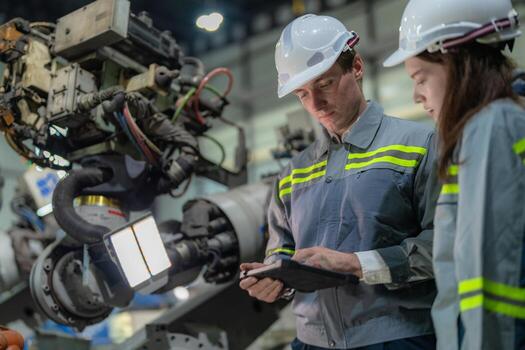
Table of Contents
- What Is LingLong Insight 1.0?
- The Bearing Problem: Why Look-Alike Parts Cost Real Money
- How LingLong Insight 1.0 Works: The Visual Verification Workflow
- The LingLong Agent Box and Intel Core Ultra Hardware
- Why Edge AI Beats the Cloud on the Factory Floor
- The Data Advantage: 27 Million Product Records Behind LingLong Insight 1.0
- What LingLong Insight 1.0 Will Do Next
- What LingLong Insight 1.0 Means for US Manufacturers
- LingLong Insight 1.0 vs Traditional Machine Vision
- The Honest Limits and Open Questions
- Who Should Watch LingLong Insight 1.0
- Frequently Asked Questions
What Is LingLong Insight 1.0?
LingLong Insight 1.0 is a lightweight industrial multimodal AI model. Multimodal means it understands more than one kind of input at once: in this case, images and text together. Industrial means it is trained and tuned for factory and warehouse work, not for general chat or image captioning. And lightweight is relative: at 4 billion parameters, LingLong Insight 1.0 is far smaller than the frontier models that dominate headlines, which can run to hundreds of billions or trillions of parameters. That smaller size is the whole point. A 4-billion-parameter model can run on a workstation-class edge device at the receiving dock, while a giant cloud model cannot, at least not without a fast, always-on connection and a large compute bill for every check.
The model was built by LingLong Intelligence, ZKH Group’s AI subsidiary, and launched together with Intel. ZKH is a maintenance, repair and operations procurement platform in China: it sells the huge catalogue of parts, tools and consumables that factories need to keep running, from bearings and fasteners to safety gear and motors. That business gives ZKH something most AI labs do not have, which is deep, structured knowledge about industrial products themselves. LingLong Insight 1.0 is the attempt to turn that knowledge into a working tool, rather than leaving it sitting in catalogues and spreadsheets.
It is important to be clear about what LingLong Insight 1.0 is not. It is not a chatbot, not a consumer app, and not something a US reader can download and try this week. There is no public sign-up page, no free tier and no announced US release. It is an industrial system deployed through ZKH’s operations and partnerships, starting in China. Its value for a US audience is different: it is a working example of where industrial AI is heading, built on Intel hardware that US manufacturers already buy, and it previews a verification workflow that US factories, warehouses and suppliers will increasingly be offered by vendors of their own. Understanding LingLong Insight 1.0 now means knowing what to ask those vendors later.
The launch also fits a wider shift in AI in late 2026. The biggest models still grab headlines, but a growing share of real deployments use smaller, specialised models that run close to where the work happens. LingLong Insight 1.0 is a textbook case: a model sized for the device it runs on, trained for one family of tasks, and judged on whether it catches real mistakes on a real dock, not on a general benchmark leaderboard.
The Bearing Problem: Why Look-Alike Parts Cost Real Money
Every factory and maintenance depot faces the same quiet problem, and it is the problem LingLong Insight 1.0 exists to solve. Industrial supplies are enormously varied, and many of them look almost identical while differing in exactly one specification that matters. ZKH’s own launch example is the bearing: two bearings can share a similar appearance yet differ in a single dimension, material grade, load rating or tolerance that decides whether the part suits a particular machine at all.
When a delivery arrives, a worker must identify each item, inspect its labels, and compare its specifications against the purchase order and delivery documents. That sounds simple. In practice it is demanding, repetitive work done under time pressure, often across thousands of distinct parts, with documentation in different formats from different suppliers. A tired worker, a smudged label, a look-alike part or a packing error can each slip through.
The cost of a missed mismatch is much larger than the cost of the part. If the wrong part enters inventory, it can be picked later for a machine it does not fit. That can delay a critical repair, idle a production line while the right part is found, or, in the worst case, lead to a component being installed that fails early. Maintenance teams know this pattern well: the expensive failure is rarely the dramatic one. It is the small, undetected substitution that shows up weeks later as downtime.
Traditional quality checks help, but they have limits. Random sampling catches some errors and misses others. Barcode scanning confirms that a scanned code matches an expected code, but it cannot tell you whether the physical item in the box matches the label on the box, or whether the specification on the delivery note matches what the machine actually needs. That gap, between what the paperwork says and what the physical item is, is where LingLong Insight 1.0 aims to work.
For US readers, the bearing problem is instantly familiar even if the brand names differ. Any plant that receives MRO supplies, any warehouse that handles spare parts, and any maintenance contractor that stocks components for client sites deals with look-alike parts every week. The question LingLong Insight 1.0 raises is whether a camera plus a specialised model can close that paperwork-to-physical gap reliably, at the speed of a working dock, without slowing the whole receiving process down.
How LingLong Insight 1.0 Works: The Visual Verification Workflow
LingLong Insight 1.0 supports a visual verification workflow built around industrial cameras at the workstation. The flow is deliberately simple, because it has to survive contact with a busy receiving dock rather than a laboratory. Here is how the companies describe it, step by step:
- Capture. Industrial cameras photograph the delivery documents, the packaging and the product labels as goods arrive. Nothing exotic is required at this stage beyond cameras positioned to see the documents and items clearly.
- Identify. LingLong Insight 1.0 identifies the supplied items from the images, using its image understanding combined with its industrial product knowledge. This is where the model differs from a generic image recogniser: it is not just naming an object, it is placing that object inside a catalogue of industrial supplies with specifications attached.
- Read and compare. The model interprets the relevant text from the documents and labels, then checks the identified items’ specifications against the delivery documentation. A part that looks right but carries the wrong specification should be caught here, because the check is against the documents, not against appearance alone.
- Flag, don’t decide. When the model detects an inconsistency, it flags the discrepancy and shows the worker the associated images for review. The worker still makes the call. That human-in-the-loop design matters: the system is an assistant that catches suspects, not an autonomous gate that accepts or rejects shipments on its own.
- Confirm receipt. Only after discrepancies are reviewed does the worker confirm receipt, so a flagged mismatch is caught before the item disappears into inventory, where it becomes far harder and more expensive to find.

The key idea is the combination. A conventional image-classification system might correctly identify a bearing and stop there. The model is designed to go one step further: it connects what it sees to structured industrial knowledge and to the specific delivery documents in front of it, and then evaluates whether the item matches its intended use. In other words, the model answers a specification question, not just an identification question. That distinction is the product.
It is worth pausing on what this workflow does not claim. The launch materials do not describe the system reading handwritten notes, handling damaged or missing labels, or resolving conflicting documents without human help. Those are exactly the edge cases that decide whether a dockside system survives real use, and they are untested in public so far. A sensible buyer should ask how LingLong Insight 1.0 behaves when a label is torn, a document is in an unusual format, or two documents disagree, because those are the moments when a verification tool either earns trust or gets switched off.
The workflow also depends on camera placement and lighting, which are practical details, not footnotes. A model can only verify what its cameras can see clearly. Factories considering any system like LingLong Insight 1.0 should treat the workstation setup, the camera angles and the document handling as part of the product, not as an afterthought, because a great model behind a bad camera is just a bad system.
The LingLong Agent Box and Intel Core Ultra Hardware
LingLong Insight 1.0 runs locally on the LingLong Agent Box, a workstation device powered by Intel Core Ultra processors. Those processors combine three kinds of compute in one chip: a CPU for general computing tasks, a GPU for parallel processing, and an NPU, a neural processing unit designed to run AI workloads efficiently. That combination is what makes local inference practical for a 4-billion-parameter multimodal model. The CPU keeps the workstation running, the GPU accelerates the heavy parallel work, and the NPU handles AI tasks at lower power than a GPU alone would need.
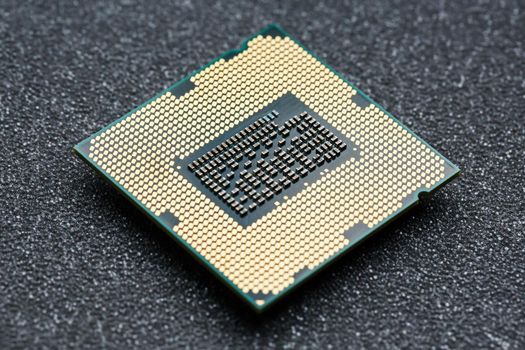
Intel’s role in the launch is more than a logo on a slide. The LingLong Agent Box is built on Intel’s edge computing technology, and the two companies say they intend to deepen their collaboration on industrial AI and jointly explore global market opportunities. For Intel, this launch is another proof point that its Core Ultra platform can carry real AI workloads outside the data centre, in environments where a cloud round-trip is slow, expensive or simply unavailable. For ZKH, Intel supplies the hardware ecosystem and the developer tools that make an edge deployment repeatable across many sites, rather than a one-off pilot at a single warehouse.
One figure worth handling carefully comes from coverage of the launch rather than the official release: Intel Core Ultra platforms are described as capable of up to 180 total platform TOPS, or trillions of operations per second, across CPU, GPU and NPU combined. That is a platform capability figure, not a measured performance result for the model itself. ZKH has not disclosed independent inference benchmarks, processing latency figures or detailed hardware configurations for the model, and independent coverage notes exactly that gap. So the honest statement is this: the hardware class is capable, and the model is sized to fit it, but nobody outside ZKH and Intel has yet published how fast LingLong Insight 1.0 checks a delivery, or how accurate it is across product categories.
The 4-billion-parameter size deserves a second look, because it tells you about the design trade-off. A bigger model might understand more, but it would need more memory, more power and more cooling, and it would be harder to run on a workstation box at a dock. A smaller model runs locally and responds quickly, but it must be carefully specialised to be useful. The model bets that specialisation wins: a smaller model fed with 27 million product records and industrial expertise can outperform a larger general model on the narrow question of whether this item matches this document. That bet is plausible, and it matches the direction of much of industrial AI, but it remains a bet until independent accuracy results appear.
Why Edge AI Beats the Cloud on the Factory Floor
The most important architectural choice behind this launch is where the AI runs. Most well-known AI tools run in the cloud: you send data to a distant data centre, the model processes it, and the answer comes back over the internet. That works beautifully for a chatbot on your phone. It works less well on a factory floor, for three practical reasons that LingLong Insight 1.0 is designed around.
First, latency. A receiving dock does not want to wait. If every verification requires a round-trip to a remote server, each check inherits the delay of the network, and delays add up across a day of deliveries. Local inference on the LingLong Agent Box removes that round-trip, so the check happens at the workstation, at the speed of the local hardware. The result is a workflow that feels instant to the worker, which is the difference between a tool that gets used and a tool that gets bypassed when the queue builds up.
Second, connectivity. Industrial environments do not always have reliable, fast internet. Remote plants, large warehouses with dead zones, and sites with strict network policies can all interrupt cloud access. A system like this that processes information locally keeps working when the connection drops or slows, because the model and the product knowledge it needs are on the device, not on the other end of a link that might fail at the worst moment.
Third, data control. Delivery documents, supplier records and inventory data are operationally sensitive. Sending them to a remote cloud for every check means moving that data constantly, with all the security review and compliance work that implies. Local processing limits how much operational information leaves the site, which simplifies security discussions and keeps sensitive supply-chain data closer to the business that owns it.
Latency, Privacy and Offline Resilience: LingLong Insight 1.0’s Edge Advantage
Those three advantages, latency, privacy and offline resilience, are the core pitch for edge AI in general, and this launch is a clean illustration of all three. But edge AI also has trade-offs that a fair guide should name. An edge device must be maintained, updated and secured at every site, which is more operational work than managing one cloud service. Model updates have to be pushed to each box, hardware eventually ages, and a site with dozens of workstations needs a plan for all of them. Cloud AI centralises that burden; edge AI distributes it. Neither is free, and the right choice depends on how much a site values instant local decisions versus centralised management.
The wider market context supports the edge direction. Cisco’s 2026 State of Industrial AI research, cited in coverage of the LingLong Insight 1.0 launch, found that 61% of surveyed organisations were using AI in live industrial operations, while 20% reported scaled, mature deployments, and 44% of manufacturing respondents expected greater edge computing capacity to be necessary as AI workloads expand. Those figures come from Cisco’s research, not from ZKH, but they explain why a launch like this lands when it does: manufacturers are already running AI on live operations, and the next bottleneck is getting that AI closer to the machines, docks and workstations where decisions happen. Gartner research cited in the same coverage put industrial AI as a potential $300 billion manufacturing technology opportunity, which, even treated as a broad analyst estimate rather than a precise forecast, signals why Intel, NVIDIA and Microsoft are all investing heavily in industrial AI infrastructure at different layers.
The Data Advantage: 27 Million Product Records Behind LingLong Insight 1.0
If the LingLong Agent Box is the body of the model, ZKH’s industrial data is arguably its brain. ZKH says it has accumulated nearly 30 years of experience in industrial supplies, more than 27 million product records, and approximately 4 billion product parameters. LingLong Intelligence has standardised that information and combined it with industry expertise to create structured, AI-ready knowledge that underpins the model.
That data matters because general-purpose multimodal models, however capable, do not know industrial specifications by default. A general model can recognise a valve, a bearing or a motor, but it does not know the tolerance, material grade, pressure rating or compatibility rule that decides whether that specific valve suits that specific machine. Domain-specific product records supply that missing context. They let the model distinguish between similar-looking supplies not by appearance alone, but by the specifications that define them.
ZKH’s chief technology officer, Yang Liu, who also leads LingLong Intelligence, put the point bluntly at launch: industrial AI is only as good as the knowledge behind it, and ZKH’s industrial data and close understanding of customer needs give it a strong foundation for building AI that delivers practical value, with Intel’s edge computing taking that intelligence beyond the cloud and onto the factory floor, where every decision counts. That quote is worth remembering, because it states the strategy plainly: the moat is not the model architecture, which other labs can replicate, but the structured product knowledge, which takes decades to accumulate.
There is a caution here too. Product data is only as good as its maintenance. Specifications change, suppliers revise parts, and old records go stale. A verification system built on product records needs a disciplined update process, or it will eventually flag correct items as mismatches, or worse, approve wrong ones because its records are out of date. Buyers evaluating any system like this one should ask how product records are updated, who validates changes, and how quickly a corrected specification reaches every edge device. The launch materials do not answer those operational questions publicly, and they are exactly the questions that separate a good demo from a reliable deployment.
It is also worth noting what this data advantage means competitively. ZKH is a procurement platform first and an AI developer second, which gives it a distribution path that a pure AI lab lacks: it already serves the customers whose docks would use LingLong Insight 1.0. If the verification workflow proves itself, ZKH can extend it from its own fulfilment operations into customer sites, turning a procurement relationship into an AI workflow relationship. That is a familiar platform play, and it is one reason the launch deserves attention beyond its technical details.
What LingLong Insight 1.0 Will Do Next
Goods receipt is only the first act for the model. LingLong Intelligence says it plans to extend the model to three further stages of industrial operations, each of which reuses the same core skill, matching what a camera sees against what the documents require:
- Warehouse inbound and outbound checks. The same verification workflow, applied when goods enter a warehouse and again when they leave it, so that outbound shipments are checked against order records before they ship, not after a customer complains.
- Production-line material verification. Checking that the correct components are being supplied to manufacturing equipment, catching a wrong-material error before it becomes a defective batch rather than after.
- Equipment operation and maintenance. Using visual and textual information to support equipment inspections and component identification during maintenance work, where identifying the right part quickly can cut repair time.
That roadmap is logical, but it is a roadmap, not a delivery record. The companies have not announced customer commitments, deployment numbers or a timetable for these extensions, nor for any overseas rollout. ZKH and Intel say they intend to deepen their collaboration and jointly explore global market opportunities, combining Intel’s computing platforms and ecosystem resources with LingLong Intelligence’s industrial data and model capabilities. Until specific deployments are announced, the roadmap should be read as intent, not achievement.
The competitive challenge for the model is also clear from independent coverage. The system must demonstrate consistent recognition accuracy across different industrial environments, product categories, lighting conditions and documentation formats. A model that works beautifully on one supplier’s clean labels can struggle with another supplier’s faded print, unusual packaging or non-standard document layout. Integration matters just as much: a verification tool that does not connect cleanly to warehouse management systems, ERP software and manufacturing execution systems will create a parallel workflow that workers resent, instead of a check that fits inside the workflow they already use. Those integration and robustness tests are where the model will ultimately be judged.
What LingLong Insight 1.0 Means for US Manufacturers
LingLong Insight 1.0 launched in China, with no US availability announced, so no US factory can buy it today. That does not make it irrelevant to US readers. On the contrary, it is a preview of a product category that US manufacturers will be sold, by US and international vendors, over the next two years. Here is how to read it from a US perspective.

First, the hardware story is American. Intel Core Ultra processors are the platform LingLong Insight 1.0 runs on, and US manufacturers already deploy Intel-based edge devices across plants and warehouses. When a vendor pitches a US factory an edge verification system, it will very likely run on similar Intel hardware, or on competing NVIDIA or Qualcomm edge platforms. This launch shows what that hardware class can already do when paired with a specialised model, which helps US buyers calibrate what is realistic versus what is marketing.
Second, the workflow is transferable even if the product is not. The visual verification pattern, cameras plus a specification-aware model plus a human reviewer, can be built by any vendor with access to product data. US distributors, MRO suppliers and warehouse automation companies all hold versions of the product knowledge ZKH holds, and several will try to productise it. A US operations manager who understands this workflow can evaluate those pitches on substance: does the vendor’s model check specifications against documents, or does it merely identify objects? Does it flag suspects for a human, or does it pretend to decide alone? Those two questions cut through most sales decks.
Third, the economics deserve attention. There is no public pricing for LingLong Insight 1.0, and this article will not invent any. Industrial edge systems are typically sold as enterprise deployments, with hardware, software, integration and support bundled, rather than as a monthly subscription with a price page. US buyers should therefore expect pricing conversations to centre on total cost per workstation, integration effort and the cost of the product-data maintenance described above, not on a simple per-user fee. If a vendor cannot explain its data-update process or its integration path, its price, whatever it is, is not the main risk.
Fourth, the regulatory and data angle matters for US sites. A system that photographs delivery documents and inventory must fit the site’s data policies, union agreements where they exist, and customer requirements about photography on premises. Local processing, as LingLong Insight 1.0 uses, helps here, because sensitive documents need not leave the site. But local processing does not remove the need for clear policies about what is photographed, how long images are kept, and who can review flagged cases. US buyers should settle those policies before cameras go up, not after.
Finally, there is a strategic point. The US manufacturing conversation about AI often focuses on robots and autonomous factories, which are spectacular but slow to deploy. LingLong Insight 1.0 points at a less glamorous and much faster payoff: using AI to stop small, expensive errors at the receiving dock. For many US plants, that unglamorous win, fewer wrong parts in inventory, fewer delayed repairs, fewer line stoppages, is worth more in a year than a futuristic pilot. The lesson of LingLong Insight 1.0 for US manufacturers is to look for AI that fixes a daily, measurable pain, and to judge it on error rates and dock throughput, not on demo videos.
For readers who follow the site’s broader AI coverage, the story also connects to two themes we have covered before. Like Drex Max open weights, it shows a specialised model beating general models at a narrow job by running locally. And like Machine-Readable Government, it turns documents that humans used to interpret by hand into a format machines can check, with a human keeping the final decision. Both parallels are worth keeping in mind, because the same pattern, structured knowledge plus local AI plus human review, is appearing across industries at once.
LingLong Insight 1.0 vs Traditional Machine Vision
Factories have used machine vision for decades, so it is fair to ask what this model adds. The table below summarises the difference in plain terms. Note that this is a conceptual comparison based on the launch descriptions, not a measured benchmark, since no head-to-head accuracy figures have been published.
| Capability | Traditional machine vision | LingLong Insight 1.0 |
|---|---|---|
| What it checks | Presence, shape, defects, barcodes | Item identity plus specification match against documents |
| Inputs understood | Images, usually one camera angle | Images plus document text, packaging and labels together |
| Knowledge used | Fixed rules and templates per product | Industrial product knowledge from millions of records |
| New product setup | Often needs new templates or retraining | Designed to use structured product records for new items |
| Where it runs | Often on dedicated vision hardware or PCs | Locally on the LingLong Agent Box edge device |
| Decision role | Pass or fail, often automated | Flags discrepancies for worker review |
The practical upshot is that LingLong Insight 1.0 is not a replacement for every machine vision system. A high-speed line inspecting thousands of identical parts per minute still wants a dedicated vision system tuned for that one job. Where the model fits is the opposite problem: high variety, low volume, document-heavy receiving work, where the challenge is not speed but judgement across thousands of different parts. Factories should not rip out working vision systems to install a general verification model. They should ask which of their quality problems are variety problems, and put a system like LingLong Insight 1.0 there.
There is also a useful comparison with cloud AI tools. A general cloud multimodal model could, in principle, look at a photo of a part and a document and comment on them. But it would lack the structured industrial product knowledge, it would need a reliable connection for every check, and it would send operational documents off-site each time. This model trades generality for specialisation and locality, and for dockside verification that trade looks right, provided the accuracy holds up in independent testing.
The Honest Limits and Open Questions
A good guide should be as clear about what is unknown as about what is known. Here are the limits and open questions around the model, stated plainly:
- No independent benchmarks. ZKH has not published independent inference benchmarks, latency figures or accuracy rates. Until third parties test LingLong Insight 1.0 across product categories and document formats, its real-world accuracy is unverified. Treat all performance language as company description, not measured fact.
- No pricing or availability. No price, licensing model, public trial or US release has been announced. US readers cannot buy or try LingLong Insight 1.0 today, and any article claiming a price for it would be inventing one.
- No overseas timetable. ZKH and Intel speak of exploring global opportunities, but no specific overseas deployments, customers or dates have been named. A global ambition is not a global product.
- Untested edge cases. Damaged labels, missing documents, conflicting paperwork, unusual packaging and poor lighting are the real tests of a dockside system, and none have been publicly demonstrated. Human review mitigates this risk, but it does not remove it.
- Data freshness risk. A system built on product records is only as current as those records. The update process for specifications, and how fast corrections reach every edge device, has not been publicly described.
- Integration unknown. How LingLong Insight 1.0 connects to warehouse management, ERP and manufacturing execution systems has not been detailed. Integration effort is often the largest hidden cost of industrial AI, and buyers should press for specifics.
- Market reaction is not product proof. Coverage noted that ZKH’s stock rose sharply after the announcement, closing up 8.54% by one account. A stock move reflects investor enthusiasm, not a verified product result, and it should not be read as evidence that LingLong Insight 1.0 works as described.
None of these limits makes the model a bad product. Every industrial launch has unknowns at this stage. But they do mean the right posture for readers is interested scepticism: a promising workflow, a credible hardware partnership, a genuine data advantage, and a set of claims that now need independent verification. That is a fair summary of where the model stands two days after launch.
Who Should Watch LingLong Insight 1.0
This model will matter most to a few specific audiences. Plant and warehouse operations managers should watch it as a template for what receiving verification will look like, and use it to write better requirements for their own vendors. MRO distributors and suppliers should note the platform play: the company that owns the product data has a head start in building the verification tool, which may reshape who captures value in industrial supply chains. Edge AI developers should study the sizing choice, a 4-billion-parameter multimodal model on Intel Core Ultra hardware, as a reference point for what is deployable at a workstation today. Investors and analysts following Intel’s edge business or ZKH’s pivot from procurement platform to AI-driven operations should track whether deployments and customers follow the announcement, since those, not the launch itself, will decide the story. And US manufacturers who cannot buy the model should still track it, because its competitors and imitators in the US market will arrive with similar pitches, and an informed buyer gets a better deal.
If you are in any of those groups, the practical next step is not to wait for LingLong Insight 1.0 to reach your market. It is to audit your own receiving process: how many mismatches slip through today, how long verification takes per delivery, and what a single wrong part costs you in downtime. Those numbers decide whether any verification system, LingLong Insight 1.0 or its future US equivalents, is worth buying. Without them, you are shopping on demos. With them, you can judge a vendor on the only metric that matters: fewer errors, at dock speed, without slowing the work down.
For a wider view of how agentic and specialised AI is reshaping business software, see our guide to Zoho Analytics Agentic Analytics, which covers a different kind of specialised AI, one that lets agents act on business data rather than just display it. The pattern is the same even though the industry differs: AI is moving from general chat toward narrow, trusted tools that do one operational job well.
Frequently Asked Questions
What is LingLong Insight 1.0 in simple terms?
LingLong Insight 1.0 is a 4-billion-parameter industrial AI model from ZKH’s LingLong Intelligence and Intel that checks delivered factory supplies at the receiving dock. Cameras photograph delivery documents, packaging and labels, the model identifies the items and compares their specifications against the paperwork, and it flags mismatches for a worker to review before receipt is confirmed.
When did LingLong Insight 1.0 launch?
It launched on 2 November 2026 at Intel Connection 2026 in Suzhou, China. The announcement was issued by ZKH Group and covered by PR Newswire and independent technology outlets the same day.
Can I use LingLong Insight 1.0 in the United States?
Not currently. LingLong Insight 1.0 is an industrial deployment through ZKH’s operations, starting in China, with no public sign-up, pricing or US release announced. US readers should treat it as a preview of the verification workflow that US vendors are likely to offer soon, rather than as a product they can buy today.
How is LingLong Insight 1.0 different from normal machine vision?
Traditional machine vision typically checks presence, shape, defects or barcodes against fixed templates. LingLong Insight 1.0 combines image and text understanding with industrial product knowledge, so it checks whether an item’s specifications match its delivery documents, not just whether an object is present. It also flags suspects for human review rather than deciding alone.
What hardware does LingLong Insight 1.0 run on?
LingLong Insight 1.0 runs locally on the LingLong Agent Box, powered by Intel Core Ultra processors that combine CPU, GPU and NPU computing. Local processing reduces latency and cloud dependence and keeps operational documents on-site.
What will LingLong Insight 1.0 do next?
LingLong Intelligence plans to extend the model from goods receipt to warehouse inbound and outbound checks, production-line material verification, and equipment operation and maintenance. No timetable, customers or overseas deployments for those extensions have been announced yet.
LingLong Insight 1.0 will not make headlines the way frontier chat models do, and that is precisely why it is worth understanding. It represents AI doing unglamorous, measurable work: catching the wrong bearing before it enters inventory, checking the document against the physical item, and letting a worker confirm receipt with more confidence than before. If it delivers on that promise at dock speed and across real product variety, it will quietly save factories far more money than many flashier launches. If it does not, the workflow it pioneered will still shape what US vendors build next. Either way, it is a launch to watch, not because it is available to you today, but because it shows where industrial AI is actually going: smaller, specialised, local, and judged on errors caught rather than parameters counted.
Sources: the official ZKH Group announcement via PR Newswire (2 November 2026), available at PR Newswire, and independent launch coverage from TechEdgeAI, which notes the absence of independent benchmarks and adds the wider industrial AI market context.