
Contents:
- What Is It?
- At a Glance
- The Five Upgrades
- How It Works
- Version Comparison
- From Games to Robots
- Everyday Life
- Limits and Risks
- The Wider Robot Race
- What to Watch Next
- Verdict
- Questions Answered
What Is Ludi 0.2?
Ludi 0.2 is Krafton’s new robot intelligence system, built by its robotics subsidiary Ludo Robotics to help robots understand what people actually mean — not just what they literally say. Presented on 30 October 2026 at the Bay Area Robotics Symposium at the University of California, Berkeley, and announced publicly on 2 November 2026, Ludi 0.2 is the successor to Ludi 0.1, which arrived in August 2026.
Where most robot demos still follow a fixed script, it is designed for the messy reality of working with people: instructions that change halfway through, vague requests, gestures instead of words, and feedback such as “no, not that one.”
That focus has a name inside Ludo Robotics: social intelligence. The company describes it as a step toward robots that can understand, communicate and collaborate with people in homes, workplaces and public spaces, rather than machines that simply execute commands in a controlled lab.
It is important to be clear about what it is not, too. It is a research system, not a product. There is nothing to download, no app to install, no robot for sale running it, and no price. Krafton has published no benchmark scores for it and no release date. Everything in this guide separates what the company has actually announced from what remains unproven, so you can judge the hype for yourself.
If you have followed robot news for a while, the most surprising part of the Ludi 0.2 story may be who is building it. Krafton is best known as the South Korean games company behind PUBG: Battlegrounds, one of the most successful games of all time.
Ludo Robotics is its attempt to take nearly two decades of experience building interactive virtual worlds — where non-player characters must react to unpredictable human players — and apply that thinking to physical robots. The question it tries to answer is simple to state and hard to solve: what does a robot need to understand before it can genuinely work alongside a person?
Ludi 0.2 at a Glance
- What it is: A robot intelligence system for socially intelligent robots, from Ludo Robotics, a Krafton subsidiary.
- Announced: 2 November 2026, after a presentation on 30 October 2026 at the Bay Area Robotics Symposium (BARS) at UC Berkeley.
- Previous version: Ludi 0.1, released in August 2026.
- Next step: Ludi 1.0, a unified foundation model now in development, combining perception, dialogue and physical action in one system.
- Headline capability: Reading human intent, feedback, gestures and social cues, and adapting when a task changes midstream.
- What you can buy: Nothing yet. It is a research demonstration with no public API, download or price.
- Benchmarks for this system: None published. Any scores you see online belong to Ludi 0.1 or to simulations, not to this version.
- Where it is built: Palo Alto, California, with a research and development lab in Seoul, South Korea.
The Five Upgrades in Ludi 0.2
Ludo Robotics lists five capability areas that it advances over Ludi 0.1. The announcement describes these areas in general terms rather than with numbers, so think of them as directions of improvement, not measured gains. Each one targets a different way that real human interaction breaks a scripted robot.
1. Ludi 0.2 Social Intelligence: Reading Intent, Not Just Words
The first and most important upgrade here is social intelligence: improving how the system interprets human intent, responds to feedback and accounts for social cues during an interaction. A command such as “tidy up in here” is full of unstated meaning. Which room counts as “in here”? Which objects are clutter and which are meant to stay exactly where they are? Is the person joking, testing the robot, or in a hurry? A scripted robot cannot answer those questions.
It is built to weigh the words together with context, tone and the situation, and to respond to corrections as part of the same conversation rather than treating every correction as a brand-new command.
This matters because most robot failures in real homes are not failures of strength or dexterity. They are failures of understanding. A robot that picks up the wrong object has usually misunderstood the goal, not fumbled the grip. By putting intent-reading at the centre, it attacks the failure that actually stops robots from being useful around people.
2. Ludi 0.2 Memory and Reasoning Across Changing Tasks
The second upgrade here is memory and reasoning that hold context even as situations change. Real tasks rarely run in a straight line. Someone starts by asking a robot to fetch a book, then remembers the book is in another room, then changes their mind and asks for a glass of water instead, then goes back to the book. A robot that forgets the first request, or that treats each new sentence as unrelated, quickly becomes more trouble than it is worth.
It aims to keep track of the conversation and the task together, so a change of plan is handled as a change of plan — not as a crash.
The system is designed to remember what was agreed a minute ago, what has already been done, and what is still outstanding, and to reason about how a new instruction fits into that picture. Again, Ludo Robotics has not published measurements for how well it does this compared with Ludi 0.1, so readers should treat this as a stated design goal demonstrated in research settings, not as a proven performance claim.
3. Ludi 0.2 Coordination: Movement, Handling and Talking as One Job
The third upgrade here is integrated coordination: linking locomotion, manipulation and interaction into a single flow. In older robot systems, walking, picking things up and talking were often handled by separate pieces of software that barely communicated. The result was a robot that could walk to a table, then pause, then pick something up, then pause again, then speak — each step correct on its own, but the whole performance feeling stiff and unnatural.
It is designed to coordinate those pieces, so a robot can move, handle an object and keep interacting with the person at the same time.
Imagine a robot handing you a tool while you are still explaining what you need it for, adjusting its grip because you gestured toward a different tool, and confirming its understanding out loud without stopping dead. That kind of fluency is the difference between a machine that performs a task and a partner that works with you, and it is exactly what the coordination upgrade is chasing.
4. Ludi 0.2 Gesture Understanding: When Words Are Not Enough
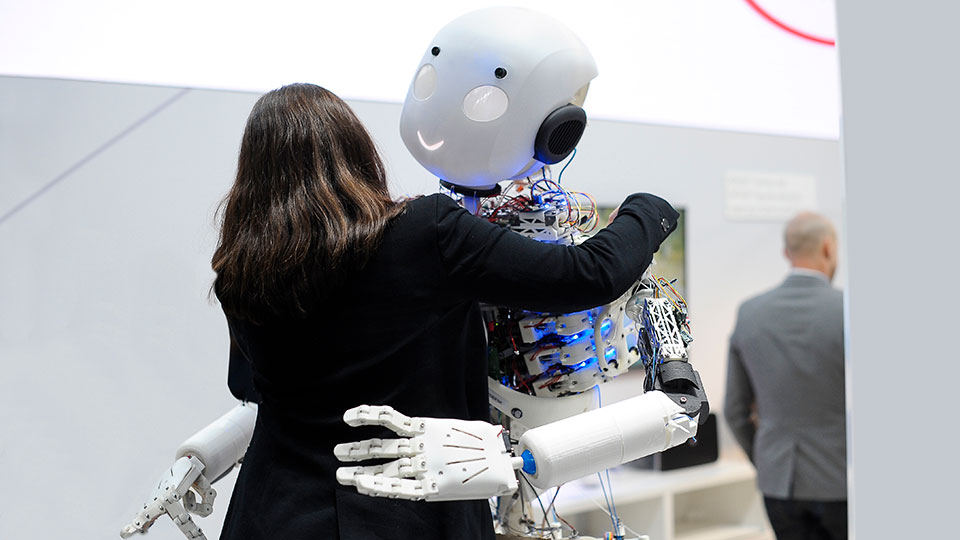
The fourth upgrade here is gesture understanding: recognising human body language alongside speech. People point, nod, wave a robot over, hold up a hand to mean “stop”, or glance toward the object they mean. Often the gesture carries the meaning that the words leave out — “put it over there” is meaningless without the pointing hand.
Teaching a robot to read gestures is harder than it sounds, because the same gesture can mean different things in different contexts, and because gestures happen fast and overlap with speech. It treats gestures as part of the same understanding problem as language, not as a separate trick. For anyone who has ever tried to direct a voice assistant with only their voice and felt the frustration, the appeal is obvious: a robot that watches as well as listens is simply easier to work with.
5. Ludi 0.2 Movement: Smoother, More Flexible Motion
The fifth upgrade here is flexible physical movement in supported environments. This is the least glamorous item on the list and one of the most important. A robot that understands you perfectly but moves jerkily, freezes when something unexpected happens, or cannot adjust its path when you step into its way will still feel unsafe and unhelpful. Smoother movement is also a safety issue: a robot sharing space with people must be able to slow down, reroute and recover gracefully, not just follow a pre-planned path at full speed.
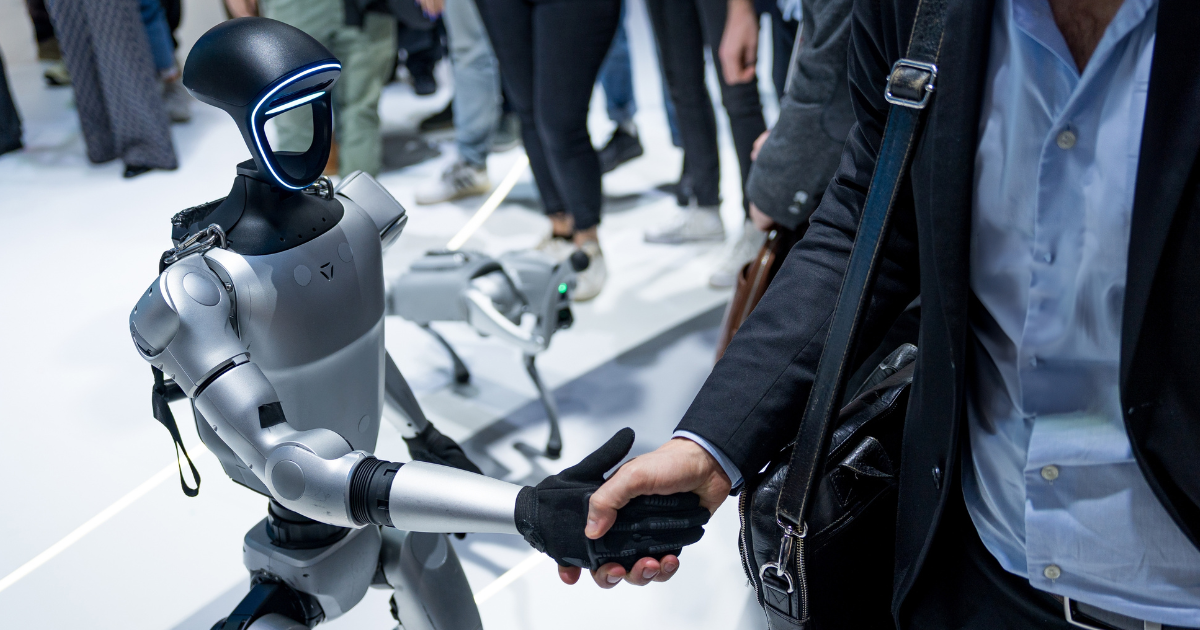
Photographs from Ludo Robotics’ Palo Alto lab show a Unitree G1 humanoid robot demonstrating object manipulation with Ludi 0.2. The G1 is a real, commercially available humanoid platform, and reporting puts its price at roughly $16,000 — but that is the price of the hardware, not of it, which is not for sale. The distinction matters, because headlines that imply you can buy a Ludi-powered robot today are misleading.

How Ludi 0.2 Works Under the Hood
Here, honesty requires a careful distinction. The detailed architecture that is publicly documented belongs to Ludi 0.1, described in the paper “Ludi 0.1: An Agentic System for Socially Intelligent Robots” and on Ludo Robotics’ own research page. The new announcement does not publish a new architecture diagram, new model sizes or new benchmark tables.
What follows is therefore the documented 0.1 design, which reporting indicates it builds on, plus the specific improvements Ludo lists for 0.2. Do not let any article tell you otherwise: if someone quotes precise model sizes or scores, ask where they came from, because the announcement does not contain them.
At the centre of Ludi 0.1 sits what Ludo calls the Ludi Brain: a fine-tuned vision-language model that provides perception, reasoning, dialogue and tool selection. Around it sit specialised capabilities for navigation and manipulation, plus speech components and a control harness that ties everything together. The idea is an agentic system — a coordinator that understands the situation and calls on the right specialist tool for each part of the job — rather than one giant model trying to do everything itself.
Reporting on the 0.1 system adds useful detail, attributed here rather than presented as Ludo’s own announcement. According to that reporting, the coordinating model is Qwen3.5-4B, Alibaba’s open vision-language model with 4 billion parameters, fine-tuned on 14,432 synthetic multi-turn conversations full of ambiguous requests, corrections and interruptions — exactly the messy dialogue patterns that break scripted robots.
Physical tasks such as picking up objects are handled by Nvidia’s GR00T robotics foundation model, fine-tuned by Ludo. In the 0.1 experiments, the system ran on a Unitree G1 humanoid with a 360-degree camera on its head and a GPU workstation on site. That on-site computer is a reminder of how early this technology still is: the intelligence is not yet running entirely inside the robot’s own body.
Why does that architecture matter for understanding it? Because it explains both the promise and the limits. A coordinator-plus-specialists design is flexible: each piece can improve independently, and the coordinator can be retrained on new kinds of conversation without rebuilding the whole robot.
It is also fragile in a specific way. If the coordinator misunderstands the intent, every specialist underneath it executes the wrong plan perfectly. That is why it puts so much weight on intent, memory and gestures — the coordinator’s understanding is the bottleneck for the entire system.
Ludi 0.1 vs Ludi 0.2 vs Ludi 1.0
| Version | Status | What it is | What to remember |
|---|---|---|---|
| Ludi 0.1 | Released August 2026; paper public | Agentic system combining a vision-language model for reasoning and dialogue with specialised navigation and manipulation | The documented architecture; its simulation scores do not describe Ludi 0.2 |
| Ludi 0.2 | Presented 30 October 2026; announced 2 November 2026 | Upgraded social intelligence, memory and reasoning, coordination, gesture understanding and movement | No benchmarks, price or public access published for this version |
| Ludi 1.0 | In development; no confirmed date in the 0.2 announcement | A next-generation foundation model aiming to integrate perception, dialogue and physical action in one unified system | The long-term goal; not a product you can waitlist for today |
The jump from 0.2 to the planned Ludi 1.0 is the most ambitious part of the roadmap. Where 0.1 and 0.2 stitch together a coordinator model and specialist tools, Ludi 1.0 aims to fold perception, dialogue and physical action into a single foundation model. In plain language, that means one system that sees, talks and acts without handing off between separate brains. Ludo says the current agent’s interaction traces — records of how people and robots actually worked together — will help train that unified model.
Ludo’s own research page for 0.1 said it planned to release Ludi 1.0 later this year, but the 0.2 announcement itself gives no delivery date, and independent analysis of the announcement notes that Ludo plans to stay in research through 2026 and choose a first real-world deployment setting in 2027. Treat any firmer date you see elsewhere as speculation until Ludo confirms it.
From PUBG to Robots: Why a Games Company Is Building This
Krafton’s move into robotics looks odd until you think about what games actually demand from artificial intelligence. In a game like PUBG: Battlegrounds, AI characters must react to human players who do unpredictable things, change their minds, cooperate one minute and compete the next, and communicate through a mix of speech, text and movement. A game AI that only follows a script is quickly exposed as fake. Krafton has spent nearly two decades building systems that must feel responsive to real people in real time.
Ludo Robotics is the attempt to carry that lesson into the physical world.
The company was established by Krafton as a robotics research subsidiary, headquartered in Palo Alto, California, with an additional research and development lab in Seoul. Its chief executive is Krafton CEO CH Kim, who also runs Ludo. The technical leadership is Krafton chief AI officer Kangwook Lee, who serves as Ludo’s chief technology officer and presented it at Berkeley, alongside chief scientist Rob Nowak, a University of Wisconsin–Madison professor, and human-robot interaction researcher Yea-Seul Kim. That mix — games industry leadership, academic robotics research and human-robot interaction science — is deliberate. Social intelligence is not a problem you solve with a bigger language model alone; it needs people who study how humans actually behave.
Ludo formally opened its Palo Alto research lab alongside the announcement, positioning the company in the heart of Silicon Valley’s robotics scene, within reach of Berkeley, Stanford and the Bay Area’s humanoid robot ecosystem. For US readers, this is not a distant overseas project: the research is happening in California, presented at a California university, and aimed at robots that would eventually work in American homes and workplaces.
What Ludi 0.2 Could Mean in Everyday Life
Because it is research rather than a product, the honest way to talk about its uses is in terms of the problems it is designed to solve, illustrated with examples rather than promised features. The following scenarios are illustrative — they show what the five capability areas would look like in practice, not transcripts of actual demonstrations.
- At home: You ask a helper robot to “sort out the living room before guests arrive.” It checks what “sort out” means in your household, asks about the pile of books you actually want kept, notices your gesture toward the coffee table, and adjusts when you change your mind and say the guests are coming tomorrow instead. The value is not the tidying; it is the robot not needing a perfect, complete instruction to start helping.
- At work: A robot assistant in a workshop or clinic fetches tools or supplies while a person is mid-task, responding to a nod or a pointed finger rather than demanding that the person stop work to type a command. When the person corrects it — “no, the smaller one” — it treats that as feedback on the same task, not as a fresh start.
- In care settings: An assistant robot for an older adult must be especially careful with intent. A vague request, a change of mind or a gesture may carry more meaning than the words, and a mistake could be distressing rather than merely annoying. Social intelligence, memory and gentle, predictable movement matter most exactly where the user is most vulnerable.
- In public spaces: A robot giving directions or helping in a store must read social cues: is this person in a hurry, confused, or just browsing? Should it approach, wait, or back off? A robot that cannot read those signals will be ignored at best and unwelcome at worst.
None of this is available to buy, and none of it should be read as a claim that it can already do these jobs reliably. Krafton CEO CH Kim told Fast Company, as summarised by independent analysis of the announcement, that Ludi is a research demonstration not yet reliable enough for everyday use. That candour is refreshing, and it is the single most important sentence in the whole story for anyone tempted to over-invest in the hype.
What Ludi 0.2 Cannot Do Yet — and the Questions It Raises
A good guide should be as clear about limits as about promise. Here is what is known, what is unknown, and what should concern any thoughtful reader.
No public evidence of performance. It arrives without benchmark scores, comparison figures against Ludi 0.1, or independent test results. Scores sometimes quoted in coverage come from Ludi 0.1 simulations, not from real homes or workplaces, and not from the new version. Until Ludo publishes evaluations of it itself, the five upgrades are best understood as research directions with demonstration backing, not proven gains.
No product, price or timeline you can plan around. There is no consumer robot, no developer API, no waitlist and no price for it. The hardware seen in demonstrations, such as the Unitree G1, is a separate purchase with its own price, and buying one does not give you the system. Anyone selling “Ludi-powered” robots or courses today is selling something else.
Privacy is the elephant in the room. A robot that reads intent, gestures and social cues must watch and listen closely, and must remember what happened earlier in the conversation. In a home, that means cameras and microphones in private spaces, plus memory of who said what.
Ludo has not published details of how it handles that data, how long it is kept, or where it is processed. Those answers will matter more than any capability demo before such robots enter real homes, and US readers should expect them to be asked loudly as the technology approaches deployment.
Safety and trust must be earned slowly. A robot that acts on inferred intent can also infer wrongly. The difference between “helpfully anticipating” and “alarmingly assuming” is thin, especially around children, older adults or people with disabilities. The industry’s gradual path — research through 2026, a first deployment setting chosen in 2027, per independent analysis — reflects that reality. Slow is a feature here, not a failure.
The name confusion is real. Some Korean outlets render the system as “Rudy 0.2” while the official English announcement and Ludo’s own research pages use “Ludi 0.2”. They are the same system; the difference is transliteration, not a second product. If you search for news, try both spellings, but use it as the canonical name.
How Ludi 0.2 Fits the Wider Robot Race
It arrives in the middle of a crowded race to build robots that work with people rather than apart from them. The field splits roughly into two camps. One camp bets on a single giant foundation model for robots, trained end to end on vision, language and action. The other camp, where Ludi 0.1 and 0.2 sit today, bets on an agentic system: a smart coordinator calling on specialist tools. Ludi 1.0 is Ludo’s plan to cross from the second camp to the first, unifying perception, dialogue and action in one model.
That roadmap is also a useful lens for reading other robot news. When a company announces a humanoid robot, ask three questions that this story teaches you to ask.
First, is this a product or a research demonstration? Second, are the numbers quoted for this version, or borrowed from an older system or a simulation? Third, does the robot understand people, or does it merely move well while a human does all the understanding? A robot that scores highly on the third question is rarer, and more valuable, than one that merely walks impressively.
For readers of this site, it also connects to the broader AI story of 2026. The same year has brought edge AI models that verify factory deliveries without the cloud, agentic analytics platforms that act on business data, and open-weight decision models that run on a laptop. The common thread is AI moving out of the chat window and into places where it must deal with the physical world, incomplete instructions and real consequences. It is the most human-facing version of that shift: AI that must read a person, not just a prompt.
What to Watch Next for Ludi 0.2
- Ludi 1.0 news: Any confirmed date, technical report or demonstration of the unified foundation model would be the biggest single signal that this research is maturing toward real use.
- A first deployment setting in 2027: Independent analysis suggests Ludo will choose where to deploy first during 2027. The choice — home, workplace, care or public space — will say a lot about how confident the team is.
- Published evaluations of the system itself: Benchmarks, comparisons with Ludi 0.1, or independent testing would turn the five upgrades from described directions into measured progress.
- Privacy and data answers: How the system handles video, audio and memory in real homes, and whether processing stays on site, will shape regulation and public trust.
- Partnerships or hardware news: A named robot platform shipping with Ludi inside, or a developer programme, would mark the move from research demo toward product.

The Verdict: Exciting Research, Not Something to Buy
It is genuinely interesting, and genuinely easy to overhype. The interesting part is the problem it chooses: robots fail around people mostly because they misunderstand people, and Ludo Robotics is attacking that problem directly with social intelligence, memory, coordination, gestures and smoother movement. The backing — a games company that understands unpredictable humans, academic researchers who study interaction, and a lab in Palo Alto — gives the project credibility that a press release alone could not.
The overhype to resist is everything else: treating a symposium presentation as a product launch, quoting Ludi 0.1 simulation scores as if they described Ludi 0.2, or assuming a robot in a lab photograph is something you can order. Krafton’s own framing is admirably restrained, and readers should hold coverage to the same standard. Watch Ludi 1.0, watch for real evaluations, and watch for the first deployment setting in 2027. Until then, it is best understood as a clear statement of where socially intelligent robots need to go — and a reminder of how far they still have to travel.
Frequently Asked Questions About Ludi 0.2
Can I buy a robot running Ludi 0.2?
No. It is a research system with no public product, API, download or price. The humanoid hardware seen in demonstrations is sold separately and does not include Ludi 0.2.
Is Ludi 0.2 the same as Rudy 0.2?
Yes. Some Korean coverage renders the name as Rudy 0.2, while the official English announcement uses that name. They refer to the same system from Ludo Robotics.
How is Ludi 0.2 different from a chatbot?
A chatbot only produces text. It is designed for an embodied robot: it must perceive a physical room, understand speech and gestures, remember the task, coordinate walking and handling objects, and keep interacting with a person while it acts.
What changed from Ludi 0.1 to Ludi 0.2?
Ludo lists five improved areas: social intelligence, memory and reasoning across changing tasks, coordination of movement and manipulation with interaction, gesture understanding, and smoother physical movement. No benchmark comparison between the versions has been published.
When will Ludi 1.0 arrive?
There is no confirmed date in the announcement. Ludi 1.0 is described as a next-generation foundation model in development, and independent analysis suggests Ludo plans to choose a first deployment setting in 2027.
Who is behind Ludi 0.2?
Ludo Robotics, the robotics subsidiary of Krafton, the company behind PUBG: Battlegrounds. It is headquartered in Palo Alto, California, with a lab in Seoul, led by Krafton chief AI officer Kangwook Lee as chief technology officer.
Further Reading
For the primary sources behind this guide, see Ludo Robotics’ own research page for Ludi 0.1 and the AJP report on the Ludi 0.2 unveiling. For context on the site’s wider AI coverage, see our guides to LingLong Insight 1.0 edge AI, Machine-Readable Government and Royally WordPress AI agents.