
Anthropic is now a public company. On Wednesday 18 November 2026, the company behind Claude priced its shares at $83 apiece, and on Thursday 19 November its stock begins trading on the Nasdaq under the ticker ANT. The Anthropic IPO debut is the largest stock market listing ever recorded: $81.3 billion raised in the main offering, comfortably ahead of SpaceX’s $75 billion debut in June. Add the $26 billion private placement agreed alongside it, and the total deal reaches about $107.3 billion.
For a company that most people know only through a chatbot, those numbers are startling. Anthropic was founded in 2021 by researchers who left OpenAI, and it spent its first years as a research lab with a safety-first reputation. Five years later, the Anthropic IPO debut arrives on the public market valued at roughly $1.5 trillion, with revenue growing faster than almost any private company in history — and a future spending bill of about $900 billion, almost all of it for the computing power its models need.
This guide explains what actually happened on debut day, how the $83 price was set, what the money is for, and — the part that matters most to readers of this site — what the Anthropic IPO debut means for the millions of people who use Claude every day. One thing to say up front: this is not investment advice. Share prices move, the first trade had not happened when this article was published, and nothing here is a recommendation to buy or sell.
What This Guide Covers
- What Happened on Anthropic IPO Debut Day
- How the Anthropic IPO Debut Price Was Set
- What the Money Is For: A $900 Billion Compute Bill
- The Business Behind the Anthropic IPO Debut
- What the Anthropic IPO Debut Means for Claude Users
- What to Watch When ANT Starts Trading
- Anthropic IPO Debut vs the Biggest Listings Ever
- The Risks Investors Are Watching
- Anthropic IPO Debut: Frequently Asked Questions
What Happened on Anthropic IPO Debut Day
The headline facts of the Anthropic IPO debut are now confirmed, and they are worth stating plainly before any analysis gets in the way. Anthropic priced its initial public offering at $83 per Class A share on Wednesday 18 November, above the $70 to $78 range it had set a week earlier. The offering was also enlarged: instead of the 825 million shares in the original plan, the company sold about 980 million shares, an increase of roughly 19 percent. At $83, that raises about $81.3 billion — the biggest amount ever raised in a single stock market debut.
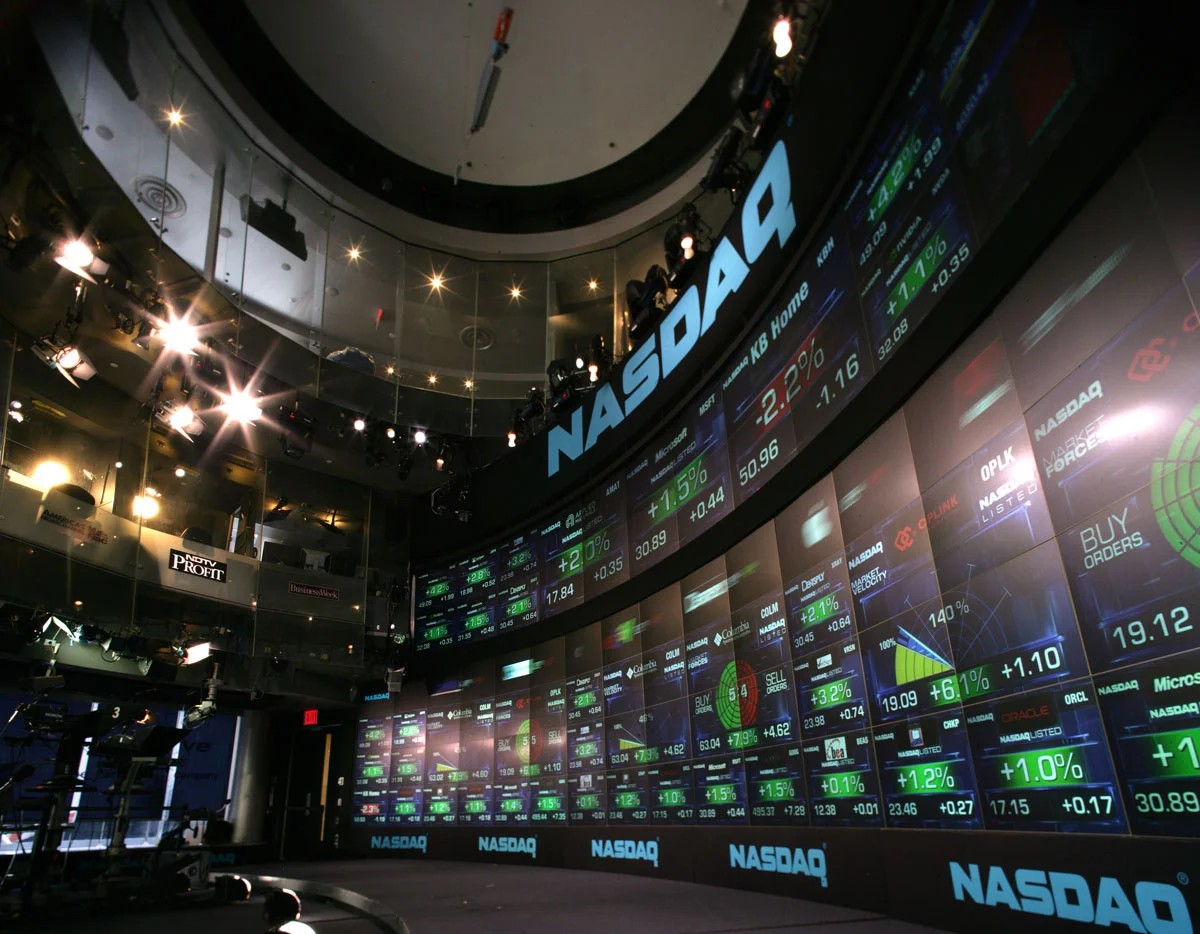
The shares are scheduled to begin trading on Thursday 19 November on the Nasdaq Global Select Market under the ticker ANT, with the offering expected to close the following day, Friday 20 November, subject to the usual conditions. Of the 980 million shares, Anthropic itself is selling about 956.4 million, with existing shareholders selling the remainder. The underwriters also hold a 30-day option to buy up to another 147 million shares, which could lift the total raised further still.
Alongside the public sale, Anthropic agreed a separate $26 billion private placement at the same $83 price. The buyers are the companies that supply the chips and cloud capacity Anthropic depends on: Nvidia, Google, Microsoft, AMD, Broadcom, Micron and TSMC. They are buying non-voting Class N shares. Add the two pieces together and the whole transaction is worth about $107.3 billion — an extraordinary sum for a company that has never before sold a single share to the public.
The valuation depends, as valuations always do, on which shares you count. On a fully diluted basis — counting stock options and restricted stock as well as shares already issued — the $83 price values Anthropic at about $1.5 trillion. On shares actually outstanding, the figure is about $1.1 trillion. Both numbers are reported by Reuters, and the gap between them is a useful reminder: when you see a single valuation figure quoted for the Anthropic IPO debut, always check which basis it uses, because the two differ by roughly $400 billion.
One more detail from the deal stands out. About 20 percent of the shares were allocated to retail investors — ordinary people buying through their brokers — roughly double or even four times the 5 to 10 percent that is usual in a large offering. That is a deliberate choice, and it tells you something about how Anthropic wants the Anthropic IPO debut to be seen: not as a deal done quietly between institutions, but as a public event that anyone with a brokerage account can take part in.
How the Anthropic IPO Debut Price Was Set
A share price is not handed down from above; it is discovered. In the weeks before the Anthropic IPO debut, that discovery process played out in public, and it did not go smoothly for the company at first.
Back in September, the numbers being discussed were far higher. Reports at the time put the valuation under discussion at roughly $2 trillion. Then the market turned. AI stocks sold off through October and into November, the cost of borrowing rose, politicians in the United States began questioning new data centre projects, and Nvidia — the company whose chips power the whole AI boom — went through a sharp fall of its own. Investors who had been willing to pay almost any price for AI exposure started asking harder questions, and Anthropic’s bankers listened.
On 10 November the company filed an amended prospectus setting a price range of $70 to $78 per share for 825 million shares. At the top of that range the deal would have raised about $64.4 billion and valued the company at roughly $1.4 trillion fully diluted — already about $600 billion below the September figure. It was, in effect, a concession: Anthropic accepted a lower valuation to get the deal done in a nervous market.
Then demand did what demand does. The order book was covered on the first day of the roadshow, 11 November, and reporting at the time said orders ran to several times the shares on offer. With that kind of appetite, the bankers did two things: they increased the number of shares for sale by about 19 percent, to 980 million, and they priced above the top of the range, at $83. The final price handed back roughly $100 billion of the valuation that had been taken away in September, taking the fully diluted figure to about $1.5 trillion.
Anthropic’s chief executive, Dario Amodei, addressed the valuation question directly on 13 November, in a public conversation with JPMorgan Chase chief executive Jamie Dimon. He said the company would rather deliver more than it promised — a careful way of saying that a lower starting valuation leaves room to grow into it, rather than promising the moon and disappointing. Whether the market agrees will be decided by the first weeks of trading, not by the roadshow.
Goldman Sachs and Morgan Stanley led the offering, heading a 22-bank underwriting syndicate. That is a large syndicate even by the standards of mega-deals, and it reflects the sheer scale of the transaction: $81.3 billion is more money than most countries raise in a year of bond sales, and it had to be placed with investors all over the world in a matter of days.
It is worth remembering how unusual this pricing story is. Most companies that go public price inside their range. The Anthropic IPO debut priced above it, after Anthropic first cut its own valuation expectations by hundreds of billions of dollars. Both facts are true at the same time, and both matter: the company met a sceptical market halfway, and the market then told it the discount had been too generous.
What the Money Is For: A $900 Billion Compute Bill
The obvious question about an $81.3 billion fundraising is what a company does with that much money. Anthropic’s own filings give a blunt answer: almost all of it will go on computing power.
The amended registration statement puts Anthropic’s committed spending at about $900.9 billion, substantially all of it for compute and infrastructure, with roughly $70.7 billion falling due in the twelve months after 30 September 2026. Those are not vague aspirations. Committed spending means contracts already signed or effectively unavoidable: data centre capacity booked, chips ordered, power secured. It is the bill for training the next generations of Claude, and it is roughly eleven times the amount the IPO itself raised.
This is the central tension of the Anthropic IPO debut, and it is the first thing any serious reader should understand. Anthropic is enormously profitable on the measures its bankers prefer to highlight, and at the same time it has promised to spend sums that dwarf its current revenue on infrastructure that may take years to pay for itself. Both halves of that sentence are true, and the investment case for ANT depends on which half you think matters more.
There is a logic to the spending. Frontier AI models are trained on vast clusters of specialised chips, and each new generation needs more computing power than the last. The companies that can afford the biggest clusters can build the most capable models, and the most capable models win the customers. It is an arms race, and Anthropic has now raised the money to stay in it. The $26 billion private placement is part of the same logic: the chipmakers and cloud providers who will supply that computing power are also shareholders now, with a direct financial interest in Anthropic’s success.
The Anthropic IPO Debut’s $26 Billion Side Deal
The private placement deserves a closer look, because it reveals how the AI industry now works. Nvidia, Google, Microsoft, AMD, Broadcom, Micron and TSMC are not merely Anthropic’s suppliers; they are its investors, buying non-voting shares at the same $83 price as everyone else. In the old world, a customer and a supplier kept their distance. In the AI world, the supplier’s chips are the raw material, the customer’s models are the product, and neither side can afford for the other to fail.
For Anthropic, the benefit is obvious: guaranteed access to the chips and cloud capacity it needs, from partners with a stake in its survival. For the chipmakers, the benefit is a locked-in customer for tens of billions of dollars of hardware. For outside investors watching the Anthropic IPO debut, the message is mixed but mostly reassuring: the companies that know Anthropic’s technology best were willing to put $26 billion of their own money into it at the IPO price.
The non-voting structure matters too. These are Class N shares, which carry no vote. The strategic investors get the economics of ownership without a say in how the company is run — a design that keeps control with Anthropic’s existing leadership while still binding its suppliers to its fate.
The Business Behind the Anthropic IPO Debut
Strip away the market drama and the Anthropic IPO debut is a story about a business that grew at a speed rarely seen in corporate history. The filing reports revenue of $33.24 billion for the first nine months of 2026, and an annualised revenue run rate of $81 billion as of 31 October — up $10 billion from 30 September alone. To put that in context, the leaked draft filing from a month earlier showed first-half revenue of $16.3 billion against $1.1 billion a year earlier.
The third quarter alone added about $16.9 billion — almost as much as the whole first half — and it did so while selling a product — access to Claude — that did not exist in its current form three years ago.
The profit picture needs more care, because two different measures tell two different stories. On the adjusted measures the company highlights, the first nine months of 2026 produced adjusted operating income of $4.08 billion and adjusted net income of $5.59 billion. Those figures strip out the accounting effects of convertible notes and other financial instruments. On the standard accounting measure, the same period produced a net loss of $104.04 billion.
Reading the $104 Billion Loss Correctly
A $104 billion loss sounds catastrophic, and it would be if it represented cash walking out of the door. It does not. The loss is driven largely by changes in the fair value of convertible notes, derivatives and other financial instruments — accounting entries that move up and down with the company’s own valuation. As Anthropic became more valuable, the instruments that convert into its shares became more valuable too, and accounting rules record that increase as a loss. It is the kind of number that looks alarming in a headline and means something quite different in a finance textbook.
That does not make the number meaningless. It is real in the sense that it reflects genuine obligations, and it is a reminder that Anthropic’s capital structure is complicated: the company raised enormous sums from private investors using instruments that behave strangely on paper. But it is not evidence that the underlying business is burning $104 billion in cash. The adjusted figures — $4.08 billion of operating income — are the better guide to whether selling Claude subscriptions and API access actually makes money. On that measure, it does.
Two risks disclosed ahead of the Anthropic IPO debut deserve attention. First, customer concentration: the leaked draft filing showed roughly a fifth of revenue coming from just two customers. A business that depends heavily on a small number of large accounts is vulnerable if one of them leaves or negotiates hard. Second, the compute bill described above. Anthropic’s revenue is growing fast, but its committed spending is growing faster, and the gap between the two has to be funded from somewhere. The IPO is that funding — for now.
None of this is unusual for a frontier AI company in 2026. Every major lab faces the same equation: enormous revenue growth, enormous infrastructure costs, and a race to stay ahead. What makes Anthropic different is that it is the first of the frontier labs to let the public market judge that equation directly.
OpenAI remains private. Google and Microsoft are vast conglomerates in which AI is one division among many. Anthropic is, as several reports noted this week, the first major frontier AI model developer to go public as a pure play on the technology itself. That is why the Anthropic IPO debut is being treated as a test of investor appetite for the whole AI trade, not just for one company.
What the Anthropic IPO Debut Means for Claude Users
For the millions of people who use Claude — to write, to code, to plan, to study — the most important question about the Anthropic IPO debut is also the simplest: does anything change for me? The honest answer, at least for now, is no. A listing changes who owns a company, not what its product does on a Tuesday morning. Claude’s plans, prices and features are set by the company’s product team, not by its share price, and nothing in the IPO filings suggests an immediate change to any of them.
That said, there are three ways the listing could matter to users over time, and they are worth knowing about.
First, scrutiny. A public company reports its results every three months, answers questions from analysts, and faces shareholders who want growth. That discipline can be good for users: it pushes a company to be honest about what works and to fix what does not. It can also push in the other direction, towards price rises and cost-cutting, when growth slows. Anthropic’s current consumer prices are $20 a month for Pro ($17 on the annual plan), $100 for Max and $200 for Ultra. Watch those numbers over the next year; if they move, the Anthropic IPO debut will be part of the reason why.
Second, stability. The $81.3 billion raised in the Anthropic IPO debut, plus the $26 billion private placement, gives Anthropic a war chest that removes any near-term doubt about whether it can afford to keep its services running and keep improving them. Users who worried — reasonably, given the $900 billion spending commitment — about whether the company could pay its bills can relax, at least for now. A listed company with $107 billion of fresh capital is not going anywhere.
Third, trust. Anthropic built its reputation on safety: it is a Delaware public benefit corporation, which means its charter formally obliges it to consider the public interest alongside shareholder returns, and it has published more about its safety practices than most of its rivals.
Going public puts that reputation to a new test, because shareholders can sue, activists can buy shares, and the pressure to maximise returns is now formal and constant. The company’s structure — including the non-voting shares sold to its suppliers — is designed to protect its mission, but structures are tested by events, not by intentions. Users who chose Claude partly because of its safety stance should watch how that balance holds over the next few years.

One practical note for existing users: Anthropic gave every Pro, Max, Ultra and Team user one free full reset of their usage limits this month, usable any time before 10 December 2026 at 2:00 p.m. Pacific. If you have not claimed yours yet, our guide to the Claude free usage reset explains exactly how to do it. The reset is unrelated to the IPO, but the timing is a useful reminder that the company is thinking hard about keeping its paying users happy in a week when its attention is elsewhere.
And a word on the product itself: the company behind Claude has been shipping fast. In the last few days alone it has rolled out new capabilities for its office tools, and its models continue to lead several independent benchmarks. The IPO does not change that pace, but it does raise the stakes: every future release will now be judged not only by users, but by a market that has just paid $1.5 trillion for the privilege of watching.
What to Watch When ANT Starts Trading
The Anthropic IPO debut is not over when the market opens; in an important sense, it is only just beginning. The $83 price was set by Anthropic and its bankers. The price at which ANT actually trades will be set by the market, and the two can differ by a lot. At the time this article was published, the first trade had not yet happened — the New York market opens at 9:30 a.m. Eastern Time, which is 7:30 p.m. in Pakistan — so no first-day price can be reported as fact yet. What can be reported is what the market was signalling beforehand.
That signal pointed firmly upwards. Over-the-counter trading in Anthropic shares was reported at around $98 shortly before the debut, roughly 18 percent above the $83 offer price. A perpetual contract tracking the stock on the crypto venue Hyperliquid traded near $100.70 on Thursday morning, and an earlier contract on Pepperstone pricing the opening level had traded around $115 in late October. Nasdaq’s private market had shown an indicative price of $88.40 on 5 November. These are not predictions from analysts; they are prices at which real money was changing hands, and they all point the same way: investors expected ANT to open well above $83.
Whether that expectation survives contact with the real market is the first question of the day. Big IPOs often open sharply higher and then drift back as early buyers take profits — a pattern known as the first-day pop followed by the fade.
SpaceX, the previous record holder, opened at $150 against a $135 offer price in June, a gain of about 11 percent on the day. If ANT opens near the $98 indicated by over-the-counter trading, that would be a gain of about 18 percent, and a market value closer to $1.8 trillion on a fully diluted basis. If it opens flat, the market will read that as a warning about the whole AI trade, not just about Anthropic.
The second thing to watch is volume. The Anthropic IPO debut offering of $81.3 billion, with a 20 percent retail allocation, means an unusually large number of small investors will be trying to buy on day one. Heavy volume with a stable price suggests genuine demand. Heavy volume with wild swings suggests speculation. Low volume would be the most surprising outcome of all.
The third is what happens in the days after. The underwriters’ 30-day option to buy 147 million more shares acts as a stabiliser: if the price falls, the banks can buy shares to support it; if it rises, they can exercise the option and sell into the demand. But that mechanism only lasts a month. After that, ANT will live or die on Anthropic’s results, and the first quarterly report as a public company — expected early in 2027 — will be the first real test of whether the $1.5 trillion valuation can be justified by the numbers.
Anthropic IPO Debut vs the Biggest Listings Ever
To understand the scale of the Anthropic IPO debut, it helps to see it next to the listings it has overtaken. The table below uses the figures reported this week, with the usual warning that older deals are quoted in the dollars of their day.
| Company | Year | Amount raised | Valuation at listing |
|---|---|---|---|
| Anthropic | 2026 | $81.3 billion | ~$1.5 trillion (fully diluted) |
| SpaceX | 2026 | ~$75 billion | ~$1.77 trillion |
| Saudi Aramco | 2019 | $25.6 billion | ~$1.7 trillion |
| Alibaba | 2014 | $25 billion | ~$168 billion |
| SoftBank (mobile unit) | 2018 | $23.5 billion | ~$66 billion |
| Visa | 2008 | $17.9 billion | ~$45 billion |
The comparison the Anthropic IPO debut invites is striking in two ways. First, the sheer size: Anthropic raised more than three times as much as Saudi Aramco, the previous long-standing record holder, and more than the next two largest technology listings combined. Second, the speed: SpaceX set its record only in June of this year, and Anthropic has already beaten it by more than $6 billion. Two record-breaking listings in five months, both from companies that barely existed as public entities a decade ago, says something about where capital is flowing in 2026 — and it is flowing, overwhelmingly, towards artificial intelligence and space.
It is also worth noting what Anthropic did not do. Unlike many technology listings of the past decade, this was not a small float designed to create scarcity: 980 million shares is a huge number of shares, and the 20 percent retail allocation is unusually generous. The company wanted a liquid, widely held stock from day one. That choice makes a first-day squeeze less likely, but it also means there is no artificial shortage to prop the price up. What ANT is worth will be decided by buyers and sellers in the open, from the very first trade.
The Risks Investors Are Watching
No honest account of the Anthropic IPO debut can stop at the celebration. The same filings that disclose the record revenue also disclose risks that are unusually large, and they are the reason the valuation fell from $2 trillion to $1.5 trillion before the deal was even priced.
The compute bill comes first. Committed spending of about $900.9 billion is a staggering obligation for a company with $33.24 billion of revenue in nine months. Even if revenue keeps doubling, the arithmetic is demanding: Anthropic must keep growing at extraordinary rates for years simply to cover what it has already promised to spend. If growth slows — because the market saturates, because a rival builds a better model, or because customers decide that last year’s model is good enough — the spending does not slow with it. Contracts for data centres and chips are hard to cancel.
Competition is second. Anthropic is the first frontier lab to go public, but it will not be the last, and its rivals are not standing still. OpenAI remains the largest player by users, Google has the deepest pockets and its own chips, and a wave of open-weight models — including Alibaba’s Qwen family, which we covered in our Qwen4-Max preview guide — is steadily closing the capability gap at a fraction of the price. A $1.5 trillion valuation assumes Anthropic stays at or near the frontier. That is a reasonable assumption today, but it is an assumption, not a fact.
Customer concentration is third. Roughly a fifth of revenue comes from just two customers, according to the leaked draft filing. Losing one of them, or watching one of them build its own models in-house, would leave a hole that would take many smaller customers to fill.
Politics is fourth. The AI stock sell-off that forced Anthropic to cut its valuation was driven partly by political opposition to new data centres and by rising borrowing costs. Those pressures have not gone away. Data centres need power, water and planning permission, and all three are becoming harder to secure in the United States. A company that has committed $900 billion to infrastructure is exposed to every one of those debates.
Finally, there is the valuation itself. At roughly 16 times its annualised revenue run rate, the Anthropic IPO debut is priced for perfection. That multiple can be justified if revenue keeps doubling; it cannot be justified if growth slows to merely fast. The market understood this in September, when it pushed the valuation down from $2 trillion. The $83 price is a compromise between a company that believes its own growth story and a market that wants proof. The proof will come, quarter by quarter, in public.
Anthropic IPO Debut: Frequently Asked Questions
What was the Anthropic IPO debut price?
Anthropic priced its shares at $83 per Class A share on Wednesday 18 November 2026, above its $70 to $78 guided range. The offering raised about $81.3 billion, the largest IPO in history.
When did ANT start trading, and on which exchange?
Anthropic’s shares began trading on Thursday 19 November 2026 on the Nasdaq Global Select Market under the ticker ANT. The offering is expected to close on Friday 20 November.
How much is Anthropic worth after the IPO?
After the Anthropic IPO debut, about $1.5 trillion on a fully diluted basis (counting options and restricted stock), or about $1.1 trillion on shares actually outstanding. Always check which basis a quoted valuation uses, because the two differ by roughly $400 billion.
How big is the Anthropic IPO compared with SpaceX?
Bigger. Anthropic raised $81.3 billion, beating SpaceX’s June 2026 debut of about $75 billion. Including the $26 billion private placement, the total Anthropic deal is about $107.3 billion.
Does the IPO change Claude’s prices or plans?
Not immediately after the Anthropic IPO debut. Claude Pro remains $20 a month ($17 on the annual plan), Max $100 and Ultra $200. A public listing brings quarterly reporting and shareholder pressure, so prices are worth watching over the next year, but nothing has changed on debut day. For background on how the IPO was put together, see our earlier pieces on the expected Anthropic IPO filing and the S-1 filing itself.
How can I buy ANT shares?
Through any brokerage account that offers access to US stocks, once trading has begun. About 20 percent of the offering was allocated to retail investors, an unusually high share. This article is not investment advice: share prices can fall as well as rise, and a first-day price is no guide to long-term value.
Why did Anthropic go public at all?
To fund its computing bill — that is what the Anthropic IPO debut exists for. The company has committed about $900.9 billion to compute and infrastructure, and the $81.3 billion raised plus the $26 billion private placement gives it the capital to keep building the data centres and buying the chips its next models will need. Going public also gives early investors and employees a way to sell their shares.
The Bottom Line
The Anthropic IPO debut is a hinge moment, and not only for Anthropic. A research lab founded in 2021 has raised more money in a single day than any company in the history of the stock market, and it has done so by selling the public a share in the future of artificial intelligence itself. The $83 price, the $81.3 billion raised, the $1.5 trillion valuation and the $900 billion spending commitment are all numbers that would have sounded absurd five years ago. Today they are facts, printed in a prospectus and confirmed by the market.
Whether they turn out to be wise will be decided over the next few years, in quarterly results, in benchmark tables, and in the ordinary experience of the people who use Claude to do their work. The debut is the beginning of that judgement, not the end of it. What is certain is that, after the Anthropic IPO debut, the most important AI company in the world is now also a public company — and from today, everyone gets to watch what happens next.
This article is for information only and is not investment advice. Figures are taken from Anthropic’s filings and from reporting by Reuters and other outlets on 19 November 2026; the first trading price had not been set when this article was published, and market prices change continuously.