
The Anthropic IPO is the most closely watched stock market debut in years, and it may be only days away. Anthropic, the San Francisco company behind the Claude family of AI models, has been preparing to go public for months, and reports say its prospectus could appear on the US Securities and Exchange Commission’s public database at any moment. When it does, everyday investors will finally get their first official look inside one of the fastest-growing companies in the history of technology — a company that reportedly pulled in $16.3 billion of revenue in the first half of 2026 alone.
But here is the part that matters most for accuracy: as of October 24, 2026, no public Anthropic S-1 has actually appeared. A check of the SEC’s EDGAR company search on October 24 found no matching filing. What exists today is a confidential draft, which Anthropic itself confirmed it submitted on June 1, 2026. Everything the public knows about the numbers inside that draft comes from reporting — principally the Wall Street Journal’s review of the draft prospectus, relayed and extended by Reuters — not from a public document anyone can download and verify. The final figures may change when the real document lands, and this article says so plainly wherever a number comes from a report rather than a filing.
In this guide, I explain the whole story of the Anthropic IPO: what an S-1 filing actually is, why the timing rules point to a filing this week, what the draft numbers reveal about revenue, losses and a compute bill that could reach $750 billion, what going public could mean for the millions of people who use Claude every day, and how ordinary investors can — and cannot — buy in. I have cross-checked the reporting across multiple outlets so you get the facts with honest caveats, not hype.
Table of Contents
- What Is the Anthropic IPO?
- Anthropic IPO Filing Status: Has It Happened Yet?
- Anthropic IPO Timeline: The Dates That Matter
- The Numbers Behind the Anthropic IPO
- The $80.7 Billion Loss, Explained
- The $750 Billion Compute Bill
- Anthropic IPO Valuation: $1.5 Trillion or $2 Trillion?
- What the Anthropic IPO Means for Claude Users
- Can You Buy Anthropic Stock Yet?
- The Risks Investors Are Watching
- Anthropic IPO vs OpenAI: The Race to Go Public
- What Happens Next With the Anthropic IPO
- Anthropic IPO FAQs
- Final Take
What Is the Anthropic IPO?
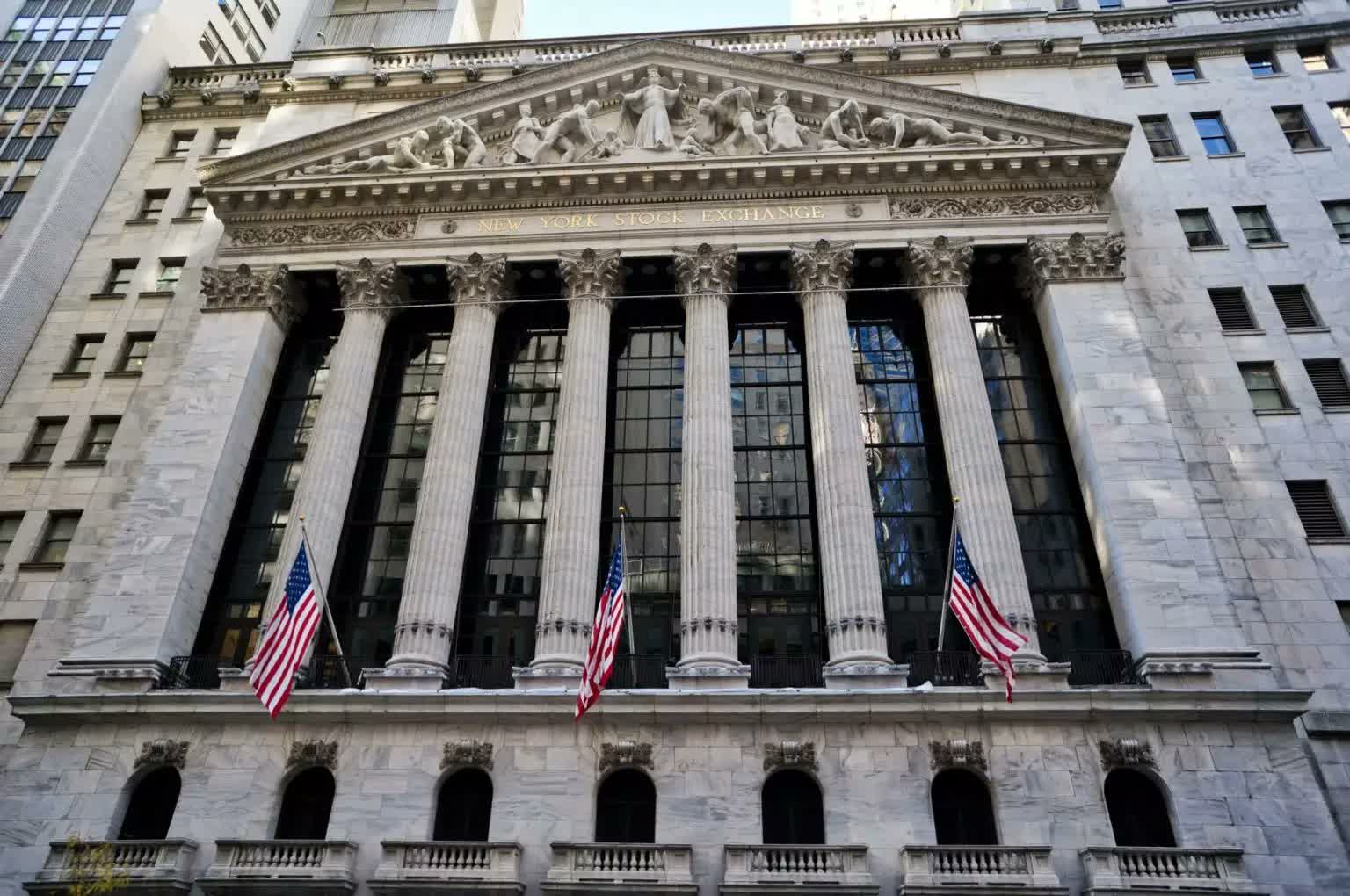
An initial public offering (IPO) is the moment a private company first sells shares to the public on a stock exchange. For Anthropic, that would mean transforming from a privately held startup — funded by venture capital firms and tech giants — into a public company whose shares anyone with a brokerage account can buy and sell. It would also make Anthropic the first pure-play frontier AI lab with a public stock price, a milestone the entire AI industry has been waiting for.
Anthropic was founded in 2021 in San Francisco by siblings Dario Amodei and Daniela Amodei, together with other former OpenAI researchers. Dario Amodei serves as chief executive officer and Daniela Amodei as president. The founding team left OpenAI partly over differences about how to develop AI safely, and Anthropic has built its identity around that safety-first pitch ever since. Its Claude models now power chatbots, coding assistants, customer-service agents and enterprise workflows used by companies around the world — and, according to recent reporting, Claude has been displacing ChatGPT in some enterprise settings.
The Anthropic IPO matters far beyond one company’s shareholders. The Anthropic IPO is widely seen as a test of public-market appetite for the AI boom itself. Investors have grown more nervous in recent weeks about the industry’s enormous spending on data centers and chips, and Anthropic’s reception on the stock market could set the tone for every AI company that follows it. If it succeeds, it validates the idea that frontier AI labs can be profitable public businesses. If it struggles, it could cool the whole sector.

Anthropic IPO Filing Status: Has It Happened Yet?
Short answer: not yet, as of October 24, 2026. Here is the precise state of play, because the distinction between a confidential draft and a public filing is the single most misunderstood part of this story.
On June 1, 2026, Anthropic announced that it had confidentially submitted a draft registration statement — Form S-1 — to the SEC for a proposed IPO. Its notice said the offering would depend on market conditions and other factors, and that the share count and price had not been set. Under SEC rules, a company that files confidentially must make its registration materials public at least 15 calendar days before it begins its formal investor roadshow — the tour where executives pitch the deal to big institutional investors.
That 15-day rule is what drives the Anthropic IPO timetable. Yahoo Finance reported on October 21, citing three people familiar with the plans, that Anthropic is set to publicly file its S-1 as early as Friday, October 23. The reported plan is to start marketing shares during the week of November 9, which would put a listing in mid-November, before Thanksgiving on November 26. A filing in the last week of October fits that schedule exactly — and the window stays open into next week.
Anthropic IPO filing date: when will the S-1 go public?
As of today, no outlet has reported that the public filing has actually landed, and the SEC’s EDGAR database showed no matching Anthropic S-1 on October 24. That does not mean the reports were wrong — “as early as Friday” was always a window, not a promise, and Anthropic has not responded to requests for comment on the timing. Sources have consistently cautioned that dates and plans can change with market conditions.
What to watch for the Anthropic IPO: the moment a public S-1 appears on EDGAR, the countdown becomes real. Until then, every number in this article remains reported rather than filed, and any article claiming the filing has already happened should be treated with suspicion. You can check for yourself on the SEC’s EDGAR company search — that is the only primary source that settles the question.
Anthropic IPO Timeline: The Dates That Matter
The road to the Anthropic IPO has been building all year. Here are the key milestones, with what is confirmed and what is reported:
- 2021: Anthropic founded in San Francisco by Dario Amodei, Daniela Amodei and fellow former OpenAI researchers.
- June 1, 2026: Anthropic announces it has confidentially submitted a draft S-1 to the SEC. Share count and price not set. (Company-confirmed.)
- May 2026: Anthropic closes a $65 billion funding round valuing the company at $965 billion privately — surpassing rival OpenAI’s reported $852 billion valuation for the first time.
- September 2026: Reuters reports Anthropic is seeking to raise as much as $100 billion at about a $2 trillion valuation, and that Nvidia is considering up to $10 billion as an anchor investor. Bloomberg reports Nasdaq as the listing venue.
- October 1, 2026: Bloomberg reports formal marketing could begin the week of November 9, with trading before Thanksgiving.
- October 20, 2026: The Wall Street Journal reports the draft S-1’s headline numbers: $16.3 billion in first-half revenue and an $80.7 billion net loss.
- October 21, 2026: Yahoo Finance reports the public filing could come as early as Friday, October 23.
- October 24, 2026: EDGAR search shows no public Anthropic S-1 yet. The filing window remains open.
- Week of November 9, 2026 (reported): Investor roadshow begins, if the filing lands in time.
- Mid-November 2026 (reported): Shares could begin trading, before Thanksgiving on November 26.
Morgan Stanley, Goldman Sachs and JPMorgan have been lined up to run the books on the Anthropic IPO, according to multiple reports. The offering is expected to match or exceed the scale of SpaceX’s June IPO, which set the recent record for a large listing.
The Numbers Behind the Anthropic IPO
The draft numbers behind the Anthropic IPO, reported by the Wall Street Journal and Reuters, are extraordinary in both directions, and they deserve a slower look than the headlines give them. Remember: these figures come from a draft prospectus reviewed by reporters, not from a public filing, so treat them as reported — but they are the best picture anyone outside the company has.
Revenue is exploding. Anthropic reportedly generated $16.3 billion in revenue in the first half of 2026, up from $1.1 billion in the same period a year earlier — roughly a 15-fold increase. For context, the company recorded about $4.6 billion of revenue across all of 2025, versus roughly $386 million in 2024. Within 2026, the quarterly path shows the same acceleration: about $4.7 billion in the first quarter, more than $11.5 billion in the second, and — according to the Financial Times — $16.8 billion in the third quarter, which Anthropic presented to investors in mid-October. That third-quarter figure also came with a notable claim: Anthropic told investors it is profitable on an adjusted basis, with positive cash flow.
Growth is slowing in percentage terms even as the absolute numbers get bigger — one reason some investors have reportedly trimmed their valuation expectations, as discussed below. But the scale is still almost without precedent: one analysis noted Anthropic’s revenue run-rate hit $47 billion in May, up from roughly $14 billion in February, from essentially zero three years ago.
The $80.7 Billion Loss, Explained
The most confusing number in the Anthropic IPO story is the reported $80.7 billion net loss for the first half of 2026. It sounds catastrophic. It is not what it first appears to be, and understanding why is essential to understanding the whole deal.
About $72 billion of that loss — the large majority — comes from an accounting adjustment tied to a rise in the value of convertible bonds that can be turned into company shares. Because those bonds count as liabilities on the balance sheet, their rising value shows up as a charge against earnings. Crucially, it is a non-cash charge: it is not money leaving the building to pay bills. The same period a year earlier recorded a loss of about $13 billion on the same basis, and the company’s 2025 loss of nearly $42 billion was likewise driven mostly by changes in the fair value of its liabilities — more than $34 billion of it, by one account.
That is why the adjusted-profitability claim matters so much. Strip out the accounting charges, and Anthropic says its underlying business is now profitable, with revenue growing faster than its compute costs. One independent newsletter analysis put it neatly: Anthropic now takes in about $1.81 of revenue for every dollar of compute, up from 63 cents a year earlier. Revenue is outrunning compute — the single most important trend for a company whose biggest cost is computing power.
None of this means the loss should be ignored. The accounting charges are real in the sense that they reflect a rising company value flowing to convertible-note holders, and the gap between a very large net loss and an adjusted profit is exactly the kind of thing the public S-1 will force Anthropic to explain in detail. But anyone who reads “$80.7 billion loss” as “the company burned $80.7 billion in cash” is misreading the draft.
The $750 Billion Compute Bill
If revenue is the good news in the Anthropic IPO draft, the compute bill is the number that makes even seasoned investors pause. Training and running frontier AI models requires staggering amounts of computing power, and Anthropic’s draft reportedly puts hard numbers on that appetite for the first time.
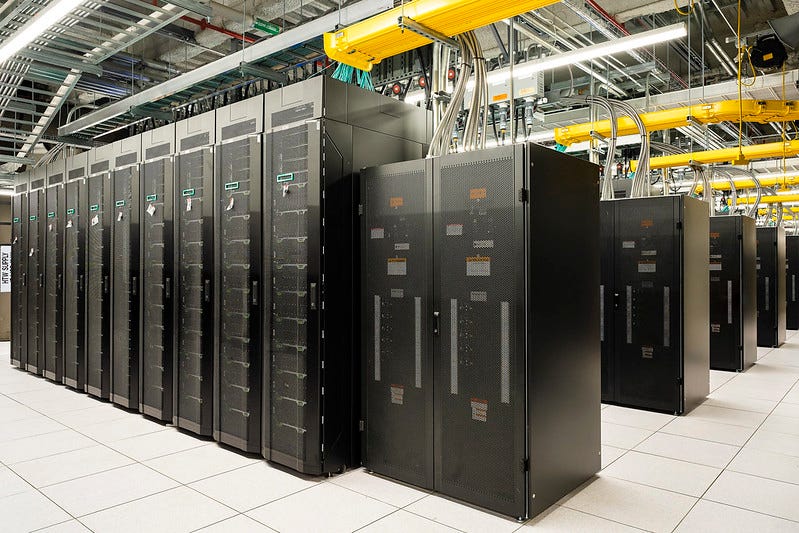
Compute and infrastructure spending reached nearly $9 billion in the first half of 2026 alone, up from about $2.3 billion in the comparable period. But the forward commitments are far larger: about $450 billion of mostly non-cancelable cloud contracts with Google, Amazon Web Services, Microsoft and specialist “neocloud” providers, spread over the next seven to ten years. Within that total, roughly $111 billion is committed to Google and $31 billion to Microsoft, according to the draft figures reported by the Journal. On top of that, Anthropic is reportedly in talks for up to $150 billion more, including more than $160 billion for Google’s TPUs supplied through Broadcom, and up to $86 billion on renting Nvidia chips.
Put it together and the Anthropic IPO draft signals that Anthropic could spend as much as $750 billion on computing capacity in the coming years. That figure is not a budget — it is a signal of how much computing the company believes it will need to stay competitive, and how much of that capacity it is willing to lock in years in advance. It also explains why the IPO exists at all: a company with this kind of appetite cannot fund itself from private rounds forever. Public markets are where the next hundreds of billions will have to come from.
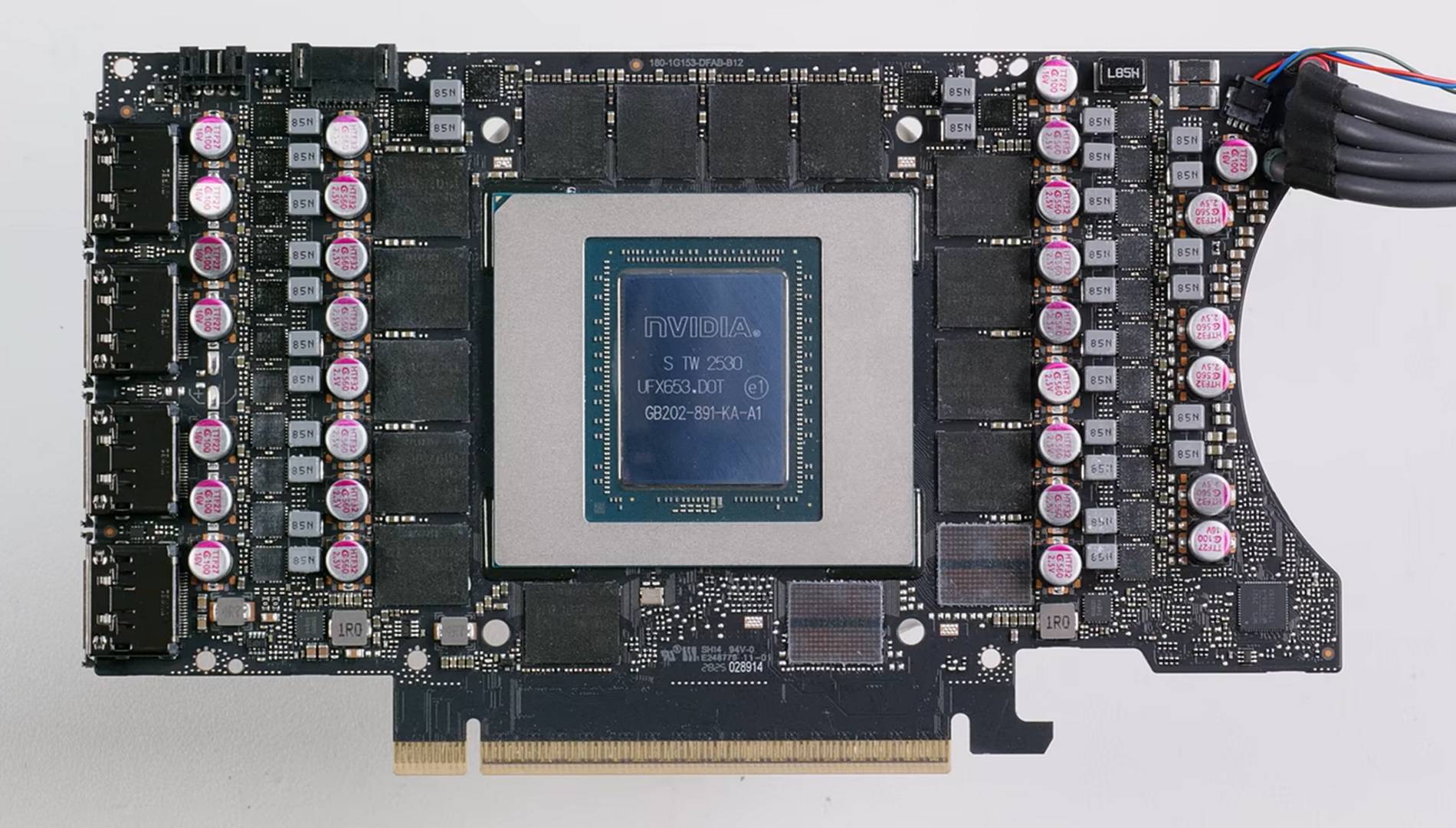
There is a flip side that investors are weighing. Long-term, non-cancelable commitments are a bet that demand will keep growing fast enough to fill that capacity. If AI demand cools, or if models become dramatically more efficient, Anthropic could be left paying for computing it does not need. The draft reportedly devotes roughly 80 of its 261 pages to risk factors — more than a third of the document — including warnings about catastrophic or existential risks from the technology itself, models that show “self-preserving behaviors” and “resist shutdown,” and risks that some analysts say may be uninsurable. That candor is unusual for a prospectus, and it is very much on brand for Anthropic.
Anthropic IPO Valuation: $1.5 Trillion or $2 Trillion?
How much is Anthropic worth? The honest answer is that nobody knows yet — there is no public price — but the reported range has been moving, and the direction of travel is itself news.
Reuters reported in September that Anthropic was seeking to raise as much as $100 billion at about a $2 trillion valuation. More recently, some investors have been weighing a valuation closer to $1.5 trillion, about 25 percent below the earlier expectation, as growth rates slow in percentage terms and AI stocks come under pressure. Separately, over-the-counter contracts have implied a valuation of about $1.957 trillion — a market-based measure, but not the same thing as IPO pricing. The company’s last private valuation, set by its $65 billion May funding round, was $965 billion.
Context helps here. At $2 trillion, the Anthropic IPO would rank among the largest listings in history and could rival the biggest IPOs ever completed. At $1.5 trillion it would still be one of the largest. Either way, the Anthropic IPO would test whether public investors are willing to pay a premium for the company that many see as the most credible challenger to OpenAI — and whether they will do so while the broader AI trade is wobbling. Prediction markets have put roughly an 80 percent probability on Anthropic listing this year, and about a 71 percent chance it announces the IPO before December 1.
Who already owns a piece of it? The cap table is concentrated among institutions. Amazon and Alphabet (Google’s parent) are the two largest strategic holders: Amazon built its stake through roughly $8 billion of early investment, now valued on paper at somewhere between $135 billion and $160 billion, while Alphabet holds roughly 14 percent in straight equity, worth about $135 billion at the current private valuation — an unusual position for a company that also competes with Anthropic through Gemini. Bloomberg’s October 22 account of other early investors put Iconiq’s stake at about $17 billion (from more than $6 billion invested), Spark Capital’s at an estimated $7 billion (from a $75 million investment in 2023), and Sequoia Capital at roughly 1 percent for $3 billion, with Singapore’s GIC above $4.5 billion for about 1 percent and Eric Schmidt at around 1 percent. No venture firm owns more than 2 percent, according to investor documents cited by one outlet. These are estimates, not cash proceeds — nobody has sold anything yet.
What the Anthropic IPO Means for Claude Users
Most people reading this will never buy a share of Anthropic. The more important question for them is what going public does to the product they use every day. Here is what we can say with confidence, and what is still speculation.
More computing capacity, faster features. The clearest direct benefit of the Anthropic IPO for Claude users is funding. IPO proceeds would go toward the compute build-out described above, which should mean more capacity, fewer slowdowns at peak times, and faster rollout of new models and features. Anthropic’s enterprise push — including tools like Claude Duet, its agent product for workplace tasks — depends on that capacity, and public capital makes it easier to deliver.
Shareholder pressure is real, but so is the counterweight. Public companies answer to shareholders every quarter, and that can push a company toward more aggressive monetization: higher prices, tighter free tiers, more upselling. That is a legitimate thing to watch. But Anthropic has unusual structural defenses. It is organized as a public benefit corporation, and it committed 5 percent of its shares to a Public Benefit Fund in October 2026 — a mechanism designed to keep its safety mission alive even under market pressure. Whether those defenses hold in practice is one of the most interesting governance questions the public filing will illuminate.
More transparency, whether Anthropic likes it or not. Public companies must report results quarterly, disclose executive pay, and file detailed risk updates. For users, that means a much clearer picture of Claude’s business: how many people pay, what it costs to run, and where the money goes. The draft’s unusually candid risk section suggests Anthropic will not suddenly go quiet about AI safety — but quarterly earnings pressure is a different kind of discipline, and users should expect both more disclosure and more scrutiny of every product decision.

What probably will not change overnight. The Anthropic IPO does not change your Claude subscription, your data settings or your plan limits on day one. Pricing changes, if they come, will arrive gradually and will be announced like any other product change. The sensible way to think about it: the IPO changes who funds Claude’s growth, not how Claude works tomorrow morning. If you are happy with Claude today, there is no action you need to take because of the listing.
Can You Buy Anthropic Stock Yet?
No — not yet. The Anthropic IPO has not happened because Anthropic is still a private company. There is no ticker symbol, no share price and no offer price, because Anthropic’s own June 1 announcement said the share count and price had not been set. Anyone claiming to sell you Anthropic shares today is selling something else, or selling nothing at all.
Here is how it will work once the listing happens, and what to avoid in the meantime:
- After the IPO: once shares begin trading on Nasdaq (the reported venue), you will be able to buy them through any standard brokerage account, just like any other listed stock. Your broker will show the ticker, the live price and the usual order types.
- Before the IPO: ordinary retail investors generally cannot buy in. Anthropic IPO allocations go first to institutional investors through the underwriters (Morgan Stanley, Goldman Sachs and JPMorgan, in this case). Some brokerages offer IPO access programs, but availability and allocations are limited and never guaranteed.
- Watch out for scams: Anthropic has explicitly warned that transactions on unauthorized secondary platforms are void. Be deeply skeptical of any website, social-media ad or messaging-group offer claiming to sell pre-IPO Anthropic shares, “guaranteed allocation” or discounted stock. The safest rule is simple: if it is not your regulated brokerage, do not send money.
- Indirect exposure exists today: some listed companies hold Anthropic stakes — Amazon and Alphabet are the big ones — but buying their shares is not the same as buying Anthropic, and their prices move for many other reasons. Treat that as background, not as a shortcut.
This article is not investment advice. IPO investing carries real risk — newly listed stocks can be extremely volatile in their first weeks, and a high valuation at listing does not guarantee gains. If you are considering investing, read the public S-1 when it lands, understand the risks section, and consider speaking to a qualified financial adviser.
The Risks Investors Are Watching
The draft S-1’s risk section is reportedly one of the longest and frankest ever written for a major listing. Here are the risks that keep coming up in coverage of the Anthropic IPO:
- Customer concentration: about 20 percent of first-half 2026 revenue came from just two customers, and the draft says a significant share of future billing is likely to stay with a limited number of clients. Losing one big customer would hurt.
- The compute trap: roughly $450 billion of mostly non-cancelable cloud commitments means Anthropic is locked into paying for capacity for years. If demand growth slows, those commitments become a burden rather than an advantage.
- AI-specific risks: the draft reportedly warns of catastrophic or existential risks from the technology, models exhibiting self-preserving behavior and resistance to shutdown, and risks that may be uninsurable. These are not boilerplate warnings — they are central to how Anthropic describes its own technology.
- Market timing: the AI trade has been under pressure. CoreWeave’s stock has fallen roughly 30 percent over two weeks and Micron about 17 percent over the past month, heightening concern about whether AI capital spending is sustainable. Some market participants believe Anthropic could delay its IPO to wait for calmer markets — though its urgent need for compute capital could push it to proceed anyway.
- Competition: OpenAI, Google, Meta and a wave of open-weight labs are all chasing the same enterprise customers, and model quality leads can disappear in months — the same churn is visible in image AI, where Canva just launched its first in-house model, Craft, and in China, where DeepSeek’s $15 billion funding round shows the same compute race playing out. Anthropic’s safety pitch is a differentiator, but it is not a moat by itself.
- Valuation risk: at $1.5–2 trillion, expectations are sky-high. Any stumble in growth, margins or guidance after listing would be punished quickly by a market that has already priced in years of success.
Anthropic IPO vs OpenAI: The Race to Go Public
For years, the assumption was that OpenAI would be the first frontier AI lab to go public. That assumption has flipped. OpenAI has reportedly pushed its own debut to 2027, while the Anthropic IPO is lining up a November 2026 listing — a reversal that would give Anthropic the first-mover advantage in public markets and the first claim on public investor appetite for pure AI exposure.
The contrast between the two companies is instructive. OpenAI’s reported annual recurring revenue is nearing $70 billion, larger than Anthropic’s, and it has the ChatGPT consumer brand. Anthropic’s pitch is different: enterprise-first growth, a safety-centered brand, and — on the draft numbers — revenue now growing faster than compute costs. Analysts quoted in recent coverage have argued that of the mega AI IPOs, Anthropic’s story requires the fewest leaps of faith, precisely because its revenue is outrunning its compute bill. Whether public investors agree will be decided in the first days of trading.
There is also a supply-chain twist worth noting. Both companies depend on the same suppliers — Nvidia’s chips, Google’s and Microsoft’s clouds, and the neoclouds building data centers at breakneck speed. Anthropic going public first does not resolve that shared bottleneck, but it does put a public price on the company most exposed to it. For readers following the AI infrastructure story, the Anthropic IPO is the moment that exposure becomes measurable in a stock price.
What Happens Next With the Anthropic IPO
The sequence from here for the Anthropic IPO is well established, and each step is publicly visible once it happens:
- The public S-1 lands on EDGAR. This is the trigger. It will contain the audited financials, the full risk section, the share structure and the use of proceeds. Expect wall-to-wall analysis within hours.
- The roadshow begins, at least 15 days later. Executives tour institutional investors, testing demand and refining the price range. The reported target is the week of November 9.
- Pricing and allocation. Underwriters set the final offer price based on roadshow demand, and shares are allocated — mostly to institutions.
- First day of trading. The reported target is mid-November, before Thanksgiving. The opening price, and where the stock closes that first day, will be read as a verdict on the entire AI trade.
- The first earnings report. Within a quarter or so, Anthropic will report as a public company for the first time — and the market will check whether the growth story survived contact with public scrutiny.
If the filing slips past next week, the November timetable slips with it — the 15-day rule makes that arithmetic unavoidable. And if market conditions deteriorate further, Anthropic could still pause: its own June announcement said the offering depends on market conditions. The most likely outcome, on current reporting, remains a filing within days and a listing before Thanksgiving — but “likely” is not “certain,” and this article will not pretend otherwise.
Anthropic IPO FAQs
Has Anthropic filed its IPO yet?
The Anthropic IPO has not been filed publicly, as of October 24, 2026. Anthropic confidentially submitted a draft S-1 on June 1, 2026. The public filing is expected any day now, but no public S-1 has appeared on the SEC’s EDGAR database yet.
What is the Anthropic IPO valuation?
Reported, not confirmed: up to $2 trillion per Reuters, with some investors weighing around $1.5 trillion. The last private valuation was $965 billion after a $65 billion funding round in May 2026. The company has announced no valuation, price or ticker.
When will Anthropic stock start trading?
Reported target: mid-November 2026, before Thanksgiving on November 26, following a roadshow in the week of November 9. That depends on the public filing landing in time to satisfy the SEC’s 15-day rule, and on market conditions.
What ticker will Anthropic trade under?
Unknown. No ticker has been announced, and none appears in the SEC’s ticker registry, because the public filing has not happened yet.
How much money will the Anthropic IPO raise?
Reuters reported Anthropic is seeking to raise as much as $100 billion, which would make it one of the largest IPOs ever. The final amount depends on the offer price and share count, neither of which is public.
Is Anthropic profitable?
On a reported basis, no: the draft shows an $80.7 billion first-half net loss, but about $72 billion of that is a non-cash accounting charge on convertible notes. On an adjusted basis, Anthropic told investors in mid-October that it is profitable with positive cash flow, and that revenue now outruns compute costs.
Should I buy Anthropic stock when it lists?
That is a personal financial decision, not something this article can answer. New listings can be volatile, the valuation is very high, and the risk section of the draft is unusually long. Read the public S-1 when it appears, and consider professional advice. This article is not investment advice.
Final Take
The Anthropic IPO is genuinely historic, and the honest state of play is more interesting than any hype version of it. A company founded five years ago, built around the idea that AI should be developed safely, is about to ask public markets for a valuation of up to $2 trillion — while reporting a headline loss of $80.7 billion that is mostly an accounting entry, revenue growing roughly fifteen-fold year over year, and a compute bill that could reach $750 billion. Every one of those numbers cuts both ways, and that tension is the story.
For Claude users, the practical message is reassuring: nothing changes overnight, and the funding should mean a better, faster product. For investors watching the Anthropic IPO, the message is cautionary: wait for the actual filing, read the risk section, and beware anyone selling you shares before they exist. For everyone else, the Anthropic IPO is the moment the AI boom gets its first real public price tag — and the market’s verdict will echo far beyond one company.
The Anthropic IPO filing could land any day now. When it does, the speculation ends and the numbers begin. Until then, treat every “confirmed” claim about the deal with the skepticism it deserves — including, if necessary, this one: as of October 24, 2026, the most important document in the biggest IPO of the decade still has not been published.
Sources for this article include reporting by the Wall Street Journal and Reuters on Anthropic’s draft S-1 (via the Economic Times), Yahoo Finance’s October 21 report on the expected filing window, an October 24 SEC EDGAR check reported by NeoTeo, and analysis from the AI-RTZ newsletter. All figures attributed to the draft prospectus are reported figures, not figures from a public filing.