
iFlytek Spark X2.6 is the newest flagship AI model from Chinese voice-technology giant iFlytek, unveiled on October 22, 2026, at the company’s 1024 Global Developer Festival in Beijing. It is a 293-billion-parameter model with 30 billion parameters active per token, a one-million-token context window, and one headline claim that sets it apart from every Western frontier model: according to iFlytek, it was trained and runs entirely on Chinese-made computing hardware. In this guide, we explain what iFlytek Spark X2.6 actually does, how its device-cloud system works, what it costs, and why its launch matters far beyond China.

What Is iFlytek Spark X2.6?
iFlytek Spark X2.6 is a general-purpose large language model (LLM) built on a mixture-of-experts (MoE) architecture. In plain terms, that means the model contains 293 billion parameters in total, but only about 30 billion of them switch on for any single token it processes. This design keeps the model powerful while keeping each response far cheaper to compute than a model that fires all of its parameters at once.
The model is the latest entry in iFlytek’s Spark series, the company’s answer to ChatGPT, Claude, and DeepSeek. iFlytek is best known outside China for speech recognition and voice AI — it has spent two decades building voice technology for schools, hospitals, and government offices across China — and Spark X2.6 is its bid to prove that a Chinese lab can build a frontier-class model without relying on American chips.
According to iFlytek, the model’s strengths are coding and agentic capabilities: writing software, planning multi-step tasks, and carrying out work with tools on the user’s behalf. The company says Spark X2.6 has reached performance comparable to leading industry systems on multiple technical benchmarks, while performing even better in real industrial deployments such as state-owned enterprises, education, healthcare, and judicial services.
The Headline: Trained Entirely on Domestic Chips
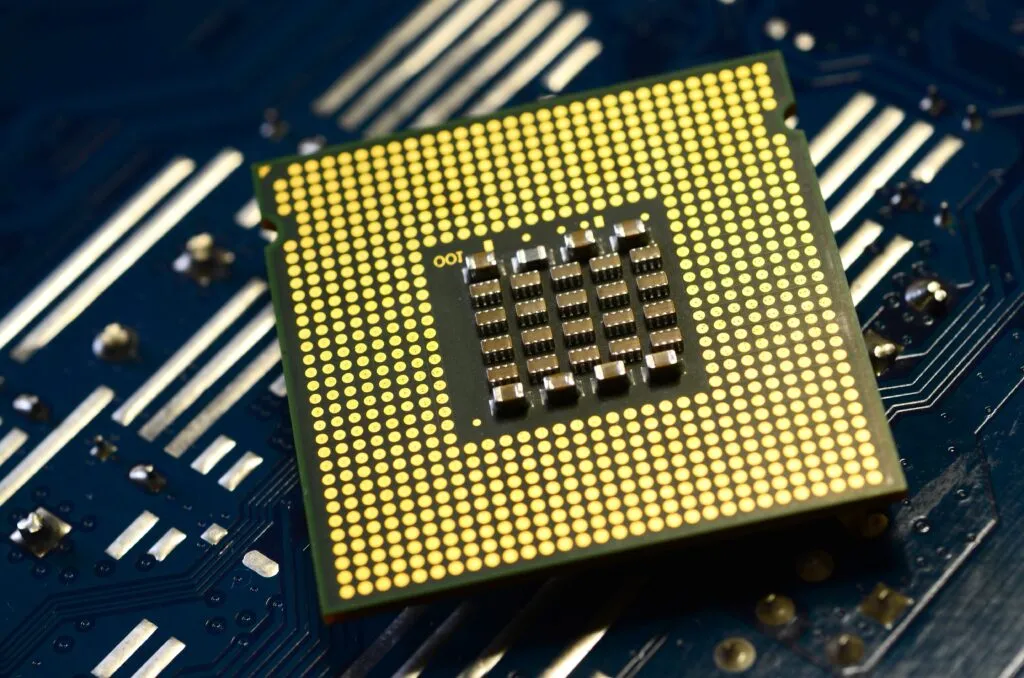
The single most important fact about iFlytek Spark X2.6 is its hardware story. iFlytek chairperson Liu Qingfeng told the Beijing audience that the model “has taken the lead in breaking through the efficiency bottleneck of long-horizon task training on domestic chips, truly achieving independence and controllability with homegrown computing power.”
Why does this matter? For years, the world’s most powerful AI models have been trained on Nvidia graphics processors, and US export controls have restricted China’s access to the most advanced versions. A frontier model trained end-to-end on Chinese-made chips is therefore a strategic milestone, not just a technical one. It suggests that export controls may slow China down, but they may not stop it.
iFlytek reported concrete efficiency gains on its domestic hardware:
- Training efficiency up 4x on Chinese-made chips compared with earlier domestic-chip training runs.
- Inference efficiency up 4.5x, meaning the model answers queries far faster and cheaper once trained.
- Training time slashed: a 2,000-billion-token-scale training run on the company’s Feixing No. 2 cluster of 10,000 cards fell from 4.5 months to just 1.2 months.
- Cache hit rate jumped from 63% to 95.7%, so the system reuses past computation instead of redoing it — a major cost saver.
Two technical innovations drove these gains, according to iFlytek. First, a distributed inference technology built for domestic heterogeneous computing power tackles the memory-bandwidth limits that have historically slowed Chinese chips. Second, a development technique that reuses existing inference results means many computations simply never need to be repeated. Both are the kind of unglamorous engineering that turns a chip disadvantage into a manageable one.
iFlytek Spark X2.6 Specs at a Glance
Here are the key numbers for iFlytek Spark X2.6, all as reported by the company at launch:
- Architecture: mixture-of-experts (MoE), 293 billion total parameters, 30 billion active per token (293B-A30B).
- Context window: 1 million tokens — enough to hold several long books, a huge codebase, or months of chat history in one conversation.
- Training hardware: fully domestic (Chinese-made) computing infrastructure, including the 10,000-card Feixing No. 2 cluster.
- Deployment: a domestic 10,000-card inference cluster, plus on-device versions for phones and PCs.
- Strengths: coding, agentic multi-step tasks, long-document work, and multilingual understanding.
- Availability: open for trial on iFlytek’s official Spark website; the 4B on-device model is open source.
- API pricing (limited-time offer): 0.9 yuan per million input tokens, 0.08 yuan per million cached-input tokens, and 3.6 yuan per million output tokens.
The one-million-token context window deserves emphasis. Most consumer chatbots still cap conversations far lower, which forces users to re-explain context constantly. A million-token window means developers can feed an entire project repository, a legal case file, or a research archive into one session and keep working across it. That is exactly the kind of capability that makes an AI model useful for real work rather than just chat.
End-Cloud Integration: How Device-Cloud Routing Works
iFlytek Spark X2.6 is not just one big cloud model. It is an end-cloud integrated system — the first time iFlytek has publicly disclosed this architecture. The idea is simple but powerful: every task is routed to the device, to the cloud, or to a combination of both, depending on what it needs.
What Routes Where in iFlytek Spark X2.6
Simple, private, or latency-sensitive tasks — drafting a message, summarizing a note, transcribing speech — can run entirely on the device. Heavy tasks that need the full 293-billion-parameter model — deep code analysis, long-document reasoning, complex agent workflows — go to the cloud. Hybrid tasks split the work: the device handles the first steps and the cloud finishes the rest. Routing accuracy, according to iFlytek, has reached 96.1%, so the system rarely sends a task to the wrong place.
Why the 40% Figure Matters
iFlytek says the share of tasks a device can now handle independently has climbed from 12.8% to more than 40%. That jump matters for three reasons. First, on-device work keeps sensitive data off the network — a major selling point for hospitals, courts, and companies handling confidential documents. Second, it cuts cloud bills, because nearly half of all requests never touch a server. Third, it keeps the assistant working when connectivity is poor or unavailable.

For everyday users, the practical effect is an assistant that feels faster and more private. For businesses, it is a cost and compliance story: less data leaving the building, lower API spend, and an assistant that still works inside a locked-down office network.
The Open-Source Spark X2.6-4B Model
Alongside the flagship model, iFlytek open-sourced Spark X2.6-4B, a compact on-device model built for phones, laptops, and edge devices. The company says the 4B model shows a significant leap in agent capabilities over its predecessor, Spark X2.5-4B, with improvements across every benchmark the company tracks.
The predecessor’s track record gives the new model credibility. Since Spark X2.5-4B was open-sourced on September 1, 2026, it has ranked among the top four on-device models globally by downloads, with 2.56 million cumulative downloads. That is a real developer audience, not a press-release number — and it means the 4B model arrives into an ecosystem that already knows how to use it.
The open-source model ships with three new inference modes and, according to iFlytek, faster inference inside its own system than the popular Ollama runtime. It is also free for a limited time. For developers, students, and hobbyists, this is the most accessible way to experiment with the Spark X2.6 family: download the weights, run them locally, and build agents without paying per-token cloud fees.
iFlytek Spark X2.6 Pricing
iFlytek Spark X2.6 launched with aggressive limited-time API pricing on its official website:
- Input: 0.9 yuan per million tokens (limited-time offer).
- Cached input: 0.08 yuan per million tokens — a steep discount for repeated context.
- Output: 3.6 yuan per million tokens (limited-time offer).
At roughly 7 yuan to the US dollar, that works out to approximately $0.13 per million input tokens and $0.51 per million output tokens — before any currency movement. That pricing sits in the same ultra-cheap territory that made DeepSeek famous, and far below the flagship rates charged by US labs for their top models. For developers building agents that make thousands of calls a day, the difference between $0.50 and $5 per million output tokens is the difference between a viable product and a money pit.
Two warnings apply. First, these are limited-time launch prices — iFlytek has not published the standard rates that follow, so treat today’s prices as an introductory window rather than a permanent promise. Second, availability outside China is still unclear: the trial runs through iFlytek’s official Spark website, and documentation and support are primarily Chinese-language today. English-speaking developers should expect some friction signing up and integrating.
How iFlytek Spark X2.6 Compares to Rivals
Placing iFlytek Spark X2.6 against its rivals requires care, because the company has published headline claims rather than a full independent benchmark table. Here is the honest comparison we can make today.
iFlytek Spark X2.6 vs DeepSeek
DeepSeek remains the benchmark for cheap, open, high-performing Chinese AI. Its V4.1-Flash model and the open-source DeepInfer inference engine set the standard for price-performance. iFlytek Spark X2.6 answers with a different bet: a much larger model (293B vs DeepSeek’s smaller flagship footprints), a million-token context, and the end-cloud system that pushes work onto devices. Where DeepSeek wins on developer mindshare and open ecosystem, iFlytek wins on enterprise deployment — its decades of relationships with Chinese schools, hospitals, and state-owned enterprises give Spark X2.6 a ready-made customer base that DeepSeek is still building. Readers following this rivalry should also read our coverage of DeepSeek’s $15 billion funding round, which explains how China’s AI money is flowing.
iFlytek Spark X2.6 vs US Frontier Models
Against OpenAI’s GPT-6 family, Google’s Gemini 4 Argon, and Anthropic’s Claude, iFlytek claims benchmark parity in multiple technical areas and better real-world deployment performance in industrial scenarios. Those claims are company-reported and have not been independently verified, so treat them as a statement of ambition rather than settled fact. What is verifiable is the strategic difference: no US lab is building a flagship model on fully domestic hardware, because no US lab needs to. iFlytek Spark X2.6 is the first model whose entire existence is an answer to export controls — and that alone makes it a milestone, whatever the final benchmark rankings turn out to be.
iFlytek Spark X2.6 vs On-Device Models
The open-source Spark X2.6-4B competes with small models from Meta, Google, and Alibaba that run on phones and laptops. Its edge is the end-cloud architecture: the 4B model is not a standalone toy, but the local half of a system that can hand hard tasks up to the 293B cloud model. For users, that means one assistant that scales from a quick on-device note to a full cloud-powered research task without switching apps.

What iFlytek Spark X2.6 Means for the US-China AI Race
iFlytek Spark X2.6 arrives in a week when the AI race is moving fast on both sides. DeepSeek closed a $15 billion funding round days earlier. Anthropic is preparing a public listing. The US government has ordered federal agencies to remove DeepSeek technology. Against that backdrop, Spark X2.6 is best understood as China’s answer to a simple question: can its AI industry keep advancing if American chips stay restricted?
Industry observers at the Beijing event told reporters that the emphasis is shifting away from sheer model size and benchmark competition toward deployment on domestic computing, data security, and real-world usefulness in offices, factories, and research labs. Veteran analyst Liu Dingding said the combination of end-cloud collaboration and a fully domestic hardware base offers a reference path for China’s entire AI industry — in other words, a template other Chinese labs can copy.
For US readers, the practical takeaway is not that one model suddenly beats GPT-6 or Claude. It is that the capability gap may be narrowing faster than export controls assumed, and that the next wave of competition may be fought on price, deployment, and on-device intelligence rather than raw benchmark scores. Cheap, capable, locally runnable AI changes who can afford to build with it — and that includes developers and small businesses far outside China.

Who Should Try iFlytek Spark X2.6 (and Who Should Wait)
Try it now if you are:
- A developer curious about open on-device models — Spark X2.6-4B is free, open source, and runs locally, making it a low-risk experiment.
- Building agents or coding tools — the model’s claimed agent strengths and million-token context are directly relevant to your work.
- Tracking the China AI ecosystem — this is the most important Chinese model launch of October 2026, and hands-on experience beats secondhand summaries.
- Cost-sensitive at scale — the launch API pricing is among the cheapest available for a model of this size, while it lasts.
Wait if you are:
- A non-technical user wanting a polished chatbot — the consumer experience, English-language support, and app ecosystem are still maturing outside China.
- Handling regulated or sensitive data — verify where your data is processed and which jurisdiction’s rules apply before routing work through any new provider.
- Needing guaranteed uptime and support — frontier US providers still offer deeper documentation, integrations, and enterprise support for Western teams.
Limitations and Honest Caveats
Every claim in this article about performance, efficiency, and cost comes with an important qualifier: the headline numbers are iFlytek’s own. The company reported them at its own developer festival, and no independent lab has yet re-run the benchmarks. That is normal for a launch-week announcement — every AI lab leads with its best numbers — but it means readers should treat the 4x and 4.5x efficiency figures as company-reported, not verified fact.
Other caveats worth knowing:
- Benchmark details are thin. iFlytek says performance is comparable to leading industry systems, but has not published a full benchmark table with named tests and scores.
- Launch pricing is temporary. The 0.9 and 3.6 yuan rates are limited-time offers; standard pricing has not been announced.
- International availability is unclear. The trial runs through iFlytek’s Chinese-language Spark website, and there is no confirmed timeline for a full English-language rollout.
- Data and privacy questions remain. As with any cloud AI provider, users should check where prompts are stored, how long they are retained, and whether they are used for training.
None of this diminishes the launch’s significance — but it does mean the smart move is to test the model yourself, especially the free open-source 4B version, rather than taking any launch claim at face value.
How to Try iFlytek Spark X2.6
Getting started takes a few steps:
- Visit iFlytek’s official Spark website and look for the Spark X2.6 trial — the flagship model is available for trial there now.
- Create an account and confirm the current API pricing before building anything production-critical, since launch rates are temporary.
- Try the open-source model first. Download Spark X2.6-4B, run it locally, and test its agent and coding abilities on your own machine — no API key or payment needed.
- Test the end-cloud routing with a real workflow: a long document, a coding task, or a multi-step agent job, and see where the system splits the work.
- Compare before committing. Run the same task through a model you already use — DeepSeek, ChatGPT, or Claude — and judge output quality, speed, and cost side by side.
For readers building AI assistants of their own, our guide to Claude Duet and our Canva Craft coverage show how the agent and creative sides of AI are evolving in parallel — useful context for where Spark X2.6 fits in the wider market.
Frequently Asked Questions
What is iFlytek Spark X2.6?
iFlytek Spark X2.6 is a 293-billion-parameter AI model unveiled by Chinese company iFlytek on October 22, 2026. It uses a mixture-of-experts design with 30 billion active parameters per token and a one-million-token context window, and it was trained entirely on Chinese-made computing hardware.
Is iFlytek Spark X2.6 really trained without US chips?
According to iFlytek, yes — training and inference run on fully domestic computing infrastructure, including its 10,000-card Feixing No. 2 cluster. That claim is company-reported and has not been independently audited, but it is the central claim of the launch and has been reported by multiple outlets.
How much does iFlytek Spark X2.6 cost?
Launch API pricing is 0.9 yuan per million input tokens and 3.6 yuan per million output tokens (roughly $0.13 and $0.51 at current exchange rates), with cached input at 0.08 yuan. These are limited-time rates. The open-source Spark X2.6-4B on-device model is free for a limited time.
Can I use iFlytek Spark X2.6 in the US?
The flagship model is on trial through iFlytek’s official Spark website, but international availability, English-language support, and documentation are still limited. The open-source 4B model is the easiest way for US developers to try the technology today.
Is iFlytek Spark X2.6 better than DeepSeek or GPT-6?
iFlytek claims benchmark parity with leading industry systems and better real-world deployment performance in industrial scenarios, but independent verification is still pending. Its real advantages today are price, the million-token context, and the end-cloud device integration — not a proven benchmark crown.
The Verdict
iFlytek Spark X2.6 is not just another model launch. It is the clearest evidence yet that China’s AI industry can build frontier-class systems on its own hardware — and that the contest for AI leadership is shifting from who has the biggest model to who can deploy capable AI cheapest, most privately, and closest to the user. The 293-billion-parameter flagship, the million-token context, and the end-cloud system that now handles over 40% of tasks on-device add up to a serious product, not a symbolic one.
That said, launch-week claims deserve launch-week skepticism. The efficiency numbers, benchmark parity, and pricing are all iFlytek’s own, and independent testing will be the real judge. The smart way to treat Spark X2.6 is as a model to test — especially the free open-source 4B version — and a strategic signal to watch. If its domestic-chip recipe works at scale, the next few years of the AI race will look very different from the last few. Watch this space: we will update this guide as independent benchmarks and international availability arrive.