
For years, the robotics industry has measured success the same way a car factory measures success: by counting units. Press releases boasted about how many robots were built, how many were shipped, and how many were delivered. AGIBOT Worken throws that scoreboard away. Unveiled at AGIBOT Innovation Day 2026 in Shanghai on October 29, 2026, it is a proposed framework for measuring the productive work robots actually do once they are on the job — in factories, warehouses, and service environments — rather than how many of them exist. In this guide, we explain what AGIBOT Worken is, how its formula works, what the hardware and AI models announced alongside it can do, where the idea is already being tested in the real world, and — just as importantly — what AGIBOT Worken is not yet. If you buy, build, or simply follow robots, this is the metric you will hear about next.
Table of Contents
- What Is AGIBOT Worken?
- AGIBOT Worken at a Glance
- The AGIBOT Worken Formula, Explained Step by Step
- Why Counting Robots Stopped Working
- Inside Innovation Day 2026: AHA3, GO-3 Preview, and WITA-Omni
- AGIBOT G2 Max: The Heavy-Duty Robot Behind the Numbers
- Link-U OS 1.0: An Operating System Built for Embodied AI
- Where AGIBOT Robots Are Already Working
- What AGIBOT Worken Is Not Yet: The Honest Caveats
- How US Businesses Should Read AGIBOT Worken
- AGIBOT Worken vs Traditional Robot Metrics
- Frequently Asked Questions About AGIBOT Worken
- Final Verdict: Should You Care About AGIBOT Worken?

What Is AGIBOT Worken?
AGIBOT Worken is a proposed measurement framework from AGIBOT, a Shanghai-based humanoid robotics company. The name combines “work” and “token,” and the company describes the concept as “Effective Intelligent Work Hours.” In plain language, AGIBOT Worken tries to answer one practical question: once a robot is installed in a real workplace, how much genuinely useful work does it deliver, on its own, over time?
That question sounds obvious, but it is one the robotics industry has mostly avoided. A robot that stands powered-on in a warehouse for twelve hours but only completes useful tasks for three of them looks identical, on a units-shipped chart, to a robot that works productively for eleven hours. A fleet of fifty robots that constantly needs human help looks identical, on a delivery chart, to a fleet of fifty robots that runs itself. AGIBOT Worken is designed to separate those two cases.
AGIBOT’s co-founder, president, and chief technology officer, Peng Zhihui, introduced the framework at Innovation Day 2026, held at the Shanghai World Expo Center on October 29. “As robots begin working in factories, warehouses and service environments, we need to answer a more practical question: how much productive work are they actually delivering?” he said. “We want to move beyond measuring how many robots are built or delivered and begin measuring how effectively they can perform useful work, autonomously and consistently, in the real world.”
It is worth being precise about what kind of announcement this is. AGIBOT Worken is not a product you can buy, not a robot you can order, and not a software download with a price tag. There is no subscription, no per-unit cost, and no US store listing, because there is nothing to sell yet. It is a proposed language for describing robot output — a yardstick, not a machine. That distinction matters, and we return to it in the caveats section below, because much of the early coverage treats the framework as if it were already an industry standard. It is not. It is a proposal, backed by one company’s hardware, models, and deployment data, and offered to the wider industry as a starting point for discussion.
Why does that matter to readers in the United States? Because the same measurement problem is about to land on American factory floors, warehouses, and service businesses. As humanoid and industrial robots move from pilot projects into daily operations, buyers will need a way to compare vendors that goes beyond glossy demonstration videos and headline robot counts. A shared way of counting productive work — if it is built honestly, with published benchmarks — could become the equivalent of miles-per-gallon for cars or uptime guarantees for cloud software: a boring, essential number that makes buying decisions fairer. AGIBOT Worken is the first serious attempt to define that number for embodied AI, and even if the framework itself evolves or is replaced, the question it asks is not going away.
AGIBOT Worken at a Glance
- What it is: A proposed framework for measuring productive robot work, described as “Effective Intelligent Work Hours.”
- Announced: October 29, 2026, at AGIBOT Innovation Day 2026 in Shanghai.
- Formula: Active robots × autonomous working hours × output efficiency ratio.
- Announced alongside it: AHA3 hardware architecture, GO-3 Preview embodied AI model, WITA-Omni interaction model, G2 Max industrial robot, and Link-U OS 1.0.
- Company milestone: AGIBOT says its 20,000th robot rolled off the production line in September 2026.
- Ecosystem claimed: 255 universities, 511 enterprises, and more than 80,000 developers.
- Price: None — AGIBOT Worken is a measurement proposal, not a purchasable product.
- Status: Proposed and evolving. Task-specific benchmarks are still to be developed from real deployment data.
The AGIBOT Worken Formula, Explained Step by Step
The AGIBOT Worken formula is deliberately simple. It has three factors, and each factor is designed to exclude something that would flatter a robot’s performance if it were counted:
Worken = Number of Active Robots × Autonomous Working Hours × Output Efficiency Ratio
Simplicity is the point. A metric that needs a statistics degree to understand will never be adopted on a factory floor. But each of the three factors carries a precise definition, and the definitions are where the framework does its real work.
AGIBOT Worken Factor 1: Active Robots Only
The first factor counts only robots that are actively performing tasks in real-world environments. Robots that have been manufactured, robots sitting in a warehouse, and robots held in inventory do not count. This sounds like common sense, but it is a sharp break from how the industry usually reports progress. A company that has built 20,000 robots — AGIBOT’s own September 2026 milestone — has not necessarily delivered 20,000 robots’ worth of work. Some of those machines may still be in transit, in storage, or awaiting installation. AGIBOT Worken refuses to credit them until they are actually working.
For a buyer, this is the most immediately useful part of the framework. When a vendor tells you they have deployed hundreds of robots, the right follow-up question becomes: how many are active right now, doing real tasks, on a normal working day? If the vendor cannot answer that, the headline number tells you very little.
AGIBOT Worken Factor 2: Autonomous Working Hours, Not Powered-On Hours
The second factor counts only time a robot spends working on its own. Total powered-on time does not count. A robot that is switched on, charging, waiting for instructions, being repaired, or being supervised step by step by a human operator is not accumulating autonomous working hours during that time. Only independent, productive operation counts.
This factor is the framework’s answer to the demonstration problem. A robot can look impressive in a carefully staged video while needing constant human rescue behind the scenes. Autonomous working hours punish that gap. Two deployments with the same number of robots can score very differently here: the fleet that runs itself for ten hours a day outscores the fleet that needs a technician beside it for half the shift, even if both fleets contain the same hardware. AGIBOT’s own argument is that deployments with similar robot counts can deliver very different productivity, depending on how independently the machines operate and how often people must intervene.
AGIBOT Worken Factor 3: The Output Efficiency Ratio
The third factor compares a robot’s productive output against a reference benchmark for a defined task. AGIBOT’s example benchmark is the acceptable work a human worker completes under established operating standards. In other words, the ratio asks: for this specific job — moving a pallet, tending a machine, handling a material — how much acceptable output did the robot produce, compared with the standard?
This is the factor that makes AGIBOT Worken a measure of work rather than a measure of time. A robot that works autonomously for eight hours but produces defective or incomplete output should not score the same as a robot that works autonomously for eight hours and produces fully acceptable output. The efficiency ratio is meant to capture that difference. It is also the factor that depends most heavily on benchmarks that do not fully exist yet. AGIBOT says it will develop task-specific benchmarks from real-world deployments and operational data, which means the ratio’s credibility will stand or fall on whether those benchmarks are published, specific, and open to outside scrutiny.
A Worked Example: How AGIBOT Worken Scores a Small Fleet
Imagine a small US warehouse running ten robots on a material-transport job. On a given day, all ten robots are active, each works autonomously for six hours, and each produces output at 90 percent of the accepted human standard for that task. The AGIBOT Worken score for the day would be 10 × 6 × 0.90 = 54 Worken, or 54 effective intelligent work hours.
Now imagine a second warehouse with the same ten robots. Five of them spend the day waiting for parts, so only five are active. Those five work autonomously for four hours each, and produce output at 80 percent of the standard. Their score is 5 × 4 × 0.80 = 16 Worken. Both warehouses own ten robots. One delivered more than three times the productive work of the other. Traditional unit-counting would call them equal. AGIBOT Worken calls them what they are: very different deployments.
The example also shows why the framework connects to lifecycle economics, a link AGIBOT made explicitly at Innovation Day. Hardware depreciates: a robot bought this year is worth less next year. But software and model updates can let the same machine do more useful work over its operating life. A robot that scores 40 Worken a day today might score 55 a day after a model update, without any new hardware purchase. Measuring output alongside total lifecycle cost, AGIBOT argues, could help buyers judge the longer-term value of a deployment rather than just its purchase price. For a US operations manager weighing a six-figure robotics investment, that framing — cost per unit of genuinely productive work, over the machine’s whole life — is far more useful than cost per robot.
Why Counting Robots Stopped Working
The robotics industry’s old scoreboard made sense when robots were rare. In the early days of industrial automation, simply having a robot on the line was the achievement. A factory with twenty robots was obviously more automated than a factory with two, and the count told you most of what you needed to know. That era is ending.
Three changes broke the old metric. First, robots are now being built at scale. AGIBOT alone reports 20,000 units off its production line, and it is one of many manufacturers scaling up. When everyone can claim large numbers, the number stops distinguishing good deployments from bad ones. Second, robots are moving into messier environments. A robot welding the same joint on a car production line, thousands of times a day, is easy to measure. A humanoid robot moving materials in a warehouse, serving customers in a tourism complex, or assisting in a metro station faces variable tasks, variable layouts, and variable human interaction. Counting units tells you nothing about how well it copes. Third, the software inside robots is now changing faster than the hardware. A robot’s brain can be updated overnight; its body cannot. Two identical-looking robots can perform very differently depending on which model version they run. A metric tied to hardware counts cannot see that difference at all.
AGIBOT Worken is best understood as a response to all three changes at once. It shifts attention from the factory gate, where robots are built, to the workplace, where robots work. It shifts attention from powered-on time to autonomous time. And it shifts attention from raw output to output measured against a standard. None of those shifts is radical on its own. Together, they amount to a different philosophy of what robotics progress means: not more robots, but more useful robot work per robot, per hour, per dollar of lifecycle cost.
There is a useful parallel in the history of computing. Early computer marketing boasted about megahertz and transistor counts. Buyers eventually learned to ask about real-world performance on their actual workloads, and the industry responded with benchmarks. Robotics is at a similar turning point. Demonstration videos are the new megahertz: impressive, easy to inflate, and weakly related to daily performance. AGIBOT Worken is an attempt to build the benchmark era for physical AI — before buyers lose patience with the demonstration era.
Inside Innovation Day 2026: AHA3, GO-3 Preview, and WITA-Omni
AGIBOT Worken was the headline concept at Innovation Day, but it was announced alongside a full stack of hardware, models, and software that AGIBOT says makes such measurement practical. Understanding those announcements helps explain why the company believes it can measure productive work at all — and where the claims need independent checking.
AHA3: The Third-Generation Hardware Architecture
AHA3, short for AGIBOT Humanoid Architecture, is the company’s third-generation humanoid hardware architecture and its first commercial “Three Intelligences in One” platform. The phrase refers to integrating the hardware foundations for three things — locomotion, interaction, and task execution — into a single architecture, rather than bolting them together as separate systems. AGIBOT cites advances in motor-drive technology, integrated computing, and high-speed connectivity, including Wi-Fi 6 and 5G.
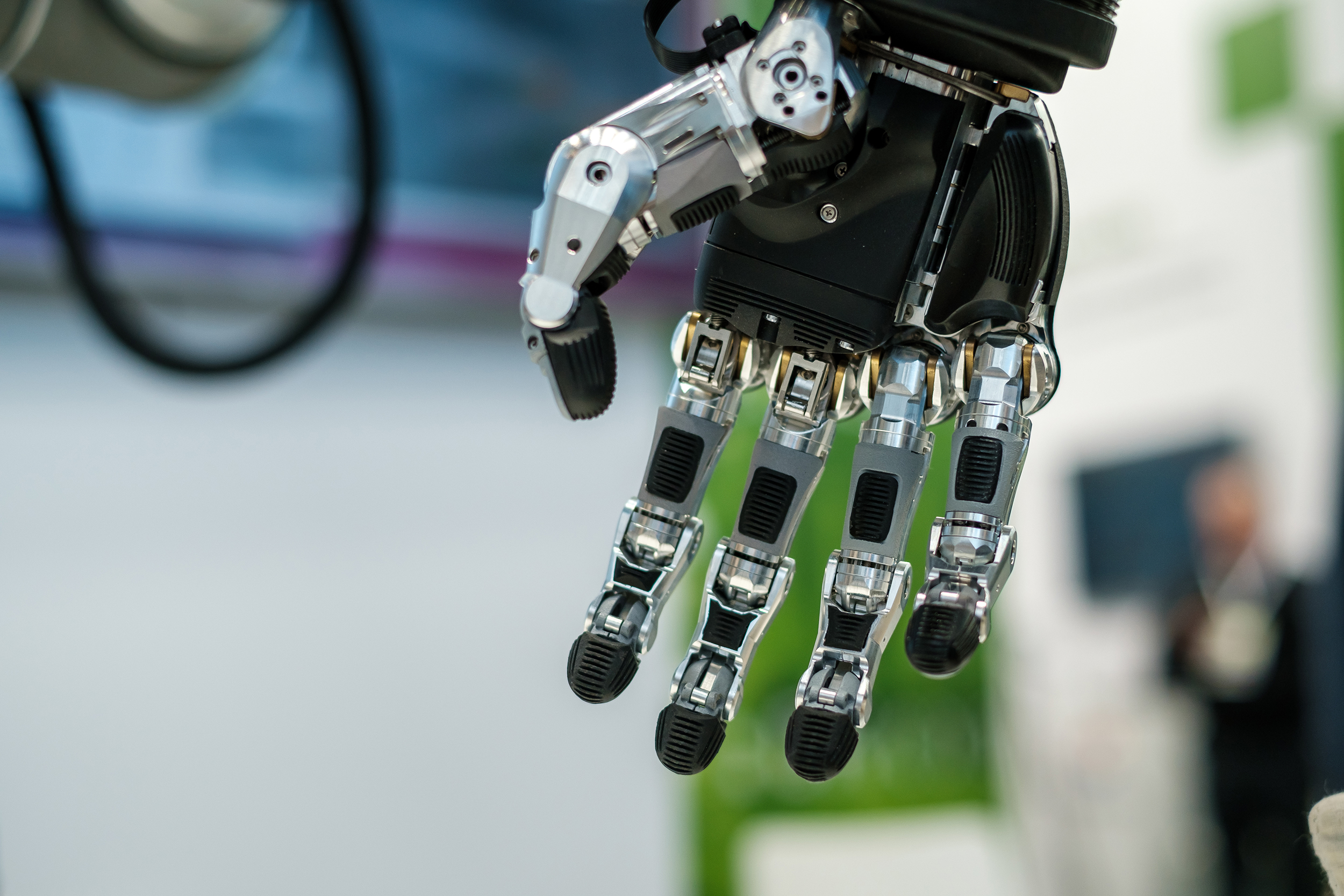
For continuous industrial operation, the company highlighted a joint liquid-cooling system to improve thermal performance, specialised joints with IP67-rated protection against dust and water, and a dexterous hand family: OmniHand 3 Lite, OmniHand 3, and OmniHand 3 Ultra, plus the OmniPicker 3 tactile gripper. These details matter for the AGIBOT Worken story because they address the unglamorous reasons robots stop working: overheating joints, dust-damaged components, and hands that cannot grip reliably. A robot that overheats after two hours cannot accumulate autonomous working hours, no matter how clever its AI model is. Hardware durability is a precondition for a high Worken score, not a footnote to it.
GO-3 Preview: The Embodied AI Foundation Model
GO-3 Preview is AGIBOT’s next-generation embodied AI foundation model, built around a unified reasoning, prediction, and action framework called WRAM, the World Reasoning Action Model. The idea behind WRAM is that a robot should not just follow a learned sequence of steps; it should reason about the world, predict the consequences of its actions, and then act — and generalise beyond the exact tasks it was trained on. AGIBOT demonstrated zero-shot and few-shot capabilities, meaning the model attempting tasks it had not been explicitly trained for, or had seen only a handful of examples of.
AGIBOT says GO-3 Preview ranked first in task success rate and process score on RoboDojo, achieved the highest overall score on RoboTwin, and ranked first overall on RoboColiseum. Those claims need careful handling, and we handle them in the caveats section. The independent picture is mixed: RoboDojo’s public leaderboard, maintained by a non-profit academic group, lists an entry named GO-3 Nano Preview in first place, which is encouraging but is not the same name as GO-3 Preview. RoboColiseum is built on AGIBOT’s own Genie Sim Benchmark, so it is not independent of the company. The RoboTwin and Daily-Omni results could not be confirmed on the public pages checked by independent coverage. None of this proves the model is weak. It proves that event-stage benchmark claims should be treated as company-presented results awaiting independent confirmation, not as settled facts.
AGILE and the MEgo Glove: Learning to Move, and Learning from Hands
AGIBOT also updated AGILE, its end-to-end motion intelligence framework, adding a self-evolving agent capability intended to let robots improve their locomotion through experience at deployment sites. In AGIBOT Worken terms, this is a direct investment in the autonomous-hours factor: a robot that learns to walk more reliably on a real factory floor, rather than only in simulation, needs less human rescue and accumulates more productive hours.
For data collection, the company introduced the MEgo Glove, a wearable tactile device that captures human hand movement and contact data. The Air version supports finger-pose capture. The Ultra version adds three-dimensional fingertip and palm force data and torque information. The logic is straightforward: if you want robots to handle objects the way people do, one of the fastest ways to teach them is to record what human hands actually do — not just where fingers go, but how hard they press and how force changes during a grip. That data feeds back into the dexterous hands in the AHA3 platform, closing a loop from human demonstration to robot capability to measured productive work.
WITA-Omni 1.0: Talking, Moving, and Expressing at Once
WITA-Omni 1.0 is an omni-modal interaction model that combines visual perception, speech, real-time dialogue, facial expressions, and physical actions. It supports full-duplex conversation — both sides talking and listening at the same time, as people do — with coordinated speech and movement, and on-device deployment. AGIBOT says it ranks first on several embodied interaction benchmarks, including Daily-Omni.
For service deployments, this is arguably the most consequential announcement after AGIBOT Worken itself. A robot in a metro station or a tourism complex does not just need to move boxes; it needs to understand a spoken question, look at the person asking, answer in a natural way, and move appropriately — all at once, without a long cloud round-trip. On-device deployment matters here because it reduces latency and keeps interaction data local. Whether WITA-Omni’s benchmark lead survives independent testing remains to be seen, but the design target — coordinated speech, movement, and expression in one model — is clearly the direction service robotics is heading.
AGIBOT G2 Max: The Heavy-Duty Robot Behind the Numbers
While humanoid robots grab headlines, the workhorse announced at Innovation Day was industrial. The G2 Max is a heavy-duty, wheeled, force-controlled robot for manufacturing and logistics. AGIBOT first unveiled it at WAIC 2026 in July and formally launched it at Innovation Day. Its headline specifications are:
- 21 degrees of freedom — the independent movements the robot can make.
- Dual-arm handling capacity of up to 40 kg — what its two arms can lift together.
- Adjustable working height from 0.1 m to 2.5 m — from near floor level to above head height.
- Force-controlled manipulation — it can adjust grip force rather than just moving to fixed positions.
- Omnidirectional mobility — it can move in any direction without turning first.
AGIBOT presented G2 Max applications in industrial material transport, warehouse handling, and pallet-related operations. Those are deliberately unglamorous jobs, and that is the point. Material transport is measurable: you can count pallets moved, cycle times, and task completion rates. It is exactly the kind of defined task that a AGIBOT Worken efficiency ratio needs as its reference benchmark. A robot that moves pallets all day generates clean, comparable data. A robot that “assists customers” generates much messier data. The G2 Max is, in that sense, the ideal first citizen of a Worken-measured world.
The company also highlighted deployments of the wider G2 family beyond the G2 Max itself. At Longcheer, G2 robots handle production-line materials for tablet manufacturing, with performance measured on cycle time, sustained operation, and task completion. Other applications cited include semiconductor packaging and testing, CNC machine tending, and logistics. In service environments, AGIBOT robots are deployed at Guangzhou Metro and at the Chimelong tourism and entertainment complex. Those service deployments are the harder test: a metro station is unpredictable, crowded, and safety-critical in ways a production line is not. If AGIBOT Worken can produce meaningful scores in both settings — the tidy factory and the messy public space — it will have proved something important. If it only works in the factory, its usefulness narrows considerably.
Link-U OS 1.0: An Operating System Built for Embodied AI
AGIBOT released Link-U OS 1.0, which it positions as the industry’s first operating system purpose-built for embodied intelligence. The OS has three layers: a unified hardware abstraction layer, an embodied-intelligence-native kernel, and an intelligent service framework. In plain terms, it is meant to let the same software run across different robot hardware, manage the real-time demands of a physical machine, and provide services that robot applications can build on — rather than every robot maker reinventing that plumbing.
AGIBOT says Link-U OS has been validated on mass-produced robots. Selected ecosystem partners are trialling version 1.0, and the company plans to make it fully open source by the end of 2026. It has donated the project to the OpenAtom Foundation and become a Platinum Level sponsor of the foundation, with the two organisations building an open-source humanoid robot community focused on unified interfaces and standards. AGIBOT says its ecosystem spans 255 universities, 511 enterprises, and more than 80,000 developers.
The open-source plan is the part of the Link-U story to watch. An operating system that stays proprietary to one company can still be useful, but it cannot become shared infrastructure. A genuinely open Link-U, adopted by universities and other manufacturers, would give AGIBOT Worken something it currently lacks: a neutral place where measurement tools could live, independent of any single vendor’s marketing. The end-of-2026 target is close, so readers will not have to wait long to see whether the promise is kept, and under what licence terms. Until the code is actually public, treat the open-source plan as a stated intention, not a completed fact.
Where AGIBOT Robots Are Already Working
One reason AGIBOT Worken deserves attention, despite being a proposal, is that it arrives with deployment examples rather than only laboratory demos. The event also featured the release of the “2026 Embodied Intelligence Industry Innovation Report,” jointly compiled by China Economic Information Service and the Shanghai Industrial Innovation Center of the China Academy of Information and Communications Technology (CAICT). The report includes AGIBOT Worken and AGIBOT’s deployment examples as part of its industry analysis, which gives the framework a foothold in an industry document beyond the company’s own press release.
The deployments AGIBOT cited span manufacturing and commercial services. In manufacturing, the pattern is consistent: robots handling materials, tending machines, and moving goods, with performance tracked on cycle time, sustained operation, and task completion. Those are the metrics that translate most directly into Worken scores, because the tasks are defined, repeatable, and comparable. In commercial services, the pattern is broader and harder to score: robots in a metro system and a tourism complex, where success includes helping people, navigating crowds, and operating safely in public. The contrast between those two deployment types is itself informative. It shows where the framework is already on solid ground, and where its benchmarks will need the most development.
For US readers, the honest translation is this: these deployments are in China, under Chinese operating conditions, labour arrangements, and safety regimes. They prove that AGIBOT’s robots can work in real environments, not that the same deployments would transfer unchanged to a US warehouse or a US transit system. Regulatory requirements, union agreements, insurance, and workplace safety rules differ substantially. AGIBOT Worken as a concept travels well — any country can measure productive robot work — but specific scores, benchmarks, and deployment playbooks will need local adaptation. Any vendor, American or otherwise, that quotes you a Worken-style score should be asked which tasks, which benchmarks, and which operating conditions produced it.
What AGIBOT Worken Is Not Yet: The Honest Caveats
A genuinely useful article about AGIBOT Worken must say clearly what the framework cannot yet do. Here are the caveats that matter most.
First, the benchmarks do not fully exist yet. The output efficiency ratio depends on reference benchmarks for defined tasks. AGIBOT says it will develop those benchmarks from real-world deployments and operational data. Until they are published in enough detail for outsiders to reproduce them, the ratio is a promise, not a measurement. A score built on an unpublished benchmark cannot be checked, compared, or trusted in a purchasing decision.
Second, adoption is an open question. AGIBOT says it hopes AGIBOT Worken can eventually serve as a widely applicable reference. Hope is not adoption. The open questions, as independent coverage has noted, are whether those task benchmarks are published, and whether organisations outside AGIBOT adopt the measure. A metric used by one company is a company report card. A metric used by many companies, auditors, and buyers is an industry standard. AGIBOT Worken is currently the former, aiming to become the latter.
Third, the benchmark claims announced alongside it are company-presented. GO-3 Preview’s first-place claims on RoboDojo, RoboTwin, and RoboColiseum, and WITA-Omni’s claims on Daily-Omni and other embodied interaction benchmarks, were presented at AGIBOT’s own event. As noted above, RoboColiseum rests on AGIBOT’s own simulation benchmark, and some results could not be confirmed on public leaderboards. That does not make the claims false. It makes them unverified by independent testing, and readers should hold them in that category until independent results appear.
Fourth, there is no price, and no product to buy. Readers searching for “AGIBOT Worken price” or “buy AGIBOT Worken” will not find one, because the framework is not for sale. The robots and models around it — G2 Max, GO-3 Preview, Link-U OS — have their own availability stories, and GO-3 Preview in particular is a preview, not a general release. Do not let a search result or a reseller listing imply otherwise. If someone tries to sell you “Worken” as a product, that is a misunderstanding at best.
Fifth, the framework’s human benchmark needs scrutiny. Comparing robot output with “the acceptable work a human worker completes under established operating standards” sounds fair, but human standards vary by task, country, shift pattern, and workplace. A benchmark built from one factory’s standards may not transfer to another’s. The fairness of AGIBOT Worken will depend on how those human reference points are chosen, documented, and updated — and on whether workers and their representatives have a voice in defining them, rather than the benchmark being set entirely by robot vendors.
How US Businesses Should Read AGIBOT Worken
Even with those caveats, AGIBOT Worken gives US buyers, operators, and managers a practical checklist. You do not need to adopt AGIBOT’s framework to benefit from its questions. The next time a robotics vendor pitches you, ask these five questions, and judge the answers:
- How many robots are active, right now, on real tasks? Not built, not shipped, not delivered — active. If the vendor cannot separate active units from inventory, their headline numbers are marketing, not measurement.
- How many autonomous hours per day does each robot actually achieve? Ask for the number with human interventions, charging, waiting, and maintenance stripped out. A robot that needs rescue every hour is not an autonomous worker, whatever the brochure says.
- What is the output, measured against what standard? Ask for the defined task, the reference benchmark, and the defect or rework rate. “It works great” is not a benchmark. Pallets per hour, completed tasks per shift, and first-pass success rates are.
- What happens to the score after a software update? If the vendor’s model improves, does measured productivity rise without new hardware? A lifecycle view — cost per unit of productive work over the robot’s whole operating life — beats a purchase-price comparison every time.
- Who else uses this metric? A measurement that only one vendor reports cannot be compared across vendors. Ask whether independent auditors, customers, or industry bodies have reproduced the numbers.
For small and mid-sized US businesses, the most realistic near-term use of AGIBOT Worken is not as a formal procurement standard but as a discipline for your own pilots. If you trial two robots, or two vendors, track active units, autonomous hours, and output against a standard you define in advance. You will learn more in a month of honest tracking than in a year of demonstration videos. And if the industry does converge on a shared metric — whether it is called Worken or something else — you will already be speaking its language.
There is also a workforce angle US employers should not ignore. A metric that measures robots against human standards will inevitably be read, by workers, as a comparison between people and machines. Handled transparently — with clear task definitions, safety data, and a stated purpose of removing dull, dangerous, or repetitive work — it can support honest planning. Handled opaquely, as a black-box score used to justify headcount decisions, it will breed distrust. The companies that adopt productive-work measurement first should also adopt transparency about it first. That is a management choice, not a technical one, and AGIBOT Worken does not make it for you.
For readers following the wider agent era, AGIBOT Worken belongs to the same story as AI agents entering real-world work. Our coverage of Walmart’s AI shopping agents showed software agents completing purchases in the digital world; our guide to the GitHub Copilot app showed agents coordinating coding work; and our look at Shopify’s Fall 2026 agent shopping tools showed agents acting on behalf of buyers and merchants. AGIBOT Worken is what happens when that agent story grows a body and walks onto a factory floor — and discovers that, in the physical world, someone has to measure whether the work actually got done.
AGIBOT Worken vs Traditional Robot Metrics
| Metric | What it counts | What it misses |
|---|---|---|
| Units shipped | Robots built and delivered | Whether they ever work productively |
| Powered-on hours | Time switched on | Waiting, charging, and supervised time |
| Task demonstrations | Best-case performance on video | Daily reliability and intervention rates |
| AGIBOT Worken | Active robots × autonomous hours × output vs a standard | Still needs published, independent benchmarks |
The table makes the trade-off clear. Traditional metrics are easy to measure and easy to inflate. AGIBOT Worken is harder to measure and harder to inflate — but only if its benchmarks are real. That “only if” is the whole story. A metric is only as honest as its reference points, and reference points are only honest if outsiders can inspect them. Watch for published task benchmarks, independent reproductions, and adoption beyond AGIBOT itself. Those three signals, in that order, will tell you whether AGIBOT Worken becomes an industry standard or remains an interesting conference talk.
Frequently Asked Questions About AGIBOT Worken
What exactly is AGIBOT Worken?
AGIBOT Worken is AGIBOT’s proposed framework for measuring the productive work robots perform in real environments, described as “Effective Intelligent Work Hours.” Its formula is active robots × autonomous working hours × output efficiency ratio. It is a measurement proposal announced on October 29, 2026, not a product for sale.
How much does AGIBOT Worken cost?
Nothing, because there is nothing to buy. AGIBOT Worken is a framework, not a robot, model, or software licence. The costs that matter are the costs of the robots, deployments, and lifecycle operations that a Worken score would measure — and those vary by vendor, deployment, and region. Any listing that offers “AGIBOT Worken” at a price should be treated with scepticism.
Can I use AGIBOT Worken in the United States today?
You can use its questions today: count active robots, track autonomous hours, and measure output against a defined standard. You cannot yet use it as a published, industry-wide standard, because its task-specific benchmarks are still being developed and it has not been adopted beyond AGIBOT’s own ecosystem. US buyers should treat it as a useful discipline for pilots and vendor comparisons, not as a certified score.
Which robots does AGIBOT Worken measure?
In principle, any robot doing productive work in a real environment. In practice, AGIBOT introduced it alongside its own stack: the AHA3 hardware architecture, GO-3 Preview model, WITA-Omni interaction model, G2 Max industrial robot, and Link-U OS 1.0. The framework is presented as general, but its first examples all come from AGIBOT’s own deployments.
How is AGIBOT Worken different from counting robots?
Counting robots credits machines that are built, shipped, or sitting idle. AGIBOT Worken credits only active robots, only autonomous working time, and only output measured against a standard. Two fleets with the same robot count can therefore score very differently — which is precisely the difference buyers need to see.
What is Link-U OS 1.0, and when will it be open source?
Link-U OS 1.0 is AGIBOT’s operating system purpose-built for embodied intelligence, with a hardware abstraction layer, an embodied-intelligence-native kernel, and an intelligent service framework. AGIBOT says selected partners are trialling it and plans to make it fully open source by the end of 2026, after donating it to the OpenAtom Foundation. Until the code is public, that plan remains a stated intention.
Final Verdict: Should You Care About AGIBOT Worken?
Yes — but care about it for the right reason. AGIBOT Worken is not a product launch to rush out and buy. It is a challenge to how the robotics industry talks about progress. For a decade, the industry’s favourite number was how many robots it built. AGIBOT is arguing, with hardware, models, and deployment data behind it, that the favourite number should be how much useful work those robots actually do, on their own, against a standard anyone can inspect.
That argument will succeed or fail on evidence that does not exist yet: published task benchmarks, independent reproductions of the GO-3 Preview and WITA-Omni results, adoption by organisations outside AGIBOT, and a genuinely open Link-U OS by the end of 2026. If those things arrive, AGIBOT Worken could become the miles-per-gallon moment for physical AI — a boring, comparable, essential number that makes the whole market more honest. If they do not arrive, the framework will still have done something valuable: it will have forced every other vendor to answer the question Peng Zhihui asked in Shanghai. How much productive work are your robots actually delivering?
For now, the smart move is to borrow the question, not the score. Track active robots, autonomous hours, and output against a standard in your own pilots. Ask vendors for the same three numbers. And keep watching for the benchmarks. When AGIBOT Worken can be checked by outsiders, it will stop being a proposal and start being a standard. Until then, it is the most interesting idea to come out of Innovation Day 2026 — and the one most worth following into 2027.
Sources: AGIBOT’s Innovation Day 2026 announcement via PRNewswire / Channel NewsAsia, and independent analysis by Derrington Collaborative AI, which checked the benchmark claims against public leaderboards. Benchmark results and ecosystem figures attributed to AGIBOT are company-reported unless stated otherwise.