
Cerebras Kimi is not a chatbot you can open today. It is something arguably more important: a working recipe for running one of the largest AI models on Earth at a speed that feels instant. Chipmaker Cerebras has published a technical breakdown showing how its wafer-scale hardware serves the roughly 3-trillion-parameter Kimi K3 model spread across 59 of its WSE-3T wafers, targeting 1,000 to more than 2,000 tokens per second. If you have ever wondered why AI sometimes feels slow, expensive, or both, the Cerebras Kimi story explains the bottleneck — and the radical engineering answer to it.
In plain terms, the problem is simple. A model with 3 trillion parameters is far too big to fit on any single chip. Traditional setups solve this by constantly shuttling the model’s weights in and out of memory, like a chef who has to run to a warehouse for every ingredient. Cerebras flips that idea on its head: it parks the entire model on the chips themselves and moves almost nothing else. The weights stay put. Only the small intermediate results travel between wafers. That single design choice is the whole secret behind Cerebras Kimi, and it is why this technical post — published on October 22, 2026 — caught the attention of developers, chip watchers, and the Hacker News front page within a day.
This guide walks through the Cerebras Kimi setup in plain English: the wafer math, the pipeline trick, the eye-catching speed claim, the power bill nobody should ignore, and the honest fine print. You will also learn what you can actually use today, what remains a demonstration rather than a product, and how this fits into the wider race to make giant AI models fast and affordable in the United States.
Table of Contents
- What Is Cerebras Kimi?
- The 59-Wafer Math, Explained Simply
- Pipeline Parallelism: The Assembly Line Idea
- 1,000–2,000 Tokens per Second: What That Speed Feels Like
- The Power Catch Behind Cerebras Kimi
- The Honest Fine Print
- Cerebras Kimi vs Traditional GPU Inference
- What Cerebras Kimi Means for Developers and Businesses
- What You Can Actually Use Today
- Cerebras Kimi FAQs
- The Bottom Line on Cerebras Kimi
What Is Cerebras Kimi?
Cerebras Kimi refers to Cerebras’s technical demonstration of serving Moonshot AI’s Kimi K3 model — a model with roughly 3 trillion parameters — on its wafer-scale engine hardware. It is not a new model, and it is not a consumer app. Think of it as a deployment blueprint: Cerebras took one of the biggest open-weight models available, worked out exactly how it maps onto its chips, and published the math so engineers can judge whether the approach scales.
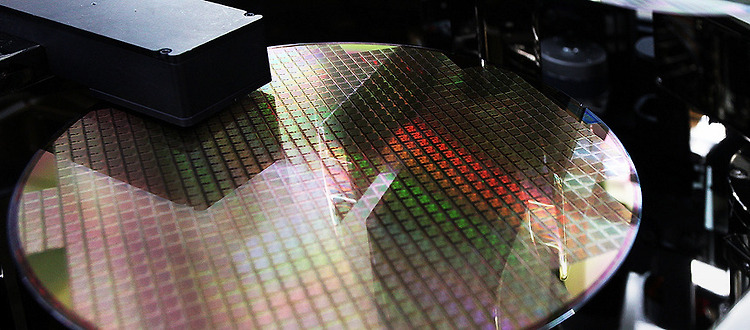
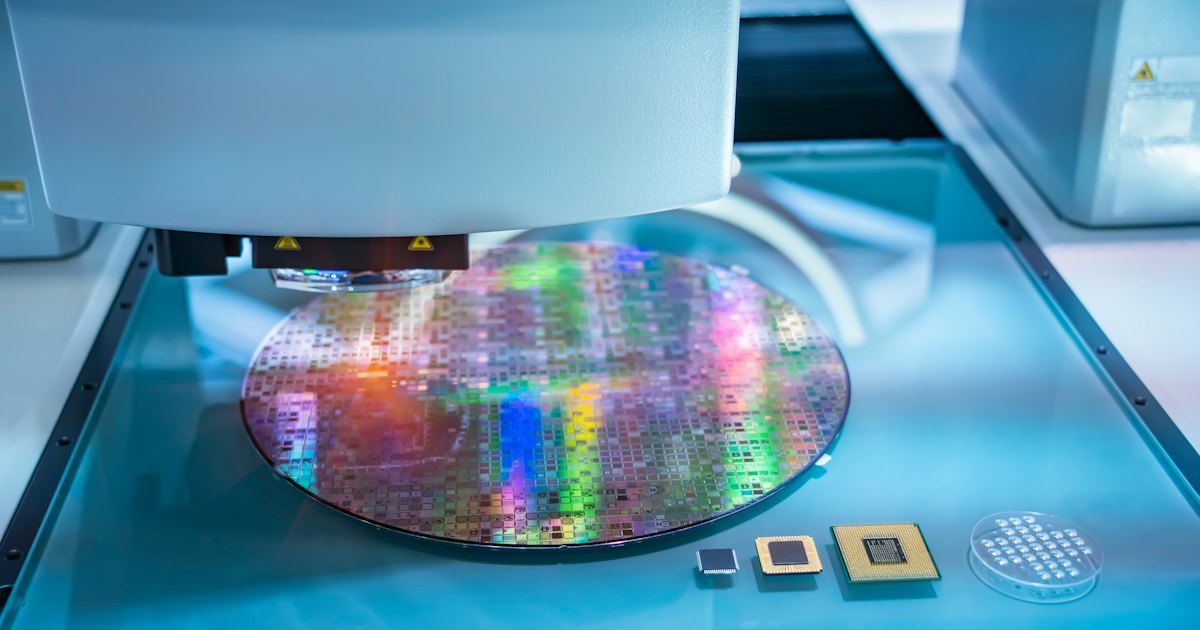
The star of the show is the WSE-3T wafer, short for Wafer-Scale Engine. Unlike a normal processor, which is a small chip cut from a silicon wafer, Cerebras builds one giant chip out of an entire wafer. Each WSE-3T wafer carries 44 GB of fast on-chip memory (SRAM) right next to its compute cores. That matters because the biggest enemy of AI speed is not computing power — it is moving data. When weights live in on-chip memory, the processor never has to wait for them to arrive from somewhere else.
The model in the example, Kimi K3, is Moonshot AI’s large open-weight model. According to the coverage of the Cerebras post, Kimi K3 scores 88.3% on Terminal-Bench 2.1 and 91.2% on BrowseComp, outperforming OpenAI’s GPT-5.6 Sol on the latter benchmark. In other words, this is not a toy model chosen to make the hardware look good. It is a genuinely capable frontier-class system, which is exactly why the demonstration matters: if the recipe works for a model this big and this good, it should work for the next generation of models too.
One clarification up front, because it is easy to mix up two similar names. Moonshot AI’s newest model, Kimi K3.1 Pro, launched on October 23, 2026, and we covered it separately in our Kimi K3.1 Pro guide. The Cerebras Kimi example uses the earlier Kimi K3 as its worked example. The two models are related, but they are not the same release — and the Cerebras numbers below describe the K3 layout specifically.
The 59-Wafer Math, Explained Simply
So how do you fit 3 trillion parameters onto chips that hold 44 GB each? The Cerebras Kimi answer starts with a bit of arithmetic that anyone can follow, even without an engineering degree.
First, shrink the model. At full precision, 3 trillion parameters would need an enormous amount of memory. Cerebras applies 4-bit weight quantization, which stores each parameter in just half a byte instead of two or four. That compression brings the total weight payload down to roughly 1.5 terabytes — still huge, but now divisible into manageable pieces.
Next, split by layer. Kimi K3 has 93 layers, and at 4-bit precision each layer works out to about 16 GB. A single WSE-3T wafer holds 44 GB, so a layer fits comfortably — but the exact packing depends on what kind of layer it is. This is where the Cerebras Kimi math gets clever.
Cerebras Kimi by the Numbers
- Model size: roughly 3 trillion parameters (Kimi K3)
- Layers: 93 total — 69 linear-attention layers and 24 dense layers
- Memory per wafer: 44 GB of on-chip SRAM
- Weight precision: 4-bit quantization, with an 8-bit key-value (KV) cache
- Wafers required: 59 (35 for linear layers + 24 for dense layers)
- Target speed: 1,000 to 2,000+ tokens per second
- Between-wafer hop time: about 2 microseconds, via RDMA over Ethernet
- Assumed request size: a 256,000-token average request, per Cerebras’s own description
Why Dense Layers Hog a Whole Wafer Each
Kimi K3’s 24 dense layers each occupy a full wafer in the Cerebras Kimi layout. The reason is the key-value cache — the working memory a model uses to remember the conversation so far. Dense layers need a large KV cache, and that cache eats into the wafer’s 44 GB alongside the layer’s weights. So one dense layer plus its cache fills one wafer: 24 dense layers, 24 wafers. There is no room to squeeze a second layer in, and Cerebras does not try.
Why Linear Layers Pack Two to a Wafer
The other 69 layers are linear-attention layers, and they behave very differently. A linear-attention layer keeps only a small, fixed-size state for each request, rather than a cache that grows with the conversation. That fixed state is tiny compared with a dense layer’s cache, so two linear layers fit on a single wafer with room to spare. Do the division — 69 layers at two per wafer — and you get 35 wafers (with the last wafer holding a single layer). Add the 24 dense-layer wafers, and you arrive at the headline number: 59 wafers for one model.

That number sounds extravagant until you compare it with the alternative. On conventional GPU hardware, a 3-trillion-parameter model also needs many chips — but those chips spend much of their time waiting for weights to travel across slower memory and network links. The point is not that 59 wafers is a small number. It is that 59 wafers, wired the right way, can answer at a speed GPUs struggle to match for a model this size.
Pipeline Parallelism: The Assembly Line Idea
Once the layers are mapped, the 59 wafers are connected in a pipeline. If you have ever seen a car factory, you already understand the idea. Each station does one job and passes the half-finished product to the next station. Nobody waits around, and many cars move through the line at once.
In this pipeline, each wafer runs its assigned layers and passes only the activations — the intermediate results of the computation — to the next wafer. The weights never move. Activations cross between wafers via RDMA over Ethernet in about 2 microseconds per hop. Because only small activations travel, the links between wafers never become the bottleneck. And because every wafer works on a different request (or a different stage of a request) at the same time, the pipeline stays busy instead of idling.
This is the opposite of how most people imagine AI running. The popular image is one giant computer thinking hard about one question. The reality is closer to an assembly line: dozens of stages, each doing a small piece, with many requests flowing through simultaneously. The result is high throughput — lots of tokens per second across all users — which is the metric that matters most for a service serving thousands of people at once.
There is a second, subtler benefit. Because the weights live on the chips, the system avoids the single biggest energy cost in AI inference: dragging weights out of external memory for every token. Memory movement burns power and time. Keeping weights still is why Cerebras can claim both speed and efficiency in the same breath — although, as we will see, the total power bill is still very large.
1,000–2,000 Tokens per Second: What That Speed Feels Like
Tokens are the small chunks of text a model reads and writes — roughly, a word is about one to one-and-a-half tokens. At 1,000 tokens per second, a model produces around 750 words per second. A typical 500-word answer would appear in under a second. At 2,000 tokens per second, the same answer lands in about a third of a second. For comparison, a fast human reader manages roughly 250 words per minute. Cerebras Kimi is not just faster than reading — it is faster than you can skim.
Why does that matter in practice? Three reasons. First, long documents stop being painful. A model that can chew through a 256,000-token request — the average size Cerebras assumes in this example — can analyze an entire codebase, a stack of contracts, or a year of company reports without making the user wait minutes for each step. Second, agents get practical. AI agents that plan, use tools, check their work, and revise need many back-and-forth model calls. Speed turns a ten-minute agent task into a one-minute task. Third, cost per answer falls when hardware serves more users per second, which is how frontier intelligence eventually reaches smaller companies and lower prices.
It is worth noting what Cerebras claims here and what it does not. The company advertises 1,000–2,000+ tokens per second for multi-trillion-parameter models on this architecture, and the Kimi K3 layout is presented as the worked example of how that speed is achieved. Independent commentators have stressed that the post is a deployment recipe — a careful, public calculation — rather than a published benchmark run with full test conditions. Keep that distinction in mind; we return to it in the fine print below.
The Power Catch Behind Cerebras Kimi
Here is the part of this story that deserves just as much attention as the speed: power. One Hacker News commenter did the back-of-envelope math on the full 59-wafer rig and arrived at roughly 1.18 megawatts of total power draw, or about 4.1 joules per token. To put that in perspective, 1.18 megawatts is roughly the electricity demand of several hundred US homes running at once — all to serve a single model.
That figure is commenter math, not a number Cerebras published for this layout, and it should be treated as an estimate rather than a measurement. But it makes an important point that Cerebras itself acknowledges in its own framing: the honest metric is tokens per second per megawatt at matched speed — how much useful output you get for each unit of power — and the post does not give that number for this specific 59-wafer layout. Speed alone is only half the story. Speed per watt is what determines whether a deployment is affordable, sustainable, and scalable.

Cerebras Kimi Power Math, in Plain Terms
Think of it this way. A sports car and a delivery van can both reach the same speed, but nobody would call them equally efficient. The same logic applies to AI hardware. If the 59-wafer Cerebras Kimi rig draws around a megawatt to hit 1,000–2,000 tokens per second, the interesting question is not just “how fast?” but “how fast per megawatt, compared with a GPU cluster doing the same job?” Until Cerebras or an independent tester publishes that matched comparison, the power story remains the biggest open question hanging over an otherwise elegant design.
For US businesses, this matters for a very practical reason: electricity and cooling are often the largest ongoing costs of running AI, bigger than the hardware purchase over time. A data center that needs a megawatt per model also needs the grid connection, the cooling, and the building to support it. That is why the industry’s next battleground is not just raw speed — it is speed per watt, and this debate is a perfect example of that shift.
The Honest Fine Print
Good technology coverage separates what a company showed from what it proved. Here is the fine print on Cerebras Kimi, stated plainly:
- It is an illustrative example, not a public demo. Cerebras itself describes Kimi K3 as an illustrative example in the post, and multiple independent write-ups note that the company has not established whether this exact layout was run end-to-end for real users, or supplied an independently verified benchmark tying the layout to the advertised speed.
- The request size is assumed. The layout assumes a 256,000-token average request. Real workloads vary wildly — short chats, long documents, agent loops — and performance will differ across them.
- No full benchmark conditions are published for this layout. The post does not give measured power consumption for the layout, the full test setup, or a clear count of simultaneous requests it supports.
- The power math is third-party. The roughly 1.18 MW and 4.1 joules-per-token figures come from a commenter’s calculation, not from Cerebras, and should be read as an estimate.
- Speed is a target range, not a guarantee. “1,000–2,000+ tokens per second” is an advertised range for the architecture class. Your mileage will vary with request length, batch size, and model configuration.
None of this makes the Cerebras post unimportant. A concrete, checkable deployment recipe for a 3-trillion-parameter model is genuinely useful — engineers can now argue about specific numbers instead of vague claims. But readers should understand the difference between “here is how it would work” and “here is a measured result.” Cerebras Kimi is firmly the former, and honest coverage should say so.
Cerebras Kimi vs Traditional GPU Inference
How does the wafer-scale approach compare with the GPU clusters that run most AI today? The table below summarizes the key differences in plain terms. Note that the Cerebras column describes the published Kimi K3 layout, while the GPU column describes the conventional approach in general — not a head-to-head benchmark, which has not been published.
| Feature | Cerebras Kimi (wafer-scale) | Traditional GPU inference |
|---|---|---|
| Where weights live | On-chip SRAM, next to compute | Mostly in external high-bandwidth memory |
| What moves between chips | Only small activations | Weights and activations across memory and network |
| Scaling method | Pipeline across 59 wafers | Tensor and pipeline parallelism across many GPUs |
| Target speed (3T model) | 1,000–2,000+ tokens/sec | Varies widely; large models are typically much slower per user |
| Biggest cost | Wafer hardware + power for the rig | Memory bandwidth and GPU-hours |
| Maturity | Published recipe; limited public models | Battle-tested at massive scale worldwide |
The GPU world has one enormous advantage that no table can hide: it is everywhere. Developers can rent GPU time in minutes, frameworks are mature, and every major cloud offers it. The Cerebras Kimi approach, by contrast, requires specialized hardware and a deployment most teams will never build themselves. Its likely path to users is not “buy 59 wafers” but “use a Cerebras-powered cloud service” — which is exactly how Cerebras already serves smaller models today.
What Cerebras Kimi Means for Developers and Businesses
Even if you never touch a wafer, this story has practical implications. First, it signals where inference pricing is headed. When a provider can serve a frontier-class model at thousands of tokens per second, the cost of each answer drops — and lower inference costs flow into cheaper APIs, cheaper agent services, and cheaper AI features inside ordinary software. US startups that could never afford to run a 3-trillion-parameter model themselves may soon rent that capability by the token.
Second, it changes what developers should design for. If near-instant, long-context inference becomes a commodity, the winning products will not be the ones with the biggest model — they will be the ones with the best workflows: agents that check their own work, tools that verify answers, and interfaces that turn raw model output into finished work. Speed removes the excuse for shallow, one-shot AI features. The bar moves from “can it answer?” to “can it do the whole job?”
Third, it is a reminder to watch the infrastructure layer, not just the model layer. Most AI news focuses on which lab released the smartest model. Cerebras Kimi shows that the hardware and serving stack can matter just as much: the same model, served differently, can feel like a different product. Investors, builders, and buyers who only track model benchmarks are missing half the race.
For a related look at the software side of cheap, fast inference, see our guide to DeepSeek DeepInfer, the open-source inference engine behind DeepSeek’s famously low API prices, and our DeepSeek V4.1 Flash explainer, which covers another efficiency-first release from the same month. Together with Cerebras Kimi, they tell one consistent story: October 2026 is the month AI got serious about the cost of thinking.
What You Can Actually Use Today
This is the reality check every reader deserves. The Cerebras Kimi 59-wafer layout is not something you can sign up for and use this afternoon. Publicly accessible models on Cerebras’s cloud today are far smaller — users report models in the GPT OSS 120B and Qwen 27B class — which are fast but, as commenters bluntly put it, sometimes wrong on harder tasks. The gap between the demonstration and the public product is real, and it is the single most important caveat for anyone excited by the headline numbers.
What you can do today is use Cerebras’s existing fast-inference service for the smaller models it currently hosts, and watch for larger models to arrive on the platform. You can also read Cerebras’s own technical writing and the independent coverage — including the October 25 AI news digest and the LavX breakdown of the wafer math — to follow how the story develops. If you are evaluating inference providers for a US business, the right questions to ask any vendor now include: What is your tokens-per-second per megawatt? What does a 256,000-token request actually cost? And can you show measured, not illustrative, numbers?
For most readers, the practical takeaway is patience with a purpose. The Cerebras Kimi recipe proves that serving a 3-trillion-parameter model at extreme speed is an engineering problem with a known shape, not a mystery. The remaining work — measured benchmarks, power efficiency at scale, and public availability — is exactly what to watch for in the coming months.
Cerebras Kimi FAQs
What exactly is Cerebras Kimi?
Cerebras Kimi is Cerebras’s published technical breakdown of how to serve Moonshot AI’s roughly 3-trillion-parameter Kimi K3 model on 59 of its WSE-3T wafer-scale chips, targeting 1,000–2,000+ tokens per second. It is a deployment recipe, not a chatbot or a consumer product.
Why does Cerebras Kimi need 59 wafers?
Each WSE-3T wafer holds 44 GB of on-chip memory. At 4-bit precision, Kimi K3’s 93 layers need 24 wafers for the 24 dense layers (one each, because of their large key-value caches) and 35 wafers for the 69 linear-attention layers (two per wafer, because their state is small and fixed). That totals 59 wafers.
Is Cerebras Kimi really that fast?
Cerebras advertises 1,000–2,000+ tokens per second for multi-trillion-parameter models on this architecture, and the Kimi K3 layout shows how that speed would be achieved. But the post is an illustrative example, not an independently verified benchmark of this exact layout, so treat the range as a target rather than a measured guarantee.
How much power does the Cerebras Kimi rig use?
Cerebras has not published a measured power figure for this layout. A commenter’s estimate puts the full 59-wafer rig at roughly 1.18 megawatts, or about 4.1 joules per token. Treat that as an estimate, and watch for an official tokens-per-second-per-megawatt figure.
Can I use Cerebras Kimi today?
No — not the 59-wafer Kimi K3 layout. Publicly available models on Cerebras’s service are much smaller today. The layout is a technical demonstration of what the hardware can do, and larger models may arrive on the platform over time.
Is Cerebras Kimi the same as Kimi K3.1 Pro?
No. The Cerebras example uses the earlier Kimi K3 model (roughly 3 trillion parameters). Kimi K3.1 Pro is Moonshot AI’s newer release from October 23, 2026, covered in our separate Kimi K3.1 Pro guide.
The Bottom Line on Cerebras Kimi
Cerebras Kimi is a glimpse of AI’s infrastructure future, published in unusually checkable detail. The wafer math is elegant: park a 3-trillion-parameter model on 59 wafers, keep the weights still, move only activations, and watch the tokens fly at 1,000–2,000+ per second. For developers, businesses, and anyone who pays for AI by the token, that is genuinely exciting news.
But excitement should come with the fine print attached. The layout is illustrative, the power figure is estimated, the benchmark conditions are unpublished, and the public product today serves far smaller models. The right way to read Cerebras Kimi is as a credible, detailed promise — one that the next few months of measured results will either confirm or qualify. If Cerebras delivers measured tokens-per-second-per-megawatt numbers and brings larger models to its public service, this post will be remembered as the moment wafer-scale inference went from curiosity to contender. Until then, it stands as the clearest public recipe yet for running a giant model at instant speed — and a useful reminder that in AI, the plumbing matters as much as the brain.
Sources and further reading: Cerebras’s technical post on deploying trillion-parameter models (October 22, 2026), as covered by the October 25 AI news digest and the LavX wafer-math breakdown. All performance and power figures are attributed to Cerebras or to the commentators cited; where a figure is illustrative or estimated, this article says so.