
Google Gemini glasses are finally real — and you can pre-order them right now. On November 12, 2026, Google and Samsung opened pre-orders for Intelligent Eyewear, a pair of audio-first smart glasses with the Gemini AI assistant built in. Prices start at $395, and the glasses go on general sale on December 10, 2026, just in time for the holidays.
This is Google’s second serious attempt at smart glasses, and it looks nothing like the original Google Glass. There is no display in the lenses, no geeky prism hovering over your eye, and no $1,500 price tag. Instead, you get normal-looking frames from two real eyewear brands — Warby Parker and Gentle Monster — with a camera, speakers, and microphones hidden inside, and Gemini answering your questions by voice. If you have ever wanted an AI assistant you can talk to without pulling out your phone, this is the closest thing to it yet.
In this guide, we explain everything that matters before you spend $395 or more: the exact prices, the release date, the full specs, what Gemini can actually do on your face, the privacy rules Google put in place, and how Google Gemini glasses stack up against the Ray-Ban Meta glasses that currently lead this market. We also cover the one big catch — phone compatibility — because these glasses will not work with every Android phone.
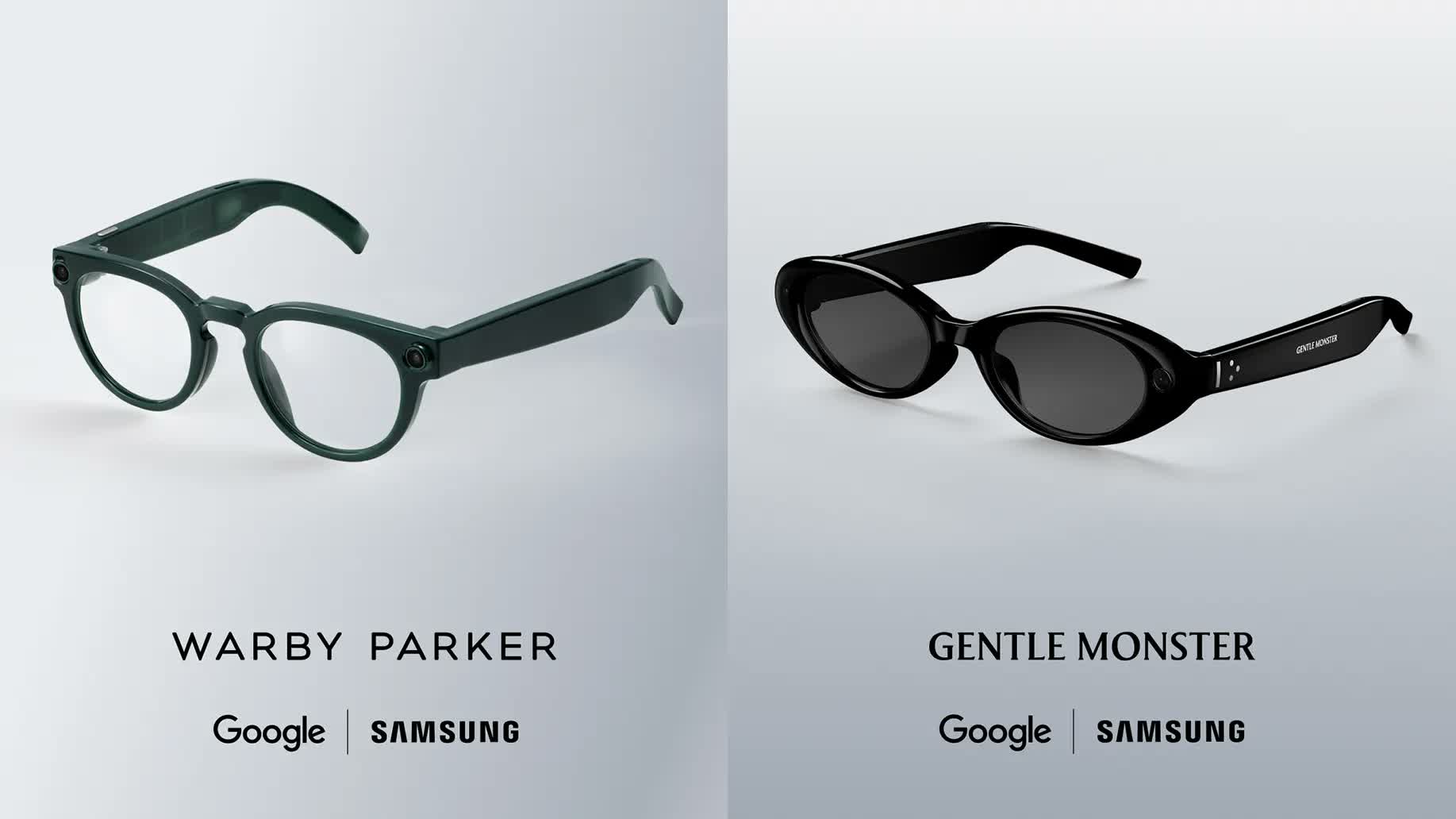
Table of Contents
- What Are Google Gemini Glasses?
- Google Gemini Glasses Price and Release Date
- Design and Styles: Nine Frames, Two Personalities
- Specs: What’s Inside the Frames
- What Can Google Gemini Glasses Actually Do?
- Privacy: The Camera on Your Face
- Google Gemini Glasses vs Ray-Ban Meta
- Phone Compatibility: Will They Work With Your Phone?
- Should You Pre-Order Google Gemini Glasses?
- What’s Missing — and the Display Version Coming Later
- Frequently Asked Questions
What Are Google Gemini Glasses?
Google Gemini glasses are smart glasses built by Google and Samsung under the name Intelligent Eyewear, running on Google’s Android XR platform. They are the first Gemini-powered glasses you can actually buy, and they mark Google’s return to a product category it famously fumbled more than a decade ago with Google Glass.
The idea is simple: put the Gemini AI assistant on your face so you can ask questions about what you are looking at, get directions, translate a conversation, or capture a photo — all without touching your phone. Say “Hey Gemini” or tap the frame, and the assistant answers through open-ear speakers built into the arms. A 12-megapixel camera gives Gemini eyes, four microphones give it ears, and your phone does the heavy computing in the background.
What makes this launch different from Google Glass is the deliberate decision to leave the display out. There is nothing projected onto the lenses and nothing for other people to stare at. The glasses look like ordinary glasses, which is exactly the point. Google learned from the original Glass — and from watching Meta sell millions of Ray-Ban smart glasses — that people will only wear an AI device all day if it looks like something they would wear anyway. That is why the frames come from Warby Parker and Gentle Monster rather than from a tech company, and why Samsung handled the engineering while Google handled the software.
The glasses are also a bet on timing. Meta’s Ray-Ban glasses proved there is a real market for camera glasses with an AI assistant, and Google is now entering that market with what early testers describe as a smarter assistant, a lighter frame, and stronger privacy rules. Whether that is enough to catch up is the question this article tries to answer honestly.
Google Gemini Glasses Price and Release Date
Here is the short version: Google Gemini glasses start at $395, pre-orders opened on November 12, 2026, and the general sale begins on December 10, 2026 in the United States and South Korea. Those are the only two launch countries for now, and Google has not announced a date for other markets.
The price of Google Gemini glasses depends on which brand you choose, and the two collections are aimed at very different buyers:
- Warby Parker Intelligent Eyewear — from $395. Three frame styles (Alden, Reid, and Wren) in optical and sun versions, in Pine, Saddle, and Jet Black. The $395 starting price covers clear or tinted lenses without a prescription; prescription lenses, and other lens options, cost extra and are priced item by item. Warby Parker counts 14 variations across the three styles.
- Gentle Monster Intelligent Eyewear — from $449 to $489. Six bolder, fashion-forward designs in colors such as dark red, pink, gray, and yellow, with tinted, clear, blue, or brown lenses — 16 variations in total. A clear prescription lens adds $100 and a light-adaptive prescription lens adds $140, and the store accepts eligible vision insurance. Prescription options are available on most frames.
Where you buy Google Gemini glasses matters too. Pre-orders run through Warby Parker’s own stores and website and through Gentle Monster’s official online store. You can also book a guided demo at more than 360 Warby Parker retail locations, or try the glasses at select Gentle Monster, Warby Parker, and Google Store locations, including pop-up events in New York during November. Gentle Monster began shipping on December 9, with the official launch on December 10; Warby Parker expects its first deliveries by mid-December.
One thing the $395 price does not include is any subscription. Unlike some AI hardware that locks features behind a monthly plan, the glasses work with the Gemini features on your phone plan. Google has not announced any bundled Gemini subscription with the glasses, so the price you see is the price you pay for the hardware — plus whatever your prescription lenses add.
Warby Parker vs Gentle Monster: Which Collection Should You Pick?
The honest answer is that the technology inside both collections is identical. The same chip, camera, battery, speakers, and Gemini software sit in every frame. What changes is the look, the fit, and the price.
Warby Parker is the practical choice. Its three styles — Alden, Reid, and Wren — are based on frames the company already sells, so they look like normal, understated glasses. They are the right pick if you want everyday glasses that happen to be smart, and if you want to try them on in one of 360-plus stores before buying. At $395, they also undercut the main rival, the Ray-Ban Meta Gen 3, by $54.
Gentle Monster is the fashion choice. Its six designs are bolder, with cat-eye shapes, bright colors, and a deliberately Y2K look on two of the frames. They cost $449 to $489, which puts the cheapest Gentle Monster frame at exactly the same price as the Ray-Ban Meta Gen 3. Buy these if the glasses are as much a style statement as a gadget for you — and note that Gentle Monster is the only collection sold in South Korea at launch.
Either way, you are buying the same Google Gemini glasses experience. Choose on looks and fit, not on features, because the features do not change.
Design and Styles: Nine Frames, Two Personalities
Across both collections, there are nine frame styles and 30 variations in total. That is a lot of choice for a first-generation product, and it is deliberate: Google and Samsung want these glasses to feel like eyewear first and technology second.
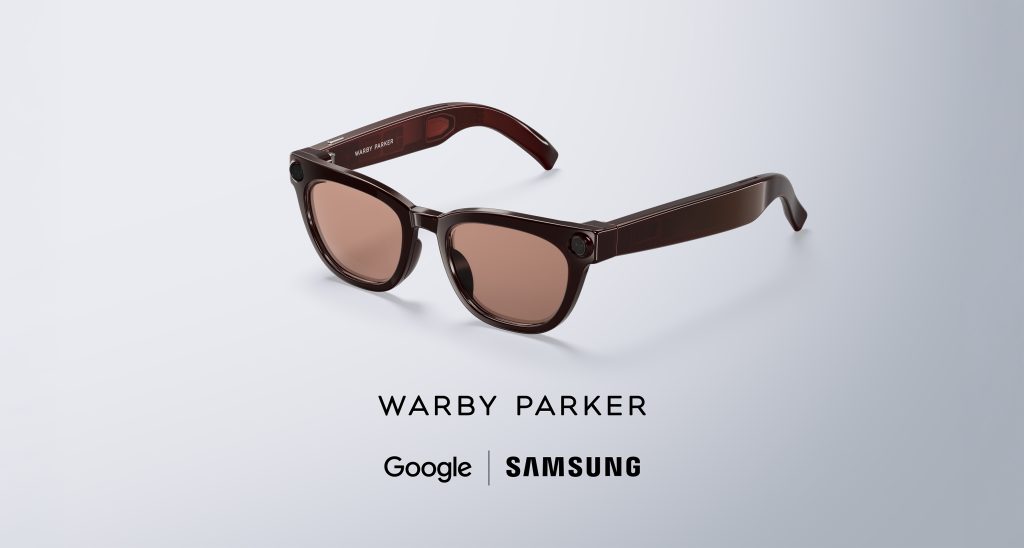
The Warby Parker collection keeps things classic. The Alden is a rounded optical frame in dark green with clear lenses, the Reid is a black square frame, and the Wren is a burgundy frame with brown-tinted lenses. Each comes in optical and sun versions, with a choice of widths and lens options, in Pine, Saddle, and Jet Black colorways. These are frames you could wear to an office without anyone noticing they are smart glasses — until you start talking to them.
The Gentle Monster collection goes the other way. Six designs with names like GGS001 through GGS006 range from wide black sunglasses to light pink frames with grey-tinted lenses and a light yellow frame with tinted lenses. The colors are loud — dark red, pink, gray, yellow — and two designs lean into a deliberately Y2K look. If Warby Parker is the glasses you wear to work, Gentle Monster is the glasses you wear to be noticed.
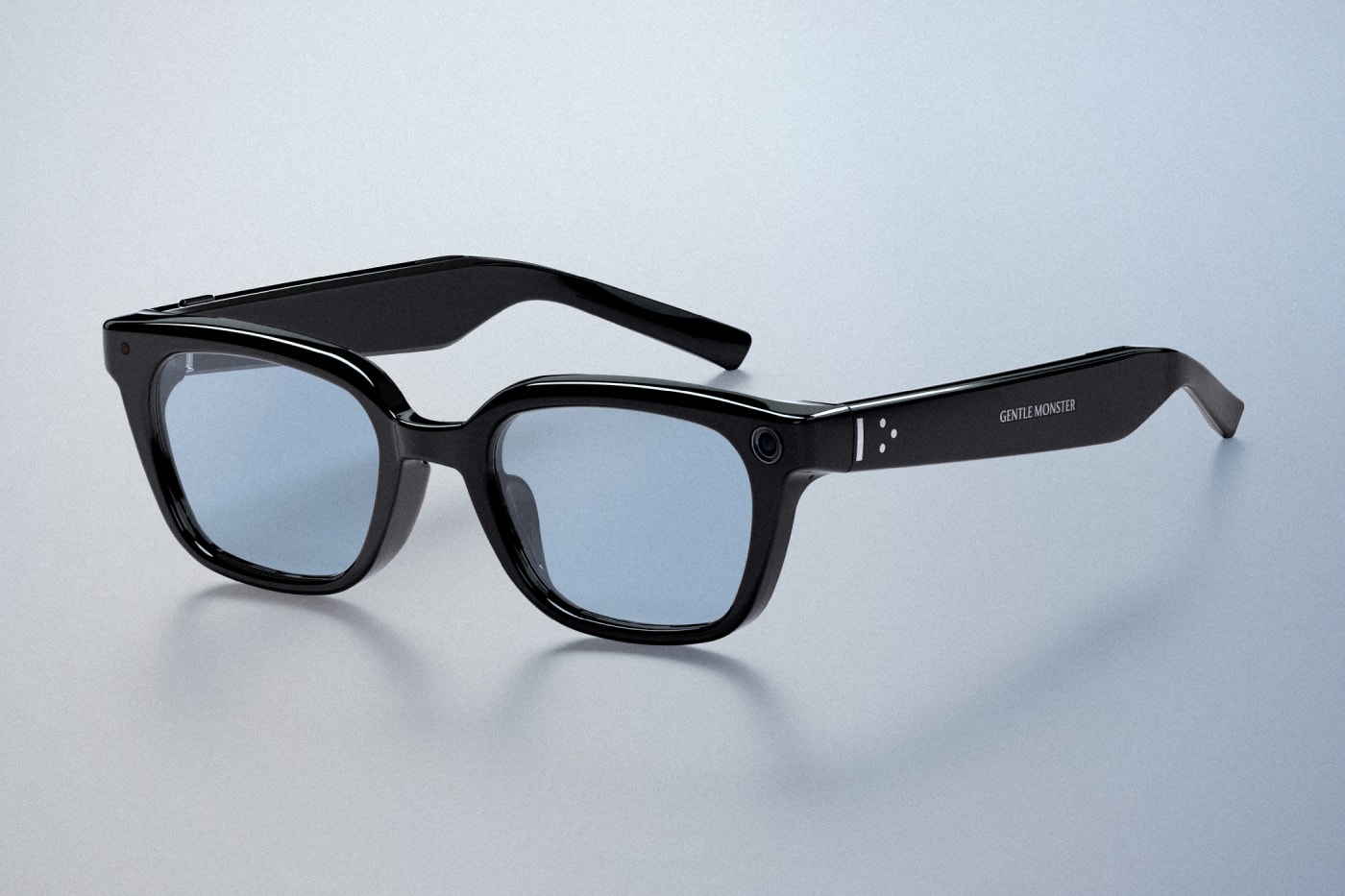
Underneath the fashion, the hardware inside Google Gemini glasses is discreet. The frames weigh 40 to 44 grams — Google’s blog says around 41 grams — which is only a little heavier than a normal pair of glasses and lighter than many rivals. The electronics live in the temples, which are thicker than a regular frame but not obviously so. A small circular camera sits on the front of the frame near each hinge, and there is a white indicator light that shows when the camera is recording. A touchpad on the temple handles taps and swipes, and a physical power switch lets the glasses work as plain, ordinary eyeglasses with everything turned off.
Google Gemini glasses carry an IPX4 water-resistance rating, so light rain and sweat are fine, but you should not swim in them. They come with a portable charging case that recharges the frames up to seven times, which matters because the on-board battery is small — more on that in the specs section below.
Specs: What’s Inside the Frames
Here is the full hardware picture for Google Gemini glasses, based on Google’s announcement and the detailed specifications reported by 9to5Google and other outlets covering the launch:
| Feature | Specification |
|---|---|
| Platform | Android XR |
| Chip | Qualcomm Snapdragon AR1 Gen 1 |
| Memory / storage | 2 GB RAM, 64 GB storage |
| Camera | 12-megapixel ultra-wide, 3K video at 30 fps, HDR, image stabilization, spatial audio capture |
| Video clips | Up to 90 seconds per clip |
| Microphones | 4 microphones |
| Speakers | 2 open-ear speakers, custom-tuned |
| Battery | 245 mAh, rated up to 9 hours per charge |
| Charging case | Up to 7 additional full charges (about 72 hours total) |
| Weight | 40–44 grams (about 41 grams per Google) |
| Connectivity | Bluetooth 5.4, Wi-Fi 6E, Wi-Fi Aware (iPhone transfers) |
| Water resistance | IPX4 |
| Controls | Touchpad (taps and swipes), physical power switch, “Hey Gemini” voice hotword |
| Price | From $395 (Warby Parker) / $449–$489 (Gentle Monster) |
| Release date | December 10, 2026 (pre-orders from November 12, 2026) |
A few of these numbers deserve a closer look before you buy Google Gemini glasses. The nine-hour battery is the headline figure, but it is a rated maximum, not a promise for heavy use. Recording lots of video, asking Gemini questions all day, and streaming music will drain the 245 mAh battery faster. The saving grace is the charging case: seven extra charges means roughly 72 hours of total use before you need a wall outlet, so the glasses should survive a long weekend away from a charger if you pop them back in the case between uses.
The 12-megapixel camera on Google Gemini glasses shoots 3K video at 30 frames per second, with HDR processing and image stabilization. On iPhone, the companion app handles the HDR processing and saves photos and video clips up to 90 seconds long directly to Apple Photos using Wi-Fi Aware for fast transfers. That 90-second clip limit is worth knowing if you planned to record long stretches of video — these are for capturing moments, not filming a whole event.
The chip inside Google Gemini glasses is the Qualcomm Snapdragon AR1 Gen 1, the same class of processor Meta uses in its own glasses, with 2 GB of RAM and 64 GB of storage on board. Google Gemini glasses do not run Gemini locally — the heavy AI work happens on your phone and in the cloud — but the chip handles the camera, audio, and the always-on “Hey Gemini” listening.
One small but thoughtful feature: hand gestures from a Pixel Watch or Galaxy Watch can control playback, and a palm-up double pinch on a Pixel Watch invokes Gemini. Support for Fitbit Air is expected next year. These are minor conveniences, but they show Google is thinking about the glasses as part of a wider ecosystem rather than a standalone gadget.
What Can Google Gemini Glasses Actually Do?
Specs only matter if the experience is good, so this is the section that counts. Google Gemini glasses are built around one idea: Gemini can see what you see, hear what you hear, and answer through your ears while your hands stay free and your eyes stay up. Here is what that means in practice.

Ask Gemini about what you are looking at
This is the core feature. Look at something — a street-art mural, a bookshelf, an event poster — and ask Gemini about it. Google’s own examples include learning the story behind a mural you are passing, asking for a tailored recommendation from a “New Arrivals” bookshelf, or looking at an event poster to check your Calendar availability on the spot. The camera feed gives Gemini the context, so you do not have to describe what you are seeing in words.
Gemini can also handle the small busywork of a day: add what you are looking at to a grocery list, remind you where your next meeting is, or catch you up on group chats while you walk between meetings. You trigger it by saying “Hey Gemini” or tapping the frame.
Real-time translation in more than 70 languages
Google Translate on the glasses delivers real-time speech translation with automatic language detection across more than 70 languages. If you are traveling, or talking with someone who speaks another language, the translation plays in your ear as the other person speaks. This is one of the most practical features on the glasses, and one of the hardest for a phone to match — holding a phone between two people during a conversation is awkward; glasses are not.
Turn-by-turn navigation in your ear
Google Maps provides turn-by-turn directions through the open-ear speakers, so you can navigate a new city without staring at your phone. Combined with the camera, this is the closest the glasses come to an augmented-reality experience without a display: Gemini knows where you are and what is in front of you, and it can talk you to your destination.
Guided Vision: accessibility built in from day one
One of the most important features on Google Gemini glasses is Guided Vision, which offers conversational audio descriptions for people who are blind, have low vision, or simply want help reading small print or finding everyday items. You can ask Gemini to describe what is in front of you, read text aloud, or help you locate something in a room.
Google has also partnered with Aira: saying “Hey Gemini, open Aira Explorer” streams the glasses’ camera feed to a professionally trained human visual interpreter for real-time support. This is a genuinely useful accessibility story, and it is one of the strongest reasons to take these glasses seriously beyond the gadget crowd. For a full look at how Google’s newest AI models power features like this, see our guide to Gemini 4 Hydrogen, the latest flagship model in the Gemini family.
Music, calls, and messages — hands-free
The custom-tuned open-ear speakers direct clear vocals into your ear while keeping you aware of your surroundings, which matters for safety when you are walking or cycling. You can listen to YouTube Music, Spotify, or Apple Music, jump back into an audiobook on Audible, catch up on missed group chats, respond to messages, and take phone calls hands-free. On iPhone, Gemini can make calls, exchange one-to-one messages including iMessage, and receive notifications through the companion app.
And when you want to capture a moment, the camera is one button press — or one voice command — away. Your phone stays in your pocket while the glasses take the photo or clip, with spatial audio capture to help you relive the moment later.
Privacy: The Camera on Your Face
Smart glasses with a camera will always raise the same question: what happens to the people around you? Google clearly learned from the original Glass, which was nicknamed “Glassholes” hardware and banned from bars and cinemas, and from the backlash Meta faced over its own camera glasses. The privacy rules on Google Gemini glasses are the most detailed any smart-glasses maker has published, and they are worth reading in full before you buy.
Here is what Google promises:
- Camera visuals are not saved in your Gemini History when you ask Gemini a question using the camera, and they are not used to train AI models or to target ads. This is a clear, specific promise — and it goes further than Meta’s equivalent policy.
- Bystanders’ faces are automatically redacted from camera visuals before Gemini processes them, so the AI does not see the faces of people who did not agree to be recorded.
- A white indicator light blinks when photos or videos are saved to your gallery, so people nearby know the camera is active. The glasses are designed to stop recording if the light is covered or disabled, and Android XR runs a hardware check while the device charges to make sure the light has not been tampered with.
- Data stored on the glasses is encrypted, and data is also encrypted in transit if it leaves the glasses.
- You control which apps can access the camera and microphone, and you can change those permissions at any time. You can also review or delete your chats with Gemini and adjust your settings in Gemini History.
- Every pair has a physical off switch, so you can turn the glasses completely off and wear them as regular glasses whenever you want.
That is a strong list — but two honest caveats belong here. First, the promise covers camera visuals used for Gemini requests. Your conversation activity with Gemini still falls under Gemini’s normal retention terms: chats can be kept and reviewed under Google’s standard policies, with auto-delete after 18 months and reviewed chats kept for up to three years. The glasses are not a privacy-free zone; they are a device with clearer-than-usual boundaries.
Second, no indicator light stops someone determined to misuse a camera, and the history of camera glasses shows that social norms matter as much as hardware. Google’s rules are better than anything before them, but they do not make the social question go away — they just give you better answers when someone asks.
It is also worth noting the wider context. AI assistants are becoming powerful enough that some companies are pushing back: major websites and banks have started blocking AI agents from acting on their platforms, a trend we covered in our article on why websites block AI agents. Glasses that let an AI see and act in the physical world sit right on that same fault line, and the privacy rules above are Google’s attempt to stay on the right side of it.
Google Gemini Glasses vs Ray-Ban Meta
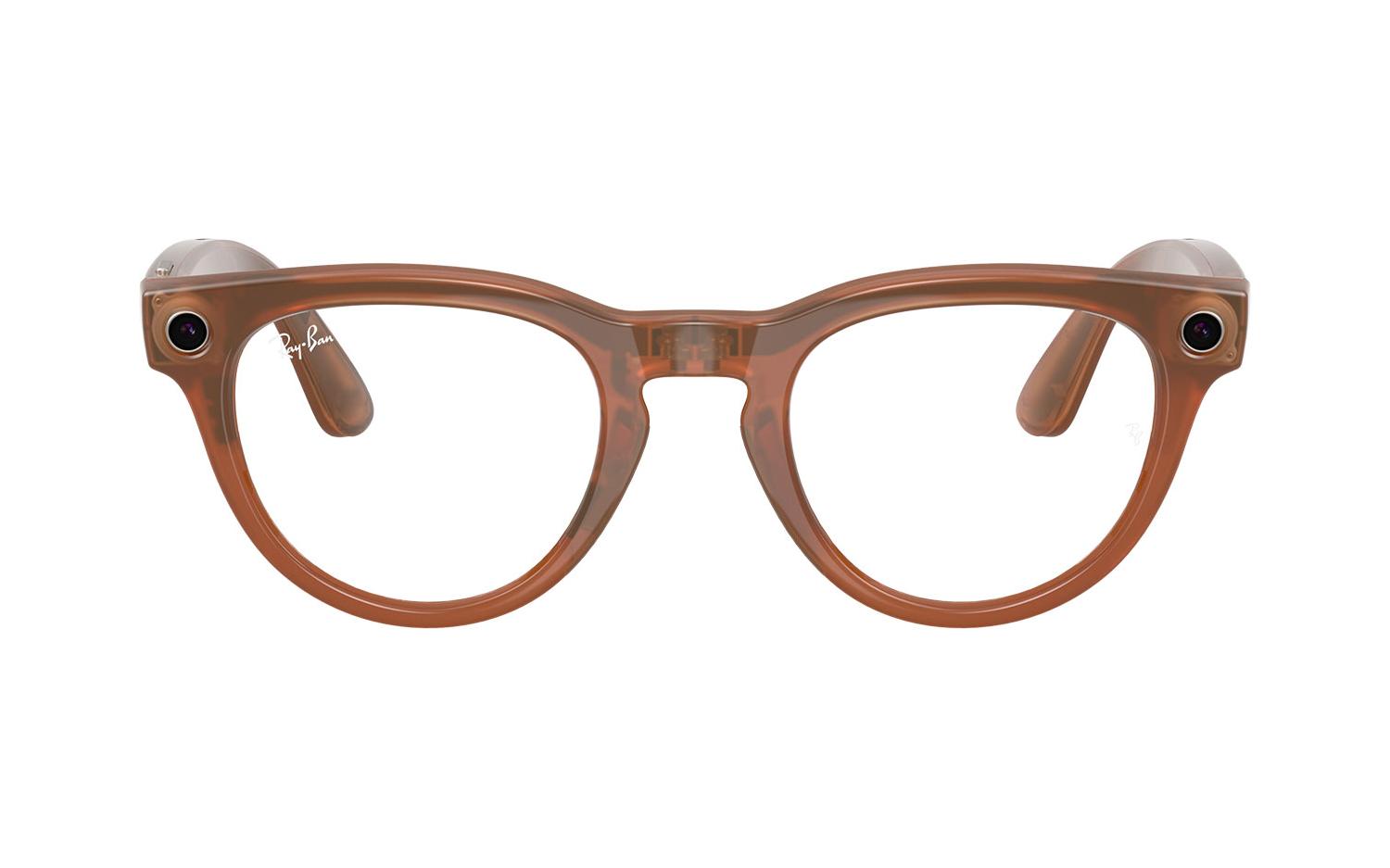
The comparison everyone wants is with Meta’s Ray-Ban glasses, which created this market and still lead it. Here is how Google Gemini glasses compare with the current Ray-Ban Meta lineup:
| Google Gemini Glasses | Ray-Ban Meta | |
|---|---|---|
| Starting price | $395 (Warby Parker) | $379 (Gen 2) / $449 (Gen 3) |
| AI assistant | Google Gemini | Meta AI |
| Camera | 12 MP ultra-wide, 3K video at 30 fps | 12 MP, 3K video (Gen 3) |
| Video clip limit | Up to 90 seconds | Up to 3 minutes (Gen 3) |
| Battery | Up to 9 hours, case adds 7 charges | Up to 8 hours (Gen 3), case adds charges |
| Weight | 40–44 grams | About 45–50 grams (Gen 3) |
| Display | None (display version coming later) | None on standard models; display version exists |
| Translation | Real-time, 70+ languages, auto-detect | Live translation, fewer languages |
| Phone support | Pixel 7+, Galaxy S/Z, iPhone 13 Pro+ | Most Android and iPhone models |
| Prescription lenses | Available (extra cost) | Available (extra cost) |
| Privacy indicator | White light; recording stops if covered | White LED recording light |
| Availability | US and South Korea, Dec 10, 2026 | Widely available now |
On paper, the contest between Google Gemini glasses and Ray-Ban Meta is close. Google wins on price at the entry level — $395 is $54 below the Ray-Ban Meta Gen 3’s $449, though only $16 above the older Gen 2 at $379. Google also wins on weight, battery life, and the breadth of its translation feature, and early testers have described Gemini as the smarter assistant of the two, with better answers to visual questions and deeper connections to Google apps like Calendar, Maps, and Gmail.
Meta wins on availability and ecosystem. Ray-Ban Meta glasses are on sale today in many countries, work with almost any modern phone, and record longer video clips. Meta also has a head start in one area Google has not matched yet: Meta already sells a display version of its glasses, while Google’s display glasses are still “coming later” with no date attached.
The real deciding factor is probably which assistant you already live in. If your life runs on Google — Gmail, Calendar, Maps, YouTube Music — the Gemini glasses will feel like a natural extension of your phone. If you live in Meta’s world, or you just want the widest choice of frames and the longest track record, the Ray-Bans remain the safer buy. Neither pair is a clear knockout; this is a genuine two-horse race for the first time.
Phone Compatibility: Will They Work With Your Phone?
This is the section to read before you pre-order, because it is the biggest catch in the whole launch. Google Gemini glasses do not work with every phone. At launch, the companion app supports only three groups of devices:
- Google Pixel 7 or later, running the Android 17 September 2026 update.
- Samsung Galaxy S and Galaxy Z phones (including S FE, Fold, Flip, and Fold Ultra models) running One UI 9.0 or later.
- iPhone 13 Pro or newer — the glasses are Made for iPhone certified. Some reports put the requirement more broadly at iPhone 13 or later with at least 6 GB of RAM on iOS 26.6 or later, but Google’s own guidance points to the iPhone 13 Pro and newer, so treat that as the safe minimum.
You also need a Google account from the US or South Korea, and you must be 18 or older. Google says it will share more about wider phone support in 2027, but for now, if you own a OnePlus, a Motorola, a Xiaomi, or any other Android brand, these glasses will not work with your phone at launch — no matter how much you want them.
This is a strange limitation for Google Gemini glasses, and it is probably the result of the deep integration the glasses need with the phone: the companion app handles HDR photo processing, fast photo transfers, calling, and messaging. Still, it is the single biggest reason to pause before pre-ordering. Check your phone against the list above first. If it is not on the list, the glasses are a 2027 purchase for you, not a December one.
Should You Pre-Order Google Gemini Glasses?
Pre-orders are open, the holiday clock is ticking, and the marketing is tempting. Here is an honest breakdown of who should buy now and who should wait.
Pre-order now if you:
- Own a Pixel 7 or newer, a recent Galaxy, or an iPhone 13 Pro or newer. Compatibility is the first gate, and if you pass it, everything else is a bonus.
- Already live in Google’s ecosystem. Gmail, Google Calendar, Google Maps, and YouTube Music are where these glasses shine, because Gemini can reach into all of them.
- Travel or work across languages. Real-time translation in 70-plus languages is the single most useful feature here, and it is hard to get this conveniently any other way.
- Need hands-free help for accessibility reasons. Guided Vision and the Aira integration are genuinely meaningful features, not marketing extras.
- Want the Warby Parker price. At $395, you are getting the cheapest entry point into this category from a major brand, $54 under the Ray-Ban Meta Gen 3.
Wait if you:
- Own an Android phone that is not a Pixel or Galaxy. The glasses simply will not work with your phone yet. Wait for the wider support Google has promised for 2027.
- Want a display in the lenses. Google has confirmed a display version is coming, but has given no date. If you want directions and notifications in your field of vision, this is not that product.
- Record long videos. The 90-second clip limit is short, and the Ray-Ban Meta Gen 3 records up to three minutes.
- Live outside the US or South Korea. There is no official channel to buy these glasses elsewhere yet, and imported pairs may not work properly with your account or phone.
- Prefer to let first-generation hardware prove itself. Nine hours of battery, real-world Gemini accuracy through a camera, and the durability of the frames are all claims that early buyers will test first. If you are cautious, the reviews arriving after December 10 will tell you more than any launch article can.
One more practical tip: if you do pre-order, book a guided demo first. Warby Parker offers demos at more than 360 stores, and fit matters more with smart glasses than with any other gadget — a frame that is uncomfortable after an hour is a $395 mistake. Try them on, ask Gemini a few questions, take a photo, and then decide.
It is also worth remembering that smart glasses are part of a bigger shift: AI assistants are moving off the phone and into the world around us, including into shopping. Walmart recently opened its stores to AI shopping agents, a story we covered in our guide to Walmart AI shopping agents — glasses that can see a product and ask Gemini about it are the wearable end of that same trend.
What’s Missing — and the Display Version Coming Later
No first-generation product is complete, and Google Gemini glasses have real gaps worth naming plainly.
There is no display. Everything Gemini tells you comes through your ears. That keeps the glasses light and normal-looking, but it also means you cannot glance at a translation, a direction arrow, or a notification. Google has confirmed a version with a display is coming later, with no date given. If you were hoping for the full augmented-reality experience, this launch is not it.
The battery is a rated maximum, not a guarantee. Nine hours is the figure for light use. Heavy camera use, constant questions, and music streaming will cut it down, and the 245 mAh battery is small by any standard. The charging case is the real battery story here — keep it with you.
Availability is narrow. Two countries, three phone families, and a US or South Korea Google account. For a product from the world’s biggest search company, that is a cautious launch, and it means most of the world will be watching from the sidelines this Christmas.
The assistant is only as good as its connection. Gemini’s answers come from your phone and the cloud, so a weak signal means a slow or silent assistant. The glasses are a companion device, not a standalone computer — without your phone nearby, they are just glasses.
None of these gaps makes the glasses a bad product. They make it a first step. Google is clearly playing a longer game here: get the audio glasses right, learn what people actually ask an assistant on their face, and then add the display when the technology and the price are ready. The $395 starting price is the clearest signal of that strategy — this is a product meant to sell in volume, not a showcase piece.
Frequently Asked Questions
How much do Google Gemini glasses cost?
Google Gemini glasses start at $395 for the Warby Parker collection (three styles: Alden, Reid, and Wren) and $449 to $489 for the Gentle Monster collection (six styles). Prescription lenses cost extra — $100 for a clear prescription lens and $140 for a light-adaptive prescription lens on Gentle Monster frames, with eligible vision insurance accepted.
When do Google Gemini glasses go on sale?
Pre-orders opened on November 12, 2026. The general sale and shipping begin on December 10, 2026 in the United States and South Korea. Gentle Monster began shipping on December 9, and Warby Parker expects first deliveries by mid-December.
Do Google Gemini glasses have a display?
No. The first-generation Google Gemini glasses have no display in the lenses — Gemini answers by voice through open-ear speakers. Google has confirmed a version with a display is coming later, but has not given a date.
Which phones work with Google Gemini glasses?
At launch, the glasses work with the Google Pixel 7 or later, Samsung Galaxy S and Galaxy Z phones on One UI 9.0 or later, and the iPhone 13 Pro or newer. Other Android brands are not supported at launch, with wider support promised in 2027. You also need a US or South Korea Google account and must be 18 or older.
How long does the battery last on Google Gemini glasses?
The battery is rated for up to 9 hours per charge, and the included charging case recharges the frames up to seven times — about 72 hours of total use. Heavy camera and voice use will reduce the per-charge figure.
Are Google Gemini glasses better than Ray-Ban Meta?
It depends on what you value. Google Gemini glasses are cheaper at the entry level ($395 vs $449 for the Ray-Ban Meta Gen 3), lighter, and offer wider real-time translation and a smarter assistant for Google app users. Ray-Ban Meta glasses are available in more countries, work with more phones, and record longer video clips. If you live in Google’s ecosystem, the Gemini glasses are the better pick; if you want the widest availability, Meta still leads.
Do Google Gemini glasses record people without them knowing?
Google built in several protections: a white indicator light blinks whenever photos or videos are saved, recording stops if the light is covered or disabled, and bystanders’ faces are automatically redacted from camera visuals before Gemini processes them. Camera visuals used for Gemini requests are not saved in your Gemini History and are not used for AI training or ads. There is also a physical off switch that turns the glasses into ordinary glasses.
Google announced the glasses on its official blog, and you can read the full announcement on Google’s blog. For an independent take on the launch pricing and holiday timing, see also the PYMNTS report on the $395 AI smart glasses.
Conclusion
Google Gemini glasses are the most important smart-glasses launch of 2026, and not just because of the $395 price. They are the moment Google stopped treating glasses as an experiment and started treating them as a product: real frames from real eyewear brands, a real ship date, and an assistant that already lives in the pockets of billions of people.
At $395, the Warby Parker collection of Google Gemini glasses undercuts the Ray-Ban Meta Gen 3 by $54, weighs less, lasts longer on a charge, and translates more languages. The privacy rules are the strongest in the category, and features like Guided Vision show Google is thinking about who these glasses help, not just who buys them. The catch is real — no display, a 90-second video limit, and phone support limited to Pixel, Galaxy, and iPhone 13 Pro and newer — but for anyone inside that compatibility list, the glasses are an easy recommendation to at least try on.
If you are going to pre-order, do it with your eyes open: check your phone against the compatibility list, book a demo at a Warby Parker store, and try the frames on before you pay. The technology is impressive, but glasses live on your face all day — comfort and fit matter as much as the chip inside. And if your phone is not supported yet, there is no rush. Google has promised wider support in 2027, and a display version is coming after that. The Gemini glasses story is just getting started, and the second act may be the one worth waiting for.
Pre-orders for Google Gemini glasses are open now at Warby Parker and Gentle Monster, with the general sale beginning December 10, 2026 in the US and South Korea.