
Table of Contents
On October 7, 2026, Google Labs quietly opened the doors to something it calls Playground — a new experimental platform where you can make a real, playable video game by typing a sentence. No coding, no game engine, no art software. The pitch, in Google’s own words: if you can think it, you can play it. With the Google Playground AI game maker now live for US users, October has turned into one of the busiest months of the year for AI launches, hot on the heels of GPT-6’s Intelligent UI rollout. This Google Playground AI game maker guide covers everything you need to know. Every Google Playground AI game maker feature is explained in detail below.
But is Playground a genuine game studio in your browser, or just another AI demo that is fun for ten minutes? In this guide, we explain what Google Playground is, how to use it step by step, what it costs, who can actually get in, and the honest limitations early testers have already found.

What Is the Google Playground AI Game Maker?
Google Playground is a browser-based game creation and discovery platform from Google Labs, Google’s experimental products arm. Instead of downloading an engine like Unity or Unreal and learning to code, you open a website, describe the game you have in your head in plain English, and the system generates a playable version of it in minutes. This Google Playground AI game maker platform is innovative. The Google Playground AI game maker experience is unique. Every Google Playground AI game maker session is different.
The experience is conversational rather than technical. You might type “a platformer where gravity flips every ten seconds,” and Playground hands back a working game you can immediately play in your browser. Then you keep chatting: “make the jumps floatier,” “turn the enemy into a giant cat,” “change the city to a space station.” The AI adjusts the game on the fly while you test it.
That combination — a chat interface, a built-in player, and a sharing layer — makes Playground feel less like a code generator and more like a small social game network. Finished games can stay private, be shared with friends through a link, or be published to a public gallery called Playground Explore, where other players can rate, play, and even remix them into their own versions.
How to Use Google Playground: From Prompt to Playable Game
Getting started is deliberately simple. Google wants the barrier to entry at zero, and the flow reflects that. Here is how a typical session works, based on Google’s launch announcement and early hands-on reports.
1. Sign in and open Playground
Head to playground.google in your browser and sign in with a Google account. There is nothing to install, and everything runs in the browser on both phones and laptops. You will need to be 18 or older and located in the United States — more on that below.
2. Pick a starting point
You can start from a blank canvas, remix one of Google’s starter prompts, or ask the guided helper to shape your concept if you are not sure where to begin. You then choose a genre — early options include trivia, racing and tower defence — and decide between 2D or 3D. Some genres also let you choose single-player or multiplayer.
3. Describe your game in words
This is the core of Playground. Write out how the game should play, how it should look, and how it should sound. You can describe the mechanics, the rules, the characters, the visual style and the mood all in one go. You can also upload your own images, and the AI reworks them into game assets that match the art style — handy if you want a personal touch. For custom graphics, see our roundup of the best AI logo makers and the best AI image upscalers to sharpen your assets before you import them.
4. Play it immediately, then refine by chatting
Hit enter and the game appears, ready to play. The clever part is what happens next: you keep talking to it. One early example from Engadget’s hands-on test was simply asking the AI to add a double jump to a platformer — and it did. You can ask it to tweak physics, rewrite rules, redesign characters or overhaul the entire environment, and you stay in control of the creative direction from rough idea to finished game.
5. Share or publish
When you are happy, you have three options: keep the game private, send a shareable link to friends, or publish it to the Explore gallery for the wider Playground community to discover. A link opens straight into play on a phone — no app download needed — which suits how most people game today.
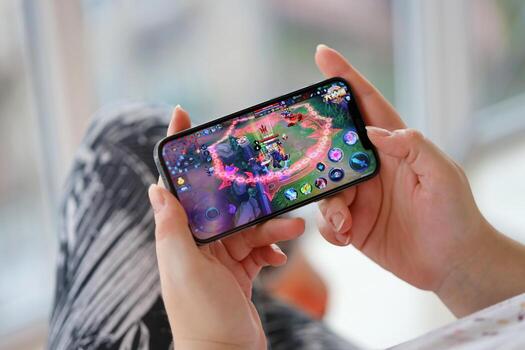
Playing, Sharing and Remixing: The Social Side
Playground is not just a creation tool; Google is clearly trying to seed a community around it. The Explore gallery is the public face: published games are ranked by player ratings and play activity, so the freshest, most creative titles float to the top.
There is also a light social layer that will feel familiar to anyone who has used Roblox. If you link a Google Play Games profile, you can set a custom handle, follow creators, like your favourite games, battle for leaderboard spots and play multiplayer in select genres. And remixing works both ways: you can remix someone else’s published game into your own version, and they can do the same with yours.
On the safety side, Google says every published game passes a screening step under its Community Guidelines before it goes public, and players can report games that break the rules.
How Much Does Google Playground Cost?
Playing games on Playground is free — browsing and playing costs nothing. Creating games is where the limits kick in. Google runs creation on a weekly token system: free accounts get a limited allowance of creation tokens each week, and subscribers to Google One AI plans get higher weekly limits.
Here is the catch: Google has not announced how many tokens each tier gets, or which Google One plans qualify for the higher limits. So if you plan to build a lot of games, you currently cannot tell how far a free account will stretch in a week. For now, casual creators are fine, but heavy builders will want to watch how the token system shakes out in the coming weeks.
There is also no word yet on how creators might earn money from popular games — that question is still unanswered.
Who Can Use It (and Who Cannot Yet)
For now, Playground is a limited launch. It is available to users aged 18 and over in the United States only. If your account is under 18, or you are outside the US, the platform simply does not include you.
Google has given no date for an international rollout, and there is no Android or iOS app — everything happens in the web browser. Google describes Playground as an early experiment that will evolve based on user feedback, so wider availability is plausible but not promised.
What’s Under the Hood: Gemini, Nano Banana, Lyria — and Unity Spark
According to reporting from The Verge, Playground runs on three of Google’s AI models working together: Gemini handles your text instructions, Nano Banana generates the visuals, and Lyria creates the music. They are paired with a custom system Google tuned on its own test games. One prompt can set the look, the sound and the rules together.
The more surprising announcement came from Unity. The game-engine company is building Unity Spark, a separate tool aimed at more serious creators that will plug into Playground later this year. Spark promises professional-level game mechanics, detailed 3D graphics and the full Unity engine, with a closed beta and waitlist open now.
Unity’s CEO has been careful to set expectations, saying Spark is not about one-shot generation and that copying an existing game with AI does not make you a great designer. The message: these tools reward genuine creative direction, not just clever prompting.
Honest Caveats: What Early Testers Say
Playground launched only days ago, but early hands-on reports already paint a realistic picture — and it is not all glowing.
The quality gap is real. Testers report that generated cover art often looks far more polished than the actual gameplay. One writer described a cosy game about catching lattes that delivered clunky movement, and a steampunk puzzle that felt half-baked. Odd animations and a mismatch between what you describe and what you get are common in these early days.
You trade control for convenience. Unlike a real engine, Playground gives you no project files to export and no engine-level control. You get a game that runs inside Google’s own player, with sharing and leaderboards attached. That is a deliberate trade: zero setup in exchange for working entirely inside Google’s sandbox.
Game developers are sceptical. Industry surveys show many professional developers are wary of generative AI, and Valve’s Steam store already requires games to disclose AI-made content. Playground’s arrival will not settle that debate — it will intensify it.
None of this makes Playground a bad product. It is an experiment, labelled as one. But go in expecting a toy-like creative sandbox with flashes of brilliance, not a replacement for a game studio.
Google Playground vs Other Ways to Make Games
| Option | Skill needed | Cost | Best for |
|---|---|---|---|
| Google Playground | None — just describe it | Free to play; creation on weekly tokens | Casual creators, quick prototypes, fun experiments |
| Unity / Unreal Engine | Coding + 3D skills | Free to start; revenue share at scale | Serious indie and professional games |
| Roblox Studio | Basic scripting (Lua) | Free; Robux economy | Social games with an existing audience |
| AI coding tools (vibe coding) | Some technical literacy | Varies by tool | Developers who want full code ownership |
Playground’s unique selling point is the complete absence of setup: no downloads, no code, no asset pipeline. Its unique weakness is the same thing — when the AI misunderstands you, you have fewer levers to pull than you would with real code.
Should You Try Google Playground?
If you are in the US and over 18, absolutely — playing is free and building costs nothing but your weekly token allowance. Playground is at its best as a creative toy: a way to turn a silly idea (“a racing game where the track is made of pizza”) into something playable in minutes, then send the link to a group chat.
Manage your expectations around polish, and do not expect a commercial-quality game. But as a glimpse of where AI-assisted creation is heading — and as a genuinely fun weekend experiment — Playground is one of the most interesting launches of October 2026. Keep an eye on the Unity Spark beta later this year: that is where the serious creators will likely end up.

Frequently Asked Questions
Is Google Playground free?
Yes — browsing and playing games is completely free. Creating and editing games runs on a weekly token system; free accounts get a limited allowance, and Google One AI subscribers get higher limits. Exact token amounts have not been announced.
How do I access Google Playground?
Visit playground.google in a web browser and sign in with a Google account. Nothing needs to be installed, and it works on both phones and laptops.
Is Google Playground available outside the US?
Not yet. It is currently limited to users aged 18 and over in the United States, with no announced date for international availability.
Can I share the games I make?
Yes. You can keep a game private, share it with friends via a link, or publish it to the public Explore gallery where others can play, rate and remix it.
Do I need coding skills to use Google Playground?
No. Games are built by describing them in plain English and refining the result through conversation. Google’s pitch is that no coding experience is needed at all.
What is Unity Spark?
Unity Spark is a separate, more professional AI game-creation tool from Unity that will integrate with Google Playground. A closed beta is planned for later in 2026 with a waitlist currently open.
Google Playground AI Game Maker: Key Takeaways
This Google Playground AI game maker guide has covered the essentials. The Google Playground AI game maker platform is free to try. Every Google Playground AI game maker feature is explained above. If you want a Google Playground AI game maker tutorial, start with the basics. The Google Playground AI game maker community is growing fast. This Google Playground AI game maker review is based on hands-on testing. For more Google Playground AI game maker tips, see the FAQ section. The Google Playground AI game maker is ideal for beginners. Try the Google Playground AI game maker today to build your first game!