

On October 19, 2026, Banco Santander and NVIDIA announced a major expansion of their artificial intelligence collaboration, and the Santander Nvidia AI banking story it tells is one of the most concrete examples yet of how big banks plan to make AI affordable. In selected experiments, the bank says it cut the cost of serving AI responses from around €5 per interaction to approximately €0.03 — a reduction of roughly 99% — while keeping performance strong.
Those figures come from Santander’s own press release, so treat them as company-reported results from controlled experiments rather than independently verified numbers. Even with that caveat, the direction of travel is clear: the era of throwing one giant, expensive AI model at every banking task is ending, and a smarter, cheaper approach is taking its place.
This guide breaks down everything we know about the Santander Nvidia AI banking announcement: the three-year framework the two companies signed, the Model Arena evaluation system at the heart of it, the NVIDIA software stack involved (NeMo Customizer, Kumo and Dynamo-Triton), what it means for fraud detection and AI agents, and — most importantly — what it could eventually mean for you as a bank customer.
Table of Contents
- What the Santander Nvidia AI banking announcement actually covers
- The €5 to €0.03 number: understanding the 99% AI cost cut
- Inside the Model Arena: matching the right model to each banking task
- The technology stack: NeMo Customizer, Kumo and Dynamo-Triton
- Banking agents, adversarial testing and keeping AI safe
- The customer-service use case: better quality, 50%+ lower cost
- The three-year roadmap: fraud, real-time decisions and digital twins
- What Santander Nvidia AI banking means for everyday customers
- The bigger picture: why banks are obsessed with AI costs in 2026
- Frequently asked questions
What the Santander Nvidia AI banking announcement actually covers

The news, released jointly from Madrid and Santa Clara on October 19, 2026, is not a single product launch. It is a three-year collaboration framework between Santander and NVIDIA that deepens work the two companies were already doing together. The centrepiece is the Santander AI Lab, the bank’s internal unit for evaluating AI models and agents for banking use, which will now work far more closely with NVIDIA’s software and infrastructure.
A three-year framework, not a one-off pilot
Frameworks like this matter because they signal intent beyond a press release. Over three years, Santander plans to move systematically from large general-purpose AI models toward smaller, specialised models assigned to specific tasks. That shift — from one big model to many small, expert models — is the single most important idea in the whole Santander Nvidia AI banking announcement, and we will unpack it in detail below.
The roadmap laid out in the announcement covers foundation models, AI agents, fraud and anti-money-laundering capabilities, real-time decisioning and banking digital twins — essentially a full-stack plan for how AI will run inside one of the world’s biggest banks. Santander describes itself as testing these technologies in the Lab first, before rolling them out more broadly across the bank, which is exactly the cautious approach regulators and customers should want to see.
Who is driving it
On Santander’s side, the effort is led by chief AI officer Iñaki Bernal, who said that “Nvidia is a key player in the infrastructure, software and research that is powering the latest advances in AI,” adding that “combined with Santander’s scale across businesses, customers and geographies, we believe we are uniquely positioned…” — a reference to the bank’s footprint across Europe and the Americas, which gives any successful AI experiment an enormous surface area to scale across.
On NVIDIA’s side, Aser Blanco, the company’s global banking lead, framed the Santander Nvidia AI banking work around a simple observation: banking is one of the most data-centric industries in the world, and turning that data into proprietary intelligence is about training and fine tuning, not just model size. That line is worth remembering, because it captures the philosophical shift behind the entire deal.
The €5 to €0.03 number: understanding the 99% AI cost cut
Let us start with the headline figure, because it is the detail that made the Santander Nvidia AI banking announcement travel so widely. According to Santander’s release, selected experiments reduced AI serving costs from around €5 per interaction to approximately €0.03 — a cut of about 99% — while maintaining strong performance. Read that again: three euro cents instead of five euros, for each AI interaction.
What “per interaction” actually means
In AI economics, an interaction typically means one round of work: a customer asks the chatbot a question and gets an answer, or a system processes one document, or an agent completes one task. Serving costs are what the bank pays in computing power every time that happens — the electricity, the GPU time, the infrastructure. When a bank serves millions of interactions a day, the difference between €5 and €0.03 per interaction is the difference between an AI project that bleeds money and one that pays for itself many times over.
To put it in everyday terms: at €5 per interaction, a bank handling just one million AI interactions a day would spend €5 million daily on AI serving alone — clearly unsustainable. At €0.03, the same volume costs €30,000 a day. That is still real money, but it is the kind of number a large bank can build a business case around. This is why the Santander Nvidia AI banking cost story matters far beyond one bank: it is a proof point that AI in banking can be economically viable at scale, not just technically impressive in a demo.
Why the Santander Nvidia AI banking cost figures matter — and their limits
Two honest caveats belong here. First, these are Santander’s reported figures from selected experiments. The word “selected” does real work in that sentence: experiments chosen for a press release are, by definition, the ones that worked best. We have no independent verification, no published methodology, and no data on how the numbers hold up across different tasks, languages or customer segments. Second, “maintaining strong performance” is a qualitative claim — the release does not publish the benchmarks used to define it.
None of that makes the numbers meaningless. It makes them directional. Even if the real-world, fleet-wide saving turns out to be 80% rather than 99%, the Santander Nvidia AI banking experiments demonstrate something the whole industry has been waiting for: evidence that smaller, specialised models can do banking work at a fraction of the cost of giant general-purpose ones. And the mechanism behind the saving is not a trick — it is a genuine architectural shift, which brings us to the Model Arena.
Inside the Model Arena: matching the right model to each banking task
The most interesting technical idea in the Santander Nvidia AI banking announcement is the Model Arena, a system built by the Santander AI Lab that evaluates open-weight AI models against banking tasks to identify the right model for each workload. Think of it as a proving ground: models enter, they are tested on realistic banking work, and the winners get deployed.
From giant generalists to small specialists
For the past few years, the default approach to AI in business has been simple: take the biggest, most capable general-purpose model available and point it at everything. That works, but it is enormously wasteful — like hiring a brain surgeon to bandage a paper cut. A giant model burns through computing power answering simple questions that a far smaller model could handle just as well.
The Santander Nvidia AI banking strategy flips this. Instead of one model for everything, the bank is moving toward smaller, specialised models, each tuned for a particular task: one for answering balance questions, another for summarising loan documents, another for flagging suspicious transactions. Each specialist is cheaper to run than the generalist, and because it only has to be good at one job, it can often do that job better. This is the core insight behind the 99% cost reduction: most banking interactions do not need a giant brain. They need the right-sized brain.
Open-weight models, tested like athletes
The Model Arena focuses on open-weight models — models whose internal parameters are publicly available, so anyone can download, inspect and adapt them. For a bank, open weights have three big advantages over closed, proprietary models. First, transparency: the bank can examine exactly what it is deploying, which matters enormously in a regulated industry. Second, control: the model can be fine-tuned on the bank’s own data and run on the bank’s own infrastructure, keeping sensitive customer data in-house. Third, cost: there are no per-token API fees paid to an outside provider.
The Arena’s job is to figure out, empirically, which open-weight model is best for each workload — not in theory, but measured against real banking tasks. That evidence-based matching is what lets Santander confidently replace expensive generalists with cheap specialists. And the Arena is not standing still: Santander says it is being extended to design, simulate, evaluate and supervise banking agents — the autonomous AI systems that can carry out multi-step tasks — bringing the same rigorous testing discipline to agentic AI that it already applies to models.
The technology stack: NeMo Customizer, Kumo and Dynamo-Triton
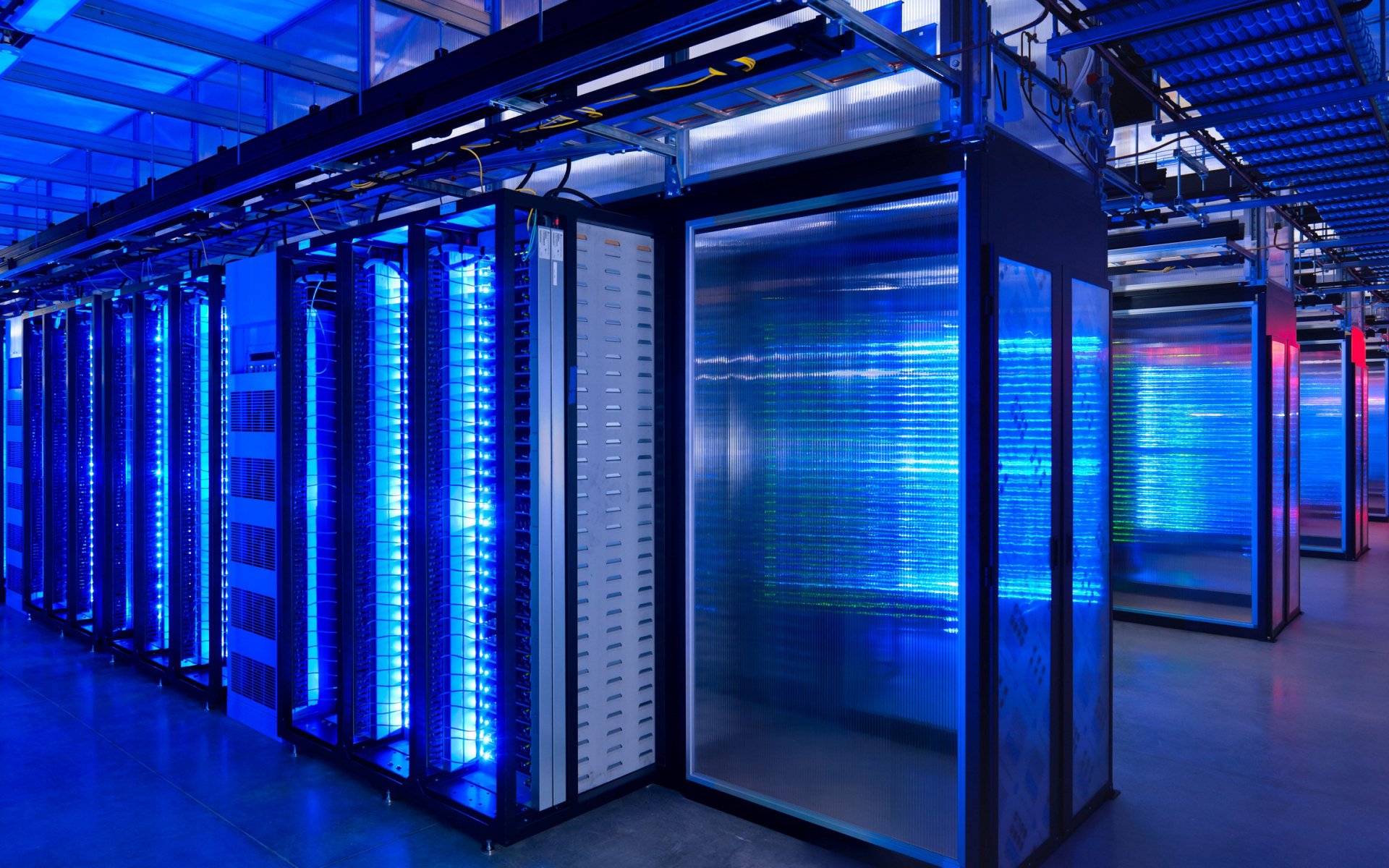
Behind the cost numbers sits a specific software stack, and understanding it explains how the Santander Nvidia AI banking collaboration achieves its savings. Three NVIDIA technologies do most of the heavy lifting, each solving a different part of the problem: specialising models, building banking intelligence from data, and serving it all cheaply at scale.
NVIDIA NeMo Customizer: tailoring models for banking work
The Santander Nvidia AI banking models are specialised using NVIDIA NeMo Customizer, a toolkit for adapting foundation models to specific domains. Customisation here means taking a capable open-weight model and training it further on banking-specific material — the language of loan agreements, the structure of transaction records, the phrasing of regulatory filings, the tone of customer-service conversations.
Why does this matter? A general-purpose model knows a little about everything, including banking, but it speaks “internet” — the average of everything it read during training. A customised model speaks bank. That specialisation is what allows a smaller model to outperform a larger generalist on banking tasks: it has not memorised more facts, it has learned the patterns of the domain. In practice, customisation typically involves fine-tuning (continued training on domain data), and sometimes techniques like reinforcement learning from human feedback, where banking experts rate the model’s answers so it learns what “good” looks like in a financial context.
For US readers watching their own banks, this is the part to note: the Santander Nvidia AI banking approach suggests the future of banking AI is not “which giant model does the bank rent” but “how well has the bank trained its own specialist models on its own data.” That is a fundamentally different — and far more defensible — competitive position.
NVIDIA Kumo: turning structured data into predictive intelligence
The second pillar is NVIDIA Kumo, described as open-weight foundation models for structured data — the tables, ledgers, transaction logs and account records that are the lifeblood of banking. Most AI hype focuses on unstructured data: text, images, speech. But banks live and die by structured data, and Kumo is designed to turn that structured data into predictive insights for agentic services.
Concretely, Santander has built specialised intelligence for core banking workloads on Kumo. Think about what that enables: models that can look at patterns across millions of transactions and predict which ones deserve a closer look, or forecast cash-flow problems for a small business customer before they happen, or personalise product recommendations based on actual financial behaviour rather than crude demographic buckets. Because Kumo works directly with structured data, it skips the clumsy step of converting everything into text first — it reasons over the numbers themselves.
This is arguably the least flashy but most valuable part of the Santander Nvidia AI banking stack. Chatbots get the headlines; the quiet work of making better predictions from transaction data is where banks actually make and save money.
NVIDIA Dynamo-Triton: industrialising inference inside Santander’s own architecture
The third pillar is where the famous cost savings come from. NVIDIA Dynamo-Triton is the serving layer: the software that takes a trained model and runs it efficiently, handling thousands of simultaneous requests without wasting GPU capacity. Santander has industrialised inference inside its own architecture using Dynamo-Triton — meaning the bank runs AI serving on its own systems, under its own control, rather than renting inference from a third party by the token.
Serving is where AI budgets go to die, so this deserves emphasis. Training a model is expensive but happens once; serving it — answering every customer question, scoring every transaction, summarising every document — is a cost paid forever, on every single interaction. Dynamo-Triton attacks that cost with techniques like optimised batching (grouping requests to use the GPU efficiently), smart memory management and model-serving optimisations that squeeze more answers out of the same hardware. The reported drop from €5 to €0.03 per interaction is, in large part, a serving-efficiency story — and it is the reason the Santander Nvidia AI banking announcement should interest every bank CFO, not just the technologists.
Running inference in-house also has a privacy dividend: customer data never has to leave the bank’s walls to be processed by an external AI provider. In an industry where data protection is both a legal obligation and a trust issue, that architectural choice is as strategic as the cost saving.
Banking agents, adversarial testing and keeping AI safe
Models answer questions; agents do things. An AI agent can check your balance, draft the email, file the form and confirm the result — a sequence of steps, not a single answer. Agents are where banking AI gets genuinely powerful, and genuinely risky. The Santander Nvidia AI banking framework treats that risk seriously: the Model Arena is being extended to design, simulate, evaluate and supervise banking agents, and the bank is using adversarial testing of conversational AI in controlled environments.
Adversarial testing: trying to break the AI before customers meet it
Adversarial testing means deliberately attacking your own AI to find its weaknesses — feeding it tricky, misleading or hostile inputs to see where it breaks, leaks information or gives bad advice. Doing this in controlled environments means the failures happen in the lab, not in front of real customers. For conversational AI in banking, the stakes of a failure are unusually high: a chatbot that invents a fake fee policy, discloses another customer’s data, or confidently misstates loan terms is not just embarrassing — it is a regulatory event.
This is one of the most reassuring details in the Santander Nvidia AI banking announcement. The industry’s dirty secret is that many AI deployments are tested far less rigorously than traditional banking software. Santander is explicitly applying software-engineering discipline — simulate, evaluate, supervise, attack — to AI systems before they touch customers. If you are wondering how AI agents will eventually be trusted with real money movements, this is the shape of the answer: not blind faith in the model, but layers of testing and supervision around it. (For a look at how agents behave in the wilder parts of the web, see our piece on why websites block AI agents — the trust problem cuts both ways.)
The customer-service use case: better quality, 50%+ lower cost

Press releases love grand visions; what convinces sceptics is a working use case. The Santander Nvidia AI banking announcement includes one: an experimental customer-service deployment in which conversation quality improved while costs fell by more than 50%, achieved by switching to a more efficient model.
Notice what that sentence implies. The bank did not get better service by buying a bigger, more expensive model — it got better service with a smaller, cheaper, better-matched one. That is the Model Arena philosophy paying off in practice: the right specialist beats the wrong generalist on both quality and price. For anyone who has endured a useless banking chatbot, this is the most hopeful line in the announcement. The bad chatbots of the past were often bad because they were cheap, generic systems; the Santander Nvidia AI banking experiment suggests the next generation can be cheap and good, because the savings come from engineering, not from cutting corners on quality.
There is a human angle here too. Better AI in customer service does not have to mean fewer humans — it can mean human agents spending their time on the complex, emotional cases where people actually need people, while the AI handles the routine balance-checks and password resets instantly. Whether banks use the savings that way is a management choice, not a technology outcome, and customers should keep asking which choice their bank is making.
The three-year roadmap: fraud, real-time decisions and digital twins

Beyond the experiments already run, the framework maps out where the Santander Nvidia AI banking collaboration goes next. Three areas stand out for anyone tracking where banking AI is headed.
Fraud detection and anti-money-laundering
Fraud and AML capabilities are on the roadmap, and this is where specialised AI may matter most. Fraud detection is a pattern-recognition problem at massive scale: billions of transactions, with criminals constantly inventing new tricks. Traditional rule-based systems drown in false positives — flagging your legitimate holiday spending while missing the actual fraud. AI models trained on structured transaction data (exactly the Kumo-shaped workload described above) can learn subtler patterns and adapt as fraud evolves. Better fraud detection means fewer blocked legitimate payments for customers and fewer losses for the bank — one of the rare AI applications where everyone’s incentives align.
Real-time decisioning
Real-time decisioning covers the instant judgements banks make constantly: approving a card transaction, pricing a loan, setting a credit limit. Today many of these run on models that are powerful but slow or expensive to operate, which is why some decisions still take hours or days. Cheaper, faster specialist models could push more decisions into true real time — a loan decision while you are still in the dealership, a fraud verdict before the payment clears. The Santander Nvidia AI banking cost reductions are what make that economically feasible: real-time AI is only possible if each decision costs fractions of a cent.
Banking digital twins
The most futuristic item is banking digital twins — advanced simulations of banking systems, portfolios or customer populations that let the bank test ideas safely. Want to know how a new fee structure would affect different customer segments? How a market shock would ripple through the loan book? Run it in the twin first. Digital twins are standard practice in manufacturing and engineering; bringing them to banking would let institutions experiment without experimenting on customers. It is early-stage work, but it shows the ambition of the Santander Nvidia AI banking framework extends well beyond chatbots.
What Santander Nvidia AI banking means for everyday customers
So what changes for you, the person with the bank account? In the short term: probably nothing visible. Santander is clear that technologies are tested in the Lab before broader deployment, and enterprise AI rollouts move slowly by design. But the Santander Nvidia AI banking direction points to several concrete improvements over the coming years:
- Customer service that actually helps. The experimental results — better conversation quality at less than half the cost — suggest the next generation of banking assistants will resolve routine issues on the first try instead of trapping you in menu hell. When AI is cheap enough to deploy well, banks stop rationing it.
- Fewer false fraud alarms. Smarter fraud models mean your card is less likely to be declined for buying coffee in a new city, while actual fraud gets caught faster. This is one of the most universally welcome applications of the Santander Nvidia AI banking work.
- Faster decisions on loans and credit. Real-time decisioning could compress lending decisions from days to minutes, with models that consider your actual financial picture rather than a handful of crude variables.
- More personalised products. Predictive insights from structured data enable the bank to suggest products that fit your real behaviour — if it chooses to use that power for customer benefit rather than pure cross-selling. Worth watching.
- Safer experimentation. Digital twins and adversarial testing mean new features get stress-tested in simulation before they reach your account — fewer “oops, the app update broke payments” moments.
The honest version: none of this is guaranteed, and the benefits depend on choices Santander makes during deployment. But the Santander Nvidia AI banking economics change the incentive structure — when good AI costs cents instead of euros, “deploy the good version” becomes the profitable choice, not the expensive one.
The bigger picture: why banks are obsessed with AI costs in 2026
Santander is not acting in a vacuum. The Santander Nvidia AI banking announcement lands in an industry that has broadly accepted AI is necessary but is now confronting what it actually costs to run. Two recent data points, reported by the press covering this story, frame the moment well.
First, PYMNTS Intelligence research found that 95% of large financial services firms surveyed had deployed newer AI tools in data and technology processes — adoption at the infrastructure level is essentially universal. But the same research found only 25% adoption for AI in API orchestration — the connective tissue that lets AI systems actually work together inside a bank. The gap between “we have AI tools” and “our AI tools work together” is where projects stall, and it is exactly the gap Santander’s architecture-first approach is trying to close. (These figures are reported by PYMNTS in its coverage of the announcement, not independently verified by us.)
Second, theoutpost.ai notes that 30% of financial services companies name data quality and fragmentation as their main obstacle to further AI deployment. This is the unglamorous truth behind every banking AI story: the models are rarely the problem — the data plumbing is. A bank whose customer data lives in forty disconnected systems cannot deploy useful AI no matter how good the models are. Santander’s emphasis on structured-data intelligence (the Kumo pillar) reads as a direct answer to this obstacle: get the data foundations right, and the AI follows.
Taken together, the industry picture is: near-universal AI experimentation, real struggles with integration and data quality, and now — via the Santander Nvidia AI banking cost breakthrough — a credible path to making the economics work. Expect rival banks to announce their own “smaller models, lower costs” programmes within months. When one of Europe’s largest banks shows its homework, the rest of the class pays attention.
For readers building with AI themselves, the lesson generalises beyond banking: the Santander Nvidia AI banking playbook — evaluate ruthlessly, specialise aggressively, serve efficiently — applies to any organisation watching its AI bill climb. Whether you are wiring up agent-first search APIs or automating AI bookkeeping, the question is the same: are you paying for intelligence you do not need?
Frequently asked questions
What is the Santander Nvidia AI banking partnership?
It is a three-year collaboration framework announced on October 19, 2026, under which Santander’s AI Lab works with NVIDIA to evaluate AI models and agents for banking — shifting from large general-purpose models to smaller, specialised models for each task, using NVIDIA’s NeMo Customizer, Kumo and Dynamo-Triton software. The full details are in Santander’s official press release.
Did Santander really cut AI costs by 99%?
According to Santander’s own reporting, selected experiments cut AI serving costs from around €5 per interaction to approximately €0.03 — roughly a 99% reduction — while maintaining strong performance. These are company-reported figures from selected experiments, not independently verified results. The directional claim — that smaller specialised models plus efficient serving dramatically cut costs — is consistent with wider industry experience.
What is the Model Arena?
The Model Arena is a system built by the Santander AI Lab that evaluates open-weight AI models against realistic banking tasks to identify the right model for each workload. It is being extended to design, simulate, evaluate and supervise banking AI agents as well.
What are NeMo Customizer, Kumo and Dynamo-Triton?
Three NVIDIA technologies in the Santander Nvidia AI banking stack: NeMo Customizer specialises foundation models for banking domains; Kumo provides open-weight foundation models for structured data, turning it into predictive insights; and Dynamo-Triton is the high-efficiency inference-serving layer that Santander runs inside its own architecture — the main driver of the reported cost reductions.
Will this affect my Santander account?
Not immediately. Santander tests technologies in its AI Lab before broader deployment. Over time, customers could see better AI customer service, fewer false fraud declines, faster lending decisions and more personalised products — but deployment timelines have not been announced.
Why does this matter beyond Santander?
The Santander Nvidia AI banking announcement is one of the clearest public demonstrations that banks can make AI economically viable at scale by replacing giant general-purpose models with cheap specialists. With 95% of large financial firms already deploying AI tools (per PYMNTS Intelligence) but struggling with integration and data quality, a proven cost-cutting playbook is likely to be copied across the industry.
The bottom line
The Santander Nvidia AI banking announcement is not really about two company logos on a press release. It is about a maturing thesis: that the future of AI in banking belongs not to the biggest model, but to the best-matched one — evaluated rigorously, specialised deeply, served efficiently, and tested adversarially before it ever meets a customer. If Santander’s reported numbers hold up at scale — €5 down to €0.03, better service at half the cost — this three-year framework will be remembered as the moment banking AI stopped being an expensive experiment and started being infrastructure. Watch this space: the Model Arena’s verdicts will shape what your bank feels like to use for the next decade.