
On October 8, 2026, Anthropic launched a tool that scans the internet’s most important software for security flaws — and charges nothing for it. Anthropic OSS Scanner is a free, opt-in service that sends some of the world’s most capable AI models hunting for vulnerabilities in open-source projects, then hands maintainers a ready-to-use report: a working proof of concept, a plain-English explanation, and a suggested fix.
The launch landed just one week after Google paused its own open-source bug bounty programme, overwhelmed by a flood of low-quality AI-generated reports. Anthropic’s answer is a different bet entirely: instead of paying humans to review AI findings, Anthropic OSS Scanner skips human review altogether and designs every report to be self-contained enough that a maintainer can judge it directly.
Photo: inside a modern data centre — the kind of infrastructure Anthropic OSS Scanner helps protect.
In this guide, we explain exactly what Anthropic OSS Scanner is, how it finds bugs differently from traditional tools, who can enrol, what it really costs (spoiler: nothing), and where it fits in the escalating race between AI labs to defend — rather than attack — the world’s software. We also cover the honest caveats, because a free AI security tool with no human review deserves scrutiny, not hype.
What Is Anthropic OSS Scanner?
Anthropic OSS Scanner is an opt-in vulnerability-scanning service for open-source software, launched by Anthropic on October 8, 2026. Eligible projects receive periodic security scans run by Anthropic’s strongest models, including Claude Mythos, the top tier of the company’s current model hierarchy. There is no charge for enrolled projects.
The service is the first of two components in Anthropic’s Cyber Mission, a long-term initiative the company announced the same day. The second component — the Critical Infrastructure Defense Program — puts Claude and Anthropic engineers alongside the security firms protecting power grids, water treatment plants, and transport networks. Together, the two programmes mark Anthropic’s most direct move yet into building cybersecurity infrastructure, rather than simply selling API access to developers who build it themselves.
What makes Anthropic OSS Scanner unusual is the delivery model. Every report is fully model-generated and sent without human review or triage. Anthropic’s own announcement is candid about the trade-off: maintainers get findings faster, but some reports may be wrong, invalid, or misleading about severity. The bet is that a well-structured report — proof of concept, explanation, suggested patch — lets a maintainer evaluate a finding in minutes instead of doing the analysis from scratch.
Almost all modern software depends on open-source code, and much of it is maintained by small teams of volunteers. For those teams, a free recurring scan from frontier models is a genuinely meaningful offer — even with the caveats.
Why Now? The AI Report Flood That Broke Google’s Bug Bounty
To understand why Anthropic OSS Scanner launched the way it did, you need the backstory: AI scanning tools have created a volume crisis in open-source security.
By mid-2026, open-source maintainers were documenting what one engineering team called the “strip-mining era” of security. AI scanning tools had pushed report volume to roughly four times historical rates — mixing genuine high-severity findings with proof-of-concept code that does not compile, duplicate submissions, and reports that ignore a project’s own threat model. Even Kubernetes, which has a mature dedicated security team, was getting blocked on triage volume.
The crisis peaked on October 1, 2026, when Google temporarily suspended product vulnerability submissions under its Open Source Software Vulnerability Rewards Program (OSS VRP). Google’s stated reason: “a significant rise in automated submissions, the vast majority of which are not valid.” The company said it would provide an update in the first quarter of 2027.
Anthropic OSS Scanner is designed as a direct answer to that dynamic. Instead of high volume without high quality, the design goal is high quality at machine speed: every report must carry a reproducer, an explanation, and a suggested patch — the three things that separate an actionable finding from noise. Whether it consistently hits that bar in practice is the question the whole industry is now watching.
How Anthropic OSS Scanner Works
How Anthropic OSS Scanner Finds Bugs: Semantic Analysis, Not Random Fuzzing
Traditional automated tools like Google’s OSS-Fuzz — which Anthropic cites as the model for its programme — work by throwing random or semi-random inputs at software to trigger crashes. A crash is a clue, but it is not a finding: a human still has to figure out what the crash means, whether it is a security problem at all, and how to fix it.
Anthropic OSS Scanner takes a different approach. It performs semantic analysis of code: the models read program logic, data flow, and attack surfaces the way a security researcher would, then craft targeted exploits that demonstrate a specific vulnerability is real — rather than merely triggering an undefined behaviour.
The gap it closes, in Anthropic’s framing: between “this input caused a crash” and “here is what the crash means for security, here is how to reproduce it, and here is how to fix it.” That second sentence is the whole product.
The capability behind the scanner has improved fast. On CyberGym, an academic vulnerability-finding benchmark, language models found under 20% of known vulnerabilities at the start of 2025 and over 85% in 2026, according to Anthropic. Over the six months before launch, Anthropic ran that capability against what it describes as some of the world’s most important software projects — and the unreviewed backlog grew faster than its human triage team could clear it: more than 29,000 candidate findings against roughly 6,000 manually verified. The company says it has already sent close to 5,000 unvalidated reports directly to maintainers who asked for the raw output rather than waiting for review.
What Every Anthropic OSS Scanner Report Contains
Every report from Anthropic OSS Scanner is designed to be self-contained. According to Anthropic’s announcement and independent coverage of the launch, a report includes:
- A proof of concept — working code showing how the bug could actually be exploited, not just a theoretical description.
- A plain-English explanation — what the vulnerability is, why it matters, and its security relevance.
- A suggested patch — a candidate code change that fixes the issue, where the model can produce one.
- Evidence of origin where available — when the problem was introduced, helping maintainers understand the blast radius.
The entire pipeline runs on AI — no human reviews or triages a report before it reaches the maintainer. That is the feature and the risk in one sentence: delivery is fast and cheap to scale, but some reports will contain inaccuracies, such as a wrong severity rating. Anthropic says it expects a true-positive rate above 90% and will work to improve the rate and the quality of fixes over time, guided by maintainer feedback.
The Accuracy Numbers — and What They Really Mean
Before making the service broadly available, Anthropic ran an internal accuracy test. Expert penetration testers from the company’s coordinated vulnerability disclosure team reviewed 97 findings across 48 projects generated by an early version of the scanner and cleared 85 for disclosure. Of the remaining 12, all but one were real bugs — duplicates or issues already surfaced by other findings — leaving a single false positive in the sample. That works out to roughly an 88% hit rate against the formal disclosure bar, with 96 of 97 reported issues corresponding to real vulnerabilities.
Those numbers deserve two honest caveats. First, the sample is narrow: accuracy may vary significantly by programming language, codebase maturity, and vulnerability class. Second, the test was conducted by Anthropic’s own team — no independent organisation has verified these figures. Treat them as a promising signal, not a proven specification. Independent analysts have made exactly this point, and you should keep it in mind when triaging any incoming report.
Who Can Use It: Enrolling Your Open-Source Project
Anthropic OSS Scanner is opt-in and selective — it is not a scanner anyone can point at any repository. Here is how enrolment works.
The GitHub Pull-Request Process
Core maintainers of eligible projects apply by opening a pull request to Anthropic’s public oss-scanner repository on GitHub. The PR adds:
- A
project.yamlfile specifying the project’s repository and a primary contact. - A
Dockerfiledefining the build environment the scanner will use. - Optionally, threat-model documentation describing what the project considers in and out of scope.
Anthropic verifies the submitter is a genuine core maintainer before admission. Reports can optionally be encrypted with an OpenPGP public key so they reach only the primary contact — a sensible precaution given that unpatched vulnerability details are sensitive by definition.
Technically, the project is first imported and built inside an isolated virtual environment with internet access (to fetch dependencies), then moved to a network-isolated environment for the actual scanning. That separation keeps the scanning phase air-gapped from the outside world.
Who Qualifies — and Who Is Already In
Eligibility criteria mirror those of Google’s OSS-Fuzz: projects must have critical impact on infrastructure or user security, with decisions made case by case. This is deliberately aimed at foundational software, not every weekend side project.
Early participants already enrolled include PostgreSQL, OpenSSL, wolfSSL, and HotCRP — foundational internet infrastructure libraries and tools. Enrolment requests were already arriving within a day or two of launch, suggesting demand is real.
One more important detail: the service is meant for projects with the capacity to keep up with surfaced findings. For smaller projects that lack the staff to absorb a stream of raw AI findings, Anthropic says it will continue sharing human-verified disclosures under its existing coordinated vulnerability disclosure policy. In other words, the unreviewed firehose is for teams that can drink from it; everyone else still gets the curated version.

What It Costs (Spoiler: Nothing — and Who Pays)
Anthropic OSS Scanner is free for eligible open-source projects. There is no per-scan fee, no subscription tier, and no usage-based billing attached to the service itself.
The money comes from Anthropic’s Defender Advantage Fund (styled 0xDAF), a dedicated financial vehicle the company established in August 2026. By funding the scanner through a dedicated fund rather than ad-hoc budget decisions, Anthropic is signalling the service is meant to last — not to be quietly wound down when quarterly priorities shift.
The Cyber Mission sits on substantial commitments beyond the fund: Anthropic has pledged up to $100 million in Claude Mythos Preview credits to security organisations and $4 million in direct donations to open-source security groups, including the Python Software Foundation, the Apache Software Foundation, the Linux Foundation’s OpenSSF, and Alpha-Omega.
There is also a companion offer aimed squarely at the remediation bottleneck: Claude for OSS, which gives qualifying maintainers free Claude Max 20x subscriptions so they can use Claude directly to fix the vulnerabilities the scanner finds. Finding a bug is only half the work; Anthropic is funding the fixing half too.
The Bigger Bet: Anthropic’s Cyber Mission
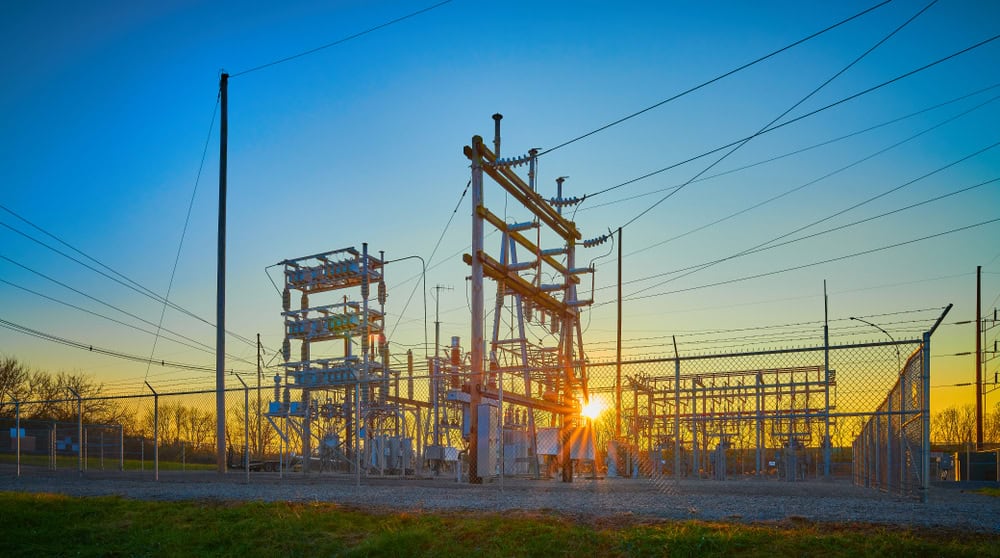
Anthropic OSS Scanner is only half the story. The scanner is the open-source half of the Cyber Mission; the other half is aimed at the physical world.
Critical Infrastructure Defense Program: AI on the Power Grid
The Critical Infrastructure Defense Program (CIDP) deploys Claude and Anthropic’s on-site engineers alongside the security companies defending operational technology (OT) networks — the industrial control systems behind power substations, water treatment facilities, and transit systems.
Eleven founding partners were named at launch: Accenture, Booz Allen Hamilton, CrowdStrike, Deloitte, Dragos, Hitachi, Insane Cyber, Nozomi Networks, Palo Alto Networks, PwC, and Rockwell Automation. Several partners are already using Claude to fix vulnerabilities and help their customers do the same, according to Anthropic.
The OT focus is deliberate and the challenge is brutal. OT equipment is built to run for decades — a turbine control system installed in 2005 may run until 2035 without significant modification, and taking it offline to apply a patch is often impossible without disrupting service. By the time a patch is available, tested, and cleared for deployment, the vulnerability may already have been exploited. According to Fortinet’s 2026 OT Cybersecurity report, 71% of OT security professionals said their organisations experienced between one and nine intrusions in the past year, up from 47% the year before, and operational outages affecting revenue rose from 42% to 46%.
Anthropic is honest that AI alone cannot fully solve OT security — a bad AI patch recommendation on a live power grid carries consequences no revert button can fully undo. The company says frontier models can help find and repair weaknesses before they are exploited, while acknowledging that critical infrastructure is hard to defend in ways AI cannot fix.
Claude for OSS and the Cyber Verification Program
The Cyber Mission also folds in Anthropic’s earlier security work. Glasswing, launched in April 2026, gave vetted security organisations access to Claude Mythos Preview for large-scale vulnerability hunting; by June it had expanded to 200 critical partners across more than 15 countries, with early deployments surfacing more than 10,000 high- or critical-severity flaws. Glasswing has now been folded into an expanded Cyber Verification Program, tiered into Defense, Red Team, and Specialized Access levels, which gives qualifying security professionals access to advanced cyber capabilities with reduced blocking classifiers.
Anthropic also released Claude Code Security alongside Claude Opus 4.6 earlier in 2026 — a tool reported to have found 500 high-severity vulnerabilities in production open-source codebases. The pattern is consistent: the lab is systematically converting its models’ offensive capability into defensive infrastructure.
The Defence Race: Google, OpenAI and Palo Alto’s Moves
Anthropic is not running this race alone. The Cyber Mission landed in the middle of a broader competition among AI labs to establish themselves as net defenders rather than net threat-accelerators — and the moves are coming fast:
- Google paused its OSS VRP (Oct 1, 2026) after AI-generated submissions made the programme unworkable — the event that arguably created the opening Anthropic OSS Scanner is filling. Meanwhile Google’s Gemini 4 Argon is being rolled out cyber-defenders-first; our Gemini 4 Argon guide covers how Google is gating its most capable model for security work.
- Palo Alto Networks launched its Frontier AI Critical Defense Program (Aug 19), naming Anthropic and OpenAI as partners, and reported that frontier models had already identified more than 14,000 previously unknown open-source vulnerabilities under the programme.
- OpenAI expanded its Daybreak cyber defence programme (Aug 10), introducing a purpose-built cybersecurity model — GPT-5.6-Cyber — reported to have found two V8 zero-days in Chrome’s JavaScript engine and more than 400 kernel privilege-escalation vulnerabilities. OpenAI’s model family keeps advancing in parallel; see our GPT-6 guide for the latest generation.
The stakes, as security researcher Mikko Hypponen put it at Black Hat, are that “defenders are ahead of the attackers” for the first time in thirty years — a thesis Anthropic shares. The company has stated publicly that it expects AI to favour defenders within two years. But the window may be narrowing: smaller open-weight models have begun reproducing some of the headline vulnerability-discovery capabilities previously exclusive to top-tier restricted models. The race to make frontier AI a structural boon to defenders — before attackers catch up — is the deeper contest that Anthropic OSS Scanner and its rivals are designed to win.

Honest Caveats Before You Celebrate
A free AI tool that sends unreviewed vulnerability reports deserves scrutiny. Here is what to keep in mind about Anthropic OSS Scanner.
The Accuracy Claims Are Self-Reported
The headline numbers — 88% hit rate on the internal test, an expected true-positive rate above 90% — come from Anthropic’s own testing. No independent organisation has re-run the evaluation, and the company acknowledges the sample is narrow. Accuracy may vary significantly by programming language, codebase maturity, and vulnerability class. Until independent researchers publish their own numbers, treat the accuracy claims as Anthropic’s assessment, not an established fact.
No Human Review Means the Triage Burden Moves to You
The most important design decision in Anthropic OSS Scanner is also its biggest risk: reports arrive with no human review. Anthropic’s two-track disclosure model reflects this honestly — unvalidated findings carry no 90-day disclosure deadline, while findings Anthropic’s own team independently verifies go through the normal coordinated disclosure process with its 90-day window. That departs deliberately from the norms Google’s Project Zero popularised in 2014.
For well-staffed projects like PostgreSQL or OpenSSL, a stream of high-quality AI findings is a gift. For a two-person volunteer team, even a 90%-accurate firehose can become a second job. Anthropic’s answer — human-verified disclosures under its existing policy for smaller projects — is the right call, but it means the free scanner’s real audience is narrower than “all open source.”
What Anthropic Has Not Said
Several questions remain open. Anthropic has not disclosed the scan cadence — how often enrolled projects get scanned — nor detailed how the company will keep improving true-positive rates over time beyond working from maintainer feedback. For the infrastructure half of the mission, questions remain about how partners will safely test AI-suggested fixes on live OT systems. And the competitive clock is ticking: as open-weight models catch up, the advantage of a frontier-model scanner may compress.
Is Anthropic OSS Scanner Worth Your Attention?
If you maintain a widely used open-source project, yes — enrolment is worth serious consideration. The offer is unusually strong: free periodic scans from frontier models, self-contained reports with reproducers and suggested fixes, encrypted delivery, and even free Claude subscriptions to help with remediation. The 88% internal accuracy figure, while self-reported, suggests the signal-to-noise ratio is far better than the report flood that broke Google’s programme.
If you run software that depends on open source — which is to say, if you run software at all — the indirect value is just as real. Every vulnerability Anthropic OSS Scanner catches in OpenSSL or PostgreSQL is a vulnerability that never reaches your stack.
And if you are simply watching the AI industry, the launch is a signal worth reading: the frontier labs have moved from demonstrating vulnerability-finding to productising defence. The lab that makes its models most useful to defenders may end up defining what “safe AI” means in practice.
For broader context on how the labs are positioning their most capable models, our Gemini 4 Argon explained guide and GPT-6 guide cover the parallel moves from Google and OpenAI.
Frequently Asked Questions
Is Anthropic OSS Scanner really free?
Yes. Anthropic OSS Scanner is free for eligible open-source projects — no per-scan fees, no subscription. Costs are covered by Anthropic’s Defender Advantage Fund, a dedicated vehicle established in August 2026, backed by the company’s broader Cyber Mission commitments of up to $100 million in model credits and $4 million in direct donations to open-source security groups.
How do I enrol my project in Anthropic OSS Scanner?
A core maintainer opens a pull request to Anthropic’s public oss-scanner repository on GitHub, adding a project.yaml (repository + primary contact) and a Dockerfile (build environment). Anthropic verifies maintainer status and judges eligibility case by case, favouring projects with critical impact on infrastructure or user security.
Do humans review Anthropic OSS Scanner reports before delivery?
No. Reports from Anthropic OSS Scanner are fully model-generated and delivered without human review or triage — that is the explicit design trade-off for speed. Anthropic says it expects a true-positive rate above 90%, but some reports may be wrong or misjudge severity. Smaller projects without triage capacity continue to receive human-verified disclosures under Anthropic’s existing coordinated disclosure policy instead.
How is Anthropic OSS Scanner different from OSS-Fuzz?
Google’s OSS-Fuzz generates random or semi-random inputs to trigger crashes, leaving humans to interpret them. Anthropic OSS Scanner uses language models to semantically analyse code — reading logic and data flow — and produces self-contained findings with a working reproducer, a plain-English explanation, and a suggested patch. Anthropic describes its programme as inspired by OSS-Fuzz but aimed at closing the gap between “something crashed” and “here is a ready-to-triage security finding.”
Why did Anthropic launch this right after Google paused its bug bounty?
The timing is not coincidental. Google suspended OSS VRP submissions on October 1, 2026, citing a flood of invalid AI-generated reports. Anthropic OSS Scanner, launched October 8, is designed to solve the quality side of that equation: mandatory reproducers, explanations, and patches in every report, generated by frontier models rather than low-effort automation.
For primary sources, see the official announcement on https://www.anthropic.com — Anthropic’s Cyber Mission details, enrolment instructions, and disclosure policy are all published there.