
Apple has finally built the device its fans have been asking about for years. On 13 October 2026, at an event called “Welcome Home”, the company unveiled the Apple HomeView — its first-ever smart home hub. Priced at $299 and shipping on 13 November, the Apple HomeView puts a 7-inch touchscreen, a rebuilt Siri AI, and facial recognition for the whole family at the centre of your house. If you have ever wondered what Apple’s answer to the Amazon Echo Hub and Google Nest Hub looks like, this is it.
In this guide, I break down everything Apple announced: the Apple HomeView price and release date, every major feature, the new Apple Home Collection accessories built with LG, how the device compares with its rivals, and the catches you should know before pre-ordering. Whether you are deep in the Apple ecosystem or just smart-home curious, here is the full picture.
Contents
- What Is the Apple HomeView?
- Price and Release Date
- Features: Siri AI Meets Facial Recognition
- Design, Display and Colours
- The Apple Home Collection Accessories
- Apple HomeView vs Echo Hub vs Nest Hub
- Who Should Buy It?
- What to Know Before You Pre-Order
- FAQ
- Final Verdict
What Is the Apple HomeView?
The Apple HomeView is Apple’s first dedicated smart home hub: a countertop or wall-mounted device that acts as the command centre for your connected home. Think of it as the missing piece of Apple’s smart home puzzle. Until now, Apple users controlled their homes through the Home app on an iPhone, iPad, Apple TV or a voice-only HomePod. The hub gives that experience a permanent, always-on home with a screen.
At its core, the Apple HomeView connects with doorbells, thermostats, security cameras, lights and locks, while also reaching into the apps on your other Apple devices. Walk up to it and it can show your calendar, play your music, or pull up your front-door camera — all personalised to whoever is standing in front of it. Apple is positioning it as direct competition for Amazon’s Echo Smart Home Hub and Google’s Nest Hub, and the timing is no accident: the smart display market has belonged to Amazon and Google for nearly a decade.
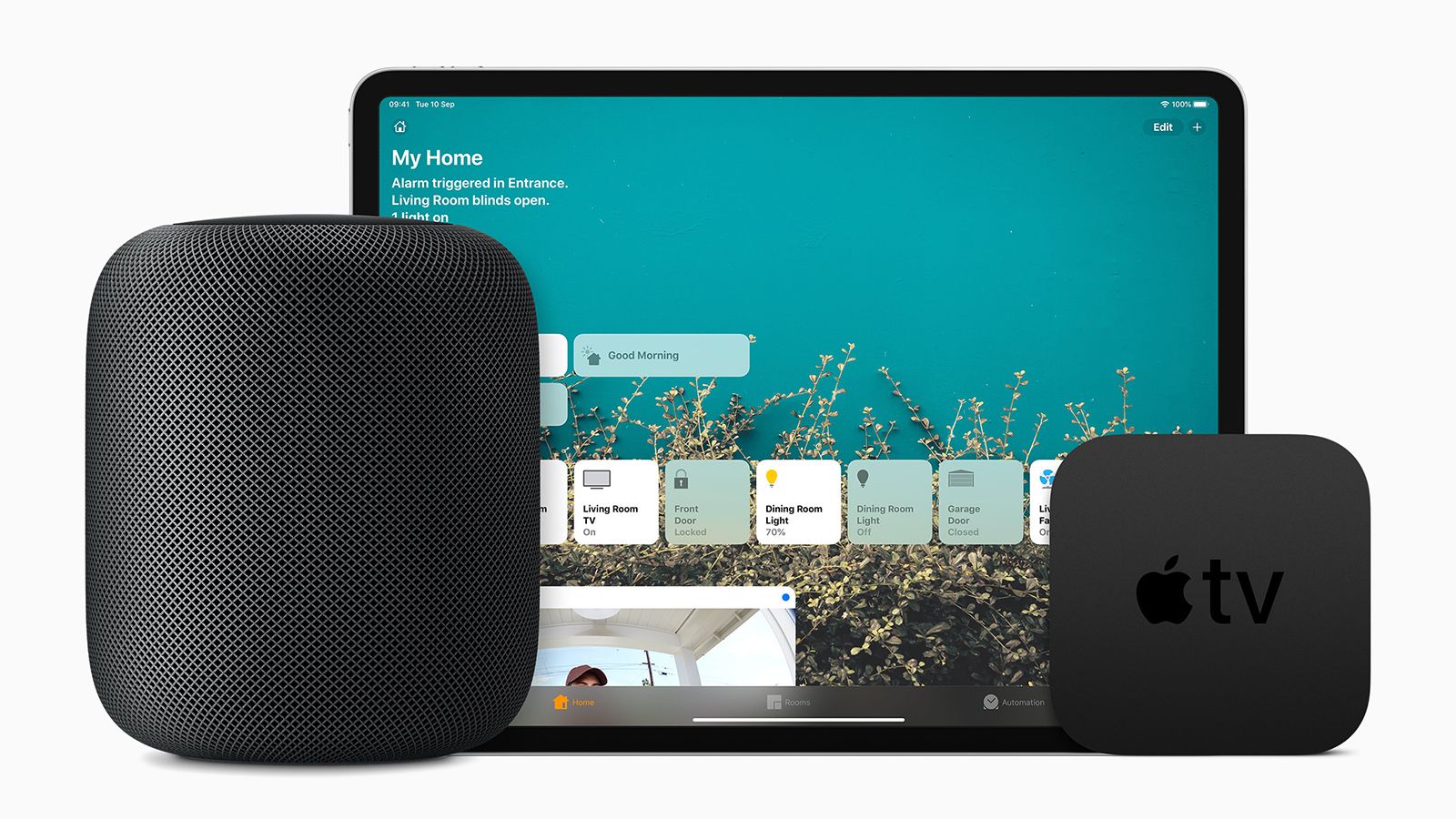
The Apple Home app dashboard — the same smart-home control experience the Apple HomeView puts on a dedicated 7-inch screen.
What makes the launch notable is how complete Apple’s play is. This is not just a screen with Siri on it. It arrives alongside a brand-new accessory line — the Apple Home Collection — co-developed with LG Electronics and Schneider Electric, covering cameras, doorbells, thermostats and more. Apple clearly wants the hub to be the centre of a whole-home system, not a standalone gadget.
Apple HomeView Price and Release Date
Let us get the practical details out of the way first, because they are refreshingly simple.
The Apple HomeView costs $299 — the same price for both the countertop and the wall-mounted version. Pre-orders opened on Apple’s website on the day of the announcement, 13 October 2026, and the device will be available in stores starting 13 November 2026. That puts it in shops just in time for the holiday season, which is surely deliberate.
If you choose the wall-mounted Apple HomeView, you will also need a mount. Apple sells two: a power-mount USB-C wall connector for $59.95, and a power-mount AC wired option (no visible wires) for $79.95. So a fully installed wall setup actually costs $358.95 or $378.95 before tax — worth knowing if you are budgeting.
At launch, it goes on sale in the United States, the United Kingdom, Canada, Australia, India and New Zealand, with more markets to follow. Note that Apple is not selling the hub in the EU at launch — a pattern we have seen before with Apple Intelligence features, which have also faced staggered European rollouts. For a full rundown of the announced specifications, see USA Today’s breakdown of the HomeView’s features, colours and price.
The $299 price is interesting. It undercuts nothing — Amazon’s Echo Hub sells for around $180 and Google’s Nest Hub Max for $229, according to launch-week press coverage — but Apple has never tried to win on price. The device is priced like a premium product because Apple believes the experience justifies it. Whether buyers agree will be the story of this holiday quarter.
Apple HomeView Features: Siri AI Meets Facial Recognition
Apple’s new hub is built around two headline ideas: a genuinely smarter Siri, and a screen that knows who is looking at it. Here is what each one actually does.
A New Siri AI Built for the Home
The Apple HomeView runs Siri AI, Apple’s rebuilt, AI-powered version of its assistant. According to Apple, Siri AI is more conversational, has broader world knowledge, and delivers a more tailored experience than the Siri you know from your phone. It officially debuted on 14 September with iOS 27, and the hub is the first dedicated device built around it.
The clever part is how Siri AI travels with you. With Apple Intelligence enabled on your iPhone or iPad, the device can take actions and pull information from mainstay Apple apps — Messages, Calendar, Reminders and Apple Music. Start a conversation with Siri AI on your iPhone in the morning, and you can pick up that same conversation on Apple’s new hub in the kitchen. That continuity between personal device and shared home device is something neither Amazon nor Google currently does as smoothly.
One honest caveat: Siri AI on the hub is still in beta at launch, and Apple’s own newsroom notes that expanded access “will be available for a fee in the future” — with no price given yet. So the full Siri AI experience may eventually sit behind a subscription. If the idea of an assistant that learns your habits appeals to you, our IrisGo AI review covers a desktop assistant that watches how you work and automates your recurring tasks — a different flavour of the same personalisation trend.
Face Recognition for Up to Six People
This is the Apple HomeView’s most distinctive trick. A built-in camera recognises up to six individual faces, and the display reshapes itself for whoever it sees. When a registered user walks up, the device pulls up their preferred apps, widgets, messages and calendar entries — no tapping through profiles, no “switch user” menus.
Apple says personal context and conversations stay private to each user, while shared things like photo albums and music remain available to everyone. In practice, that means your partner sees their reminders and your kids see theirs, but the family photo slideshow keeps playing for all of you. It is a thoughtful answer to the oldest problem with shared home screens: they are either impersonal or a privacy headache.
For comparison, Amazon’s Echo Hub offers no facial recognition or per-user content personalisation at all, while Google’s Nest Hub Max has a face-match feature tied to Google accounts — but press coverage notes it personalises a narrower range of content than what Apple is advertising for its new hub. If Apple delivers on this promise, it will be the hub’s clearest advantage.
Apple HomeView Security and Camera Controls
Like any good smart home hub, it keeps an eye on your house. It can display up to nine security camera feeds at once — more than enough for a typical home — and lets you check cameras, adjust the temperature or switch the lights on and off by voice or touch, from the couch or from another room.
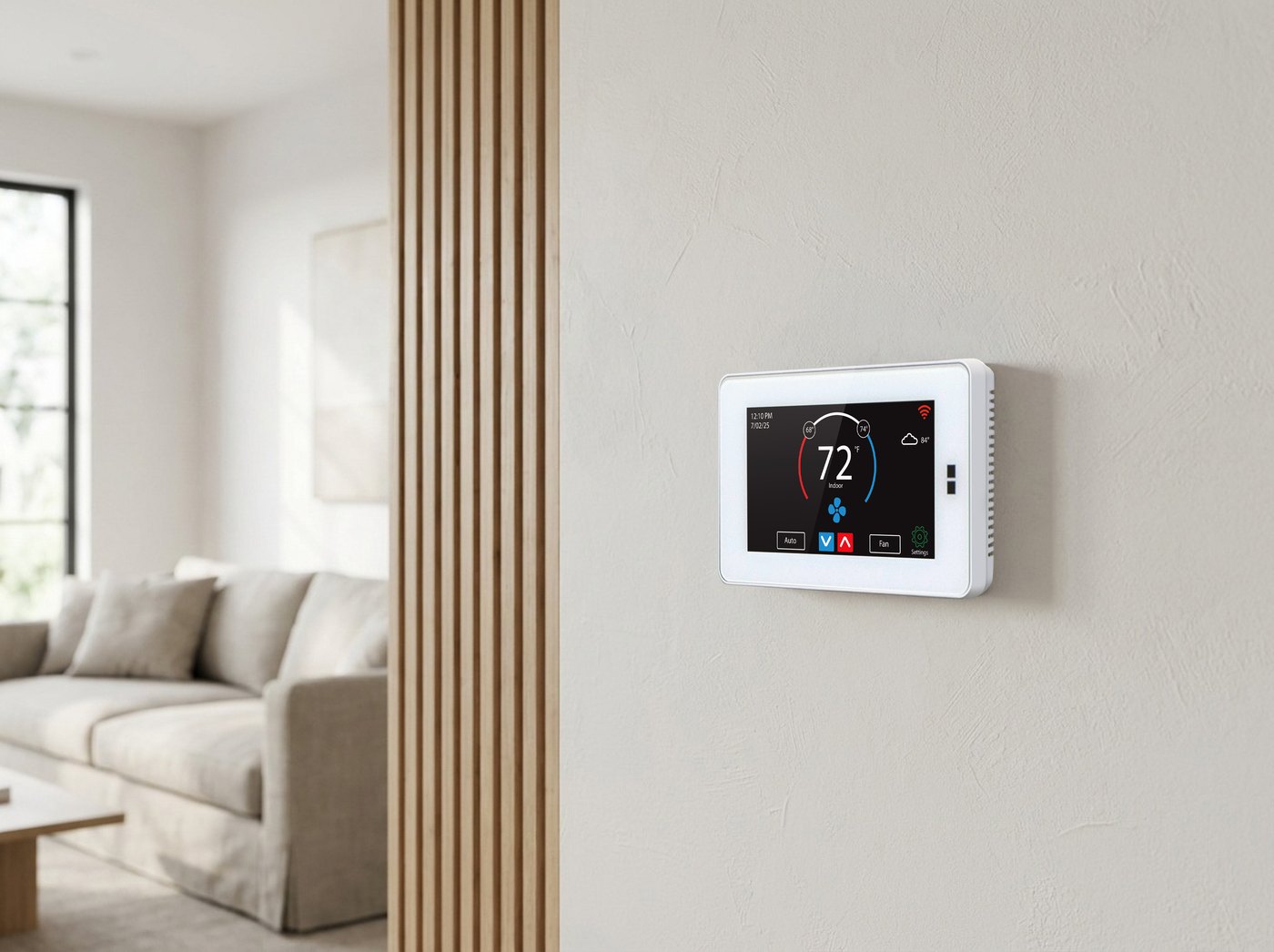
The Apple Home app on iPhone — cameras, climate, lights, scenes and locks — now gets a permanent home on the Apple HomeView’s display.
The Apple HomeView also works as a whole-house intercom. You can broadcast a message to a single room or the entire house through other HomeView units, HomePod speakers, or personal devices like an iPhone, iPad or Apple Watch. “Dinner’s ready” finally gets a proper delivery system. And because it is Find My compatible, you can ask it to track down a misplaced iPhone or AirPods charging case — a small feature that will save real households real minutes every week.
On the entertainment side, the hub handles Apple Music, News, TV and Podcasts for both listening and watching, so it doubles as a kitchen TV and a music station. The display options include a single image or clock face, a live photo album, dynamic art that shifts as someone walks past, and animations featuring characters like Snoopy — pure Apple charm, and a sign the company wants this thing to feel like furniture, not tech.
Apple HomeView Design, Display and Colours
The device centres on a 7-inch Liquid Retina display — the same display technology Apple uses across its mobile line-up, which should mean crisp text and vivid colours from across the room. Launch coverage reports it runs on Apple’s A18 chip, the processor family found in recent iPhones, which Apple is positioning as a meaningful performance advantage over the Amazon and Google silicon inside rival hubs.
There are two physical designs. The countertop Apple HomeView sits on a domed speaker base with a steel hinge that lets you tilt the display up and down — handy when it is sitting on a kitchen worktop and you are glancing at a recipe. The wall-mounted version is slimmer and hangs flush, more like a digital picture frame that also runs your house.
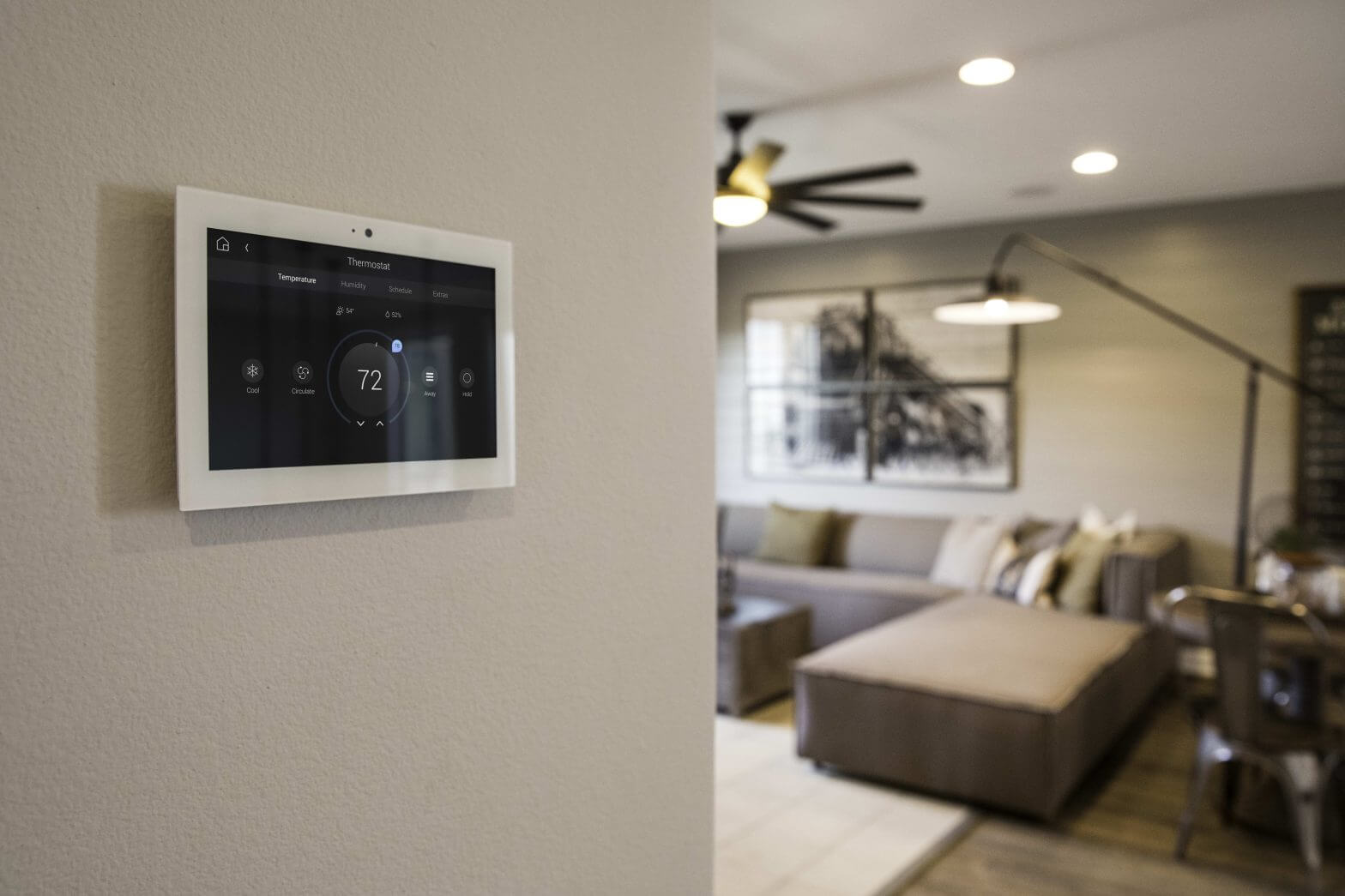
A flush wall-mounted smart display — the wall-mounted Apple HomeView takes the same always-there approach to home control.
Colour options are generous for a first-generation product. The countertop Apple HomeView comes in Silver, Starlight, Rose pink and Space grey; the wall-mounted version comes in Space grey and Silver. The Rose pink option in particular suggests Apple expects the hub to live in bedrooms and living rooms, not just utility corners.
The Apple Home Collection: LG and Schneider Electric Accessories
A hub is only as good as the devices it controls, and Apple clearly knows it. Alongside the device, Apple announced the Apple Home Collection — a brand-new line of smart home cameras, thermostats and doorbells developed in collaboration with LG Electronics and Schneider Electric.
LG’s contribution is the bigger story. The two companies co-developed seven smart home devices that apply AI to cameras, a door lock, a thermostat and more, so they can understand what is happening in and around your home and respond automatically. The line-up, as reported by ChosunBiz, is:
- Indoor camera and outdoor camera, plus an outdoor camera with floodlight
- Video doorbell with AI-powered visitor awareness
- Smart door lock
- Smart thermostat
- Temperature sensor
The plan is to link LG’s ThinQ smart home platform with Apple devices like the iPhone and Apple Watch, and to launch the devices first in North America — the United States and Canada — plus the United Kingdom, within the year. Schneider Electric is contributing its own thermostats and doorbell hardware to the Collection. As of the announcement, Apple had not given a launch date for the accessories themselves, and press coverage suggests they will arrive after the hub’s 13 November street date.
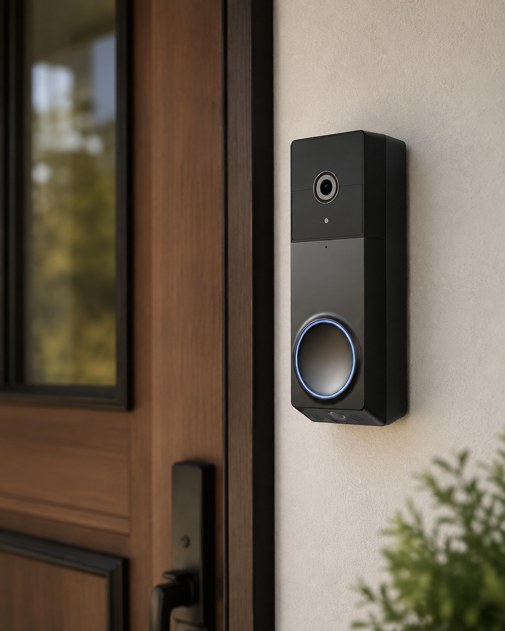
A smart video doorbell on a front door — the Apple Home Collection will include doorbells built with LG and Schneider Electric.
A smart thermostat on the wall — the Apple HomeView can adjust temperature by voice, touch, or automatically.
One detail worth noting for the technically curious: Apple’s newsroom materials name Matter as the supported smart-home standard. That is the industry-wide protocol backed by Apple, Google, Amazon and Samsung, which means the Apple HomeView should play nicely with a wide range of third-party devices — not just Apple’s own Collection.
Apple HomeView vs Echo Hub vs Nest Hub
So how does the hub stack up against the two devices that have owned this category? Here is the head-to-head on the numbers that matter, based on launch announcements and current press coverage (prices can shift with sales, so treat rival prices as approximate).
| Feature | Apple HomeView | Amazon Echo Hub | Google Nest Hub Max |
|---|---|---|---|
| Price | $299 | ~$180 | $229 |
| Display | 7-inch Liquid Retina | 8-inch touchscreen | 10-inch HD touchscreen |
| Processor | Apple A18 (per launch coverage) | Amazon silicon | Google silicon |
| Voice assistant | Siri AI (beta at launch) | Alexa (+$19.99/mo Alexa+ without Prime) | Google Assistant / Gemini for Home |
| Facial recognition | Yes — up to 6 people, full personalisation | No | Yes — Face Match, narrower personalisation |
| Camera feeds at once | Up to 9 | Multiple (grid view) | Multiple |
| Mounting | Countertop or wall ($59.95-$79.95 mounts) | Wall or countertop stand | Countertop |
| Smart home standard | Matter | Matter, Thread, Zigbee | Matter, Thread |
| Phone required | iPhone or iPad | No (works standalone) | No (works standalone) |
| Find My / device finding | Yes | No | No |
A few takeaways from that table. First, the device is the most expensive of the three by a clear margin — nearly double the Echo Hub. Second, it is the only one that requires an iPhone or iPad, which makes it a non-starter for Android households but a non-issue for Apple families. Third, its two genuine differentiators are the six-person facial recognition with deep personalisation, and the A18 chip, which should make everything feel faster.
The honest counterpoint: Amazon and Google have a decade of ecosystem momentum. The Echo Hub talks to more third-party devices out of the box (that Zigbee radio matters for older smart-home gear), and Google’s Nest Hub Max has the biggest screen of the three. Apple is betting that deep integration with the iPhone — continuing Siri AI conversations, pulling from Messages and Calendar, Find My — matters more than breadth. For households already living in Apple’s world, that bet will probably pay off.
It is also worth remembering this is a first-generation product. The original HomePod launched at $349 in 2018 and Apple eventually replaced it with the $299 second generation; the first Apple Watch needed two more generations to find its footing. Early adopters get the excitement, but patient buyers often get the refinement.
Who Should Buy the Apple HomeView?
Apple’s new hub is an easy recommendation for a specific kind of household — and a hard sell for everyone else.
You should seriously consider it if:
- Everyone in your home uses an iPhone — the deep Messages, Calendar and Apple Music integration is the whole point.
- You want a shared family screen that still respects privacy — the six-person face recognition is genuinely new in this category.
- You are already buying into HomeKit or Matter devices and want one elegant control point.
- You like the idea of a kitchen display for recipes, music and video calls that also runs the house.
You should probably skip it if:
- Anyone in the household uses Android — the Apple HomeView needs an iPhone or iPad, full stop.
- You want the cheapest capable hub — the Echo Hub does the basics for roughly $120 less.
- You are heavily invested in Alexa routines or Google Home automations — switching ecosystems is painful.
- You prefer to wait for second-generation hardware — the accessories line is not even out yet.
For the work side of a smart setup — the meetings, notes and follow-ups that happen around the kitchen table as much as the office — our comparison of the 7 best AI meeting assistants in 2026, with real prices, is worth a look alongside this.
What to Know Before You Pre-Order
Before you hand Apple $299, here are the catches and caveats worth weighing — the stuff launch keynotes glide past.
Siri AI is in beta, and a fee may come later. The assistant at the heart of the device is still labelled beta, and Apple’s newsroom includes a footnote saying expanded access “will be available for a fee in the future” — with no price attached. You are buying into a promise as much as a product. That is normal for Apple launches, but go in with open eyes.
You need an iPhone or iPad. Unlike the Echo Hub and Nest Hub, which work standalone, Apple’s new hub is designed as a companion to your Apple mobile device — it pulls conversations, apps and intelligence from it. No iPhone, no HomeView.
Not in the EU at launch. It is not being sold in the EU initially, and the new Siri AI features are limited to English in a handful of countries outside the EU at launch (the US, UK, Canada, Australia, India, New Zealand, Singapore and South Africa, according to launch coverage). If you are reading this from the EU, you are waiting regardless.
The accessories are not here yet. The Apple Home Collection — the LG and Schneider Electric cameras, doorbells, thermostats and locks — has no announced launch date and is expected to arrive after the hub itself. Early buyers will be controlling their existing Matter and HomeKit devices for a while.
The wall mount costs extra. As noted above, the wall-mounted Apple HomeView needs a $59.95 or $79.95 mount, pushing the real price to $359-$379. The countertop version needs nothing extra.
None of these are deal-breakers on their own, but together they describe a product that will be at its best six to twelve months from now — once the accessories ship, Siri AI matures, and the inevitable software updates land. If that timeline suits you, pre-ordering makes sense. If you want the finished article on day one, waiting for the reviews (and possibly a price drop) is the smarter play.
Apple HomeView FAQ
How much does the Apple HomeView cost?
The Apple HomeView costs $299 for both the countertop and wall-mounted versions. Wall mounts are sold separately at $59.95 (USB-C power mount) or $79.95 (AC wired, no visible wires).
When is the Apple HomeView release date?
Pre-orders opened on 13 October 2026, and the Apple HomeView will be available in stores from 13 November 2026 — just in time for the holiday shopping season.
Does the Apple HomeView work with Android?
No. The Apple HomeView requires an iPhone or iPad with Apple Intelligence. It is designed exclusively for households in the Apple ecosystem.
What is the Apple Home Collection?
The Apple Home Collection is a new line of smart home accessories — cameras, video doorbells, thermostats, a door lock and a temperature sensor — co-developed by Apple with LG Electronics and Schneider Electric. The devices are expected to launch after the Apple HomeView itself, first in North America and the UK.
Is the Apple HomeView better than the Echo Hub or Nest Hub?
It depends on your ecosystem. The Apple HomeView leads on facial recognition (six people, deep personalisation) and chip performance (A18), but costs more ($299 vs ~$180 for the Echo Hub and $229 for the Nest Hub Max) and requires an iPhone. For Apple households it is the most integrated option; for mixed or Android households, the rivals make more sense.
Final Verdict
The Apple HomeView is the product Apple fans have waited nearly a decade for — and on paper, it was worth the wait. A $299 hub with a 7-inch Liquid Retina display, an A18 chip, a rebuilt Siri AI and facial recognition that personalises the screen for six different people is a genuinely ambitious first entry. The LG and Schneider Electric accessory line shows Apple is thinking in terms of whole-home systems, not gadgets.
The caveats are real, though: Siri AI is in beta with a possible future fee, the accessories are not out yet, there is no EU launch, and you need an iPhone. At $299 — plus mounts — this is a premium purchase that will be better in a year than it is on day one.
But step back and the bigger picture is hard to miss. In a single week, Apple entered the smart home hub race, Meta launched its first frontier AI models to rival OpenAI and Anthropic (read our Meta Muse Wonder explainer), and Google kept pushing its agent platforms. The AI race is no longer just about chatbots — it is about who runs your home, your work and your daily routine. The Apple HomeView is Apple’s bid for the home. For Apple households, it is an easy yes; for everyone else, it is the most interesting reason yet to consider switching.