
ServiceNow Arc Explained: NVIDIA’s Secure AI Agent for Everyday Work (2026 Guide)
ServiceNow Arc is the personal, long-running AI agent that ServiceNow and NVIDIA made generally available on October 21, 2026 — an agent designed to take on your everyday work across email, Microsoft Teams, and ServiceNow workflows while enterprise IT keeps it on a tight leash. What makes this launch different from every other “AI agent” announcement this month is not the agent itself, but the security architecture around it: ServiceNow’s Super Intelligence Control Tower writes the rules, NVIDIA’s open-source OpenShell runtime enforces them, and a new “AI Passport” system can push a revocation from software policy down into silicon in about one second.
This guide breaks down what Arc actually does, how its layered governance works, what it costs (spoiler: nothing extra for existing customers), and how it compares to the other personal AI agents launched this same week — including Anthropic’s Claude Duet and Meta’s Muse personal agent. Whether you run IT for a mid-size company or just want to understand where workplace AI is heading, you will get the full picture here.
Table of Contents
- What Is ServiceNow Arc?
- Key Features
- How ServiceNow Arc Security Works: Control Tower, OpenShell and AI Passport
- ServiceNow Arc Pricing and Availability
- Arc vs Other Personal AI Agents
- Why It Matters After the Summer of Agent Breaches
- Honest Limitations
- Should You Pay Attention?
- FAQs

What Is ServiceNow Arc?
ServiceNow Arc is a personal, long-running AI agent that takes on everyday work tasks on behalf of employees. ServiceNow and NVIDIA first showed the concept back in May 2026, and on October 21, 2026 they announced it is now generally available — meaning any qualifying customer can start using it today, not just beta testers.
The key word in that description is personal. Unlike the chatbots most people know, ServiceNow Arc is not something you open, ask a question, and close. It is built to keep running in the background for long stretches — minutes, hours, or even days — working through the goals you assign it. It lives inside the tools your company already uses: ServiceNow workflows, email, Microsoft Teams, and other common productivity apps.
Think of it less like a search box and more like a tireless junior colleague who never sleeps. You give it an outcome — “get this vendor’s paperwork approved before Friday” — instead of a click-by-click script. ServiceNow Arc figures out the steps, works across the enterprise systems it has permission to touch, checks its own results, and adjusts when something changes.
What truly sets the Arc launch apart, though, is the sentence ServiceNow keeps repeating: Arc is governable by IT from day one. The agent runs inside a secure NVIDIA OpenShell runtime — either on its own dedicated computer or on the employee’s desktop — and every action it takes is checked against policies written by the company’s IT team in something called the Super Intelligence Control Tower. We will unpack that whole stack below, because it is the real story here.
Key Features
ServiceNow’s announcement lists five headline capabilities for the Arc agent. Here is what each one means in plain language.
1. Autonomous Task Ownership
Most AI tools wait for instructions, one step at a time. Arc is designed around goals: you assign it an outcome, and it plans how to get there. It executes the plan across enterprise systems, reviews its own work for errors, and changes course when a step fails or new information appears. The announcement explicitly says it continues autonomously until the task is complete, whether that’s minutes or days — which is a direct answer to the biggest complaint about first-generation agents that stall the moment they hit an unexpected screen.
2. Proactive Work Identification
ServiceNow Arc does not just wait for assignments. It scans an employee’s backlog, inbox, meetings, and conversations and surfaces work and action items — things like assigned tasks nobody followed up on, pending approvals sitting in a queue, and follow-ups promised in a meeting but never scheduled. This proactive behavior is the defining trend of October 2026’s agent launches: Anthropic’s Claude Duet does the same kind of surfacing, and it is the feature most likely to change how people feel about workplace AI.
3. Local, Lower-Cost Inference on NVIDIA RTX Spark
Running every task through a giant frontier model is expensive — and it means sending your company’s data to someone else’s servers. Arc is tuned to run on NVIDIA’s new RTX Spark devices, which are built for local AI work. The idea: routine everyday tasks run on smaller local models sitting right on the device, keeping data local and inference costs low. Only the genuinely demanding tasks get handed up to frontier models. Over a company with thousands of employees, that two-tier approach could cut AI inference bills dramatically while also easing data-privacy worries.
4. AI Agents That Build Their Own Integrations
One of the most ambitious claims in the announcement: when ServiceNow Arc needs a connection that does not exist yet, it can build the integration itself, on the fly. Crucially, anything it builds is designed to run inside the same NVIDIA OpenShell boundary — so a self-built integration cannot reach further than the organization allows. That is a clever safety answer to the obvious question (“wait, the agent writes its own tools?”), and it is enforced at the runtime layer rather than by trust.
5. Memory and Skills That Improve Over Time
ServiceNow says Arc builds memory and develops skills over time, improving its performance the longer it works with an employee. In practice, this means the agent learns your recurring patterns — which reports you run each Monday, how you like vendor summaries formatted, who needs to approve what — and gets better at handling them without being told twice. The memory is personal to the employee-agent pairing, which is part of what makes Arc “personal” rather than a generic company-wide bot.
How ServiceNow Arc Security Works: Control Tower, OpenShell and AI Passport
This is the section that matters most. Plenty of companies can ship an AI agent that writes emails and books meetings. The reason ServiceNow and NVIDIA are launching together is governance — the ability to let an autonomous agent act freely inside clearly drawn lines, with enforcement that survives even a compromised agent.
Think of it as three layers, each one watching the one above it.

Layer 1: The Super Intelligence Control Tower (Policy)
ServiceNow positions its platform as the “Super Intelligence Control Tower” for business reinvention — and in the ServiceNow Arc architecture, that name is literal. This is where IT administrators write the rules: which applications the agent may open, which APIs it may call, which data it may read, and which actions are off-limits entirely.
The Control Tower is also designed to monitor agent activity, review access, check for risks like prompt injection, and measure performance. Prompt injection — where malicious text hidden in an email or document tricks the agent into doing something it shouldn’t — is one of the hardest problems in agent security, and ServiceNow is explicitly claiming its Control Tower watches for it.
Layer 2: NVIDIA OpenShell (Runtime Enforcement)
Policies are just words unless something enforces them at the moment of action. That job belongs to NVIDIA OpenShell, an open-source runtime control tool. OpenShell reads the policies distributed by the Control Tower and enforces them while the agent is actually working — approving or blocking each action as it happens.
NVIDIA also published its OpenShell Reference Architecture on the same day, extending the runtime software into a full enterprise infrastructure design: model inference assigned to Vera Rubin systems, agent harnesses and tool use on Vera CPUs, and out-of-band monitoring and policy enforcement on BlueField-4 processors running Sentry. The message to CIOs: this is not a demo feature, it is a blueprint for how agents should run in production.
Layer 3: AI Passport + NVIDIA Sentry on BlueField (Hardware)
The newest piece is AI Passport, an attested record that the Control Tower is designed to issue to each AI agent, MCP server, and other AI assets it governs. The passport carries the business rules — risk tolerance, which external services the agent may touch, which tools and actions it can use — and enforcement points read it at the moment of orchestration and operation to confirm what the agent is trusted to do.
The enforcement then goes one step further, into silicon. NVIDIA Sentry, running on BlueField data processing units (DPUs), reads the agent’s passport status with hardware-backed trust. If the Control Tower revokes an agent’s passport, BlueField can enforce that revocation at machine speed, before the agent can proceed — an enforcement layer in hardware designed to prevent overrides from compromised software. In other words: even if the agent’s own software is hijacked, the chip underneath refuses the action.
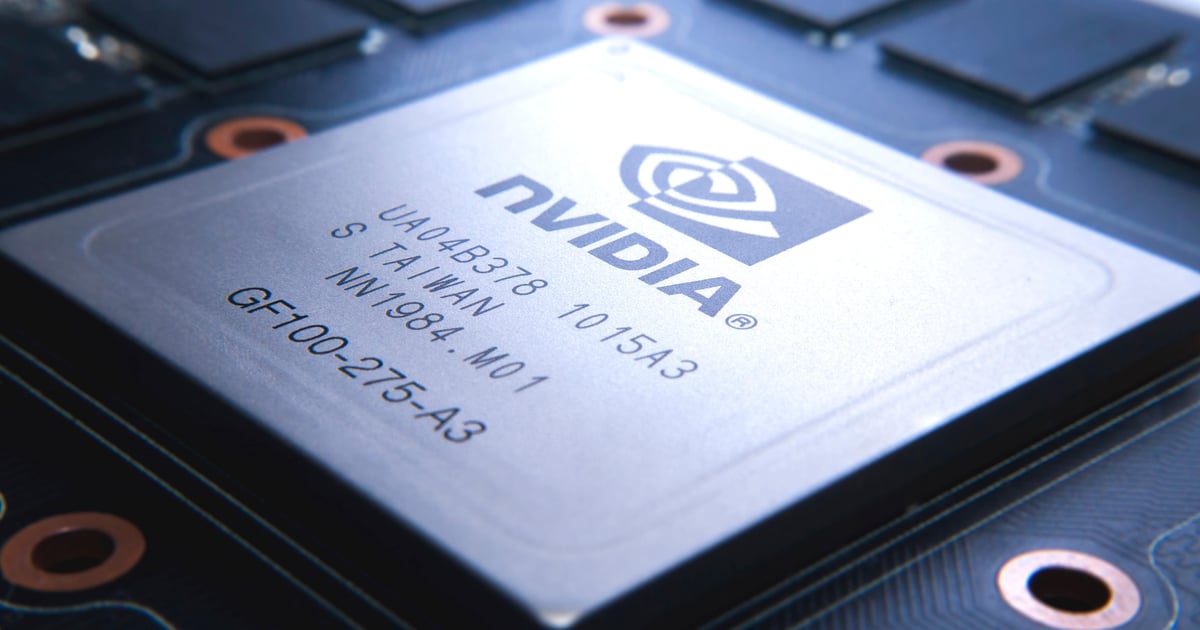
The headline numbers on revocation are striking:
- Sub-second propagation: revocation enforcement can propagate across both the software and hardware layers within approximately one second.
- Precision containment: when an agent is revoked, only its traffic stops — other workloads on the same host keep running uninterrupted, and restoring access requires no infrastructure restarts.
- Action-level control: IT can restrict a single action (for example, writing to a production system) while the agent continues the rest of its work.
- Transparent containment: a revoked task gets held inside a sandbox so reviewers can audit what happened later.
One honest caveat: the AI Passport enforcement inside OpenShell and BlueField is expected in a future release, not in the generally available build. The Control Tower policies and OpenShell runtime enforcement are live now; the hardware-layer passport checks are the roadmap item to watch.
ServiceNow Arc Pricing and Availability
Here is the pricing news enterprise buyers will care about most: ServiceNow Arc is included at no additional cost with ServiceNow EmployeeWorks on the Foundation, Advanced, and Prime SKUs. It is not sold as a separate product or a per-seat add-on — at least for now. If your company already pays for ServiceNow’s employee tools, the agent is part of the package.
| Item | Status (as of October 22, 2026) |
|---|---|
| General availability | Live as of October 21, 2026 |
| Included with | ServiceNow EmployeeWorks (Foundation, Advanced, Prime SKUs) |
| Extra cost | None on those SKUs |
| macOS support | Available now |
| Windows support | Expected within weeks |
| AI Passport enforcement (OpenShell + BlueField) | Future release |
The Mac-first rollout is worth noting for US offices: most enterprise knowledge workers in the United States are on Windows, so the “within weeks” Windows timeline is the one that decides whether ServiceNow Arc reaches critical mass. And because Arc is an enterprise product, there is no consumer free tier to try — access flows through your employer’s ServiceNow deployment.
The partner roster around the launch is also significant. SAP is integrating the OpenShell architecture with its Joule Studio runtime, CrowdStrike is integrating its Falcon Guardian with OpenShell (with a Sentry hardware integration planned), and Palantir is working with NVIDIA and customers to deploy secure agents in production. BBVA and Santander are exploring the architecture as a governance framework. NVIDIA clearly intends OpenShell to become the industry’s shared standard for agent governance — with ServiceNow Arc as its flagship proof point.
Arc vs Other Personal AI Agents
October 2026 has been an extraordinary week for personal AI agents — which makes this the perfect moment to see where ServiceNow Arc fits. Here is how it compares to the other big names.
Arc vs Claude Duet
Anthropic launched Claude Duet on October 21, 2026 — the very same day ServiceNow Arc went generally available. Duet is a proactive agent that monitors your apps, sends daily briefings, and starts work before you ask, currently in research preview for US Pro and Max subscribers. The two products share the “proactive personal agent” DNA: both surface action items from your inbox and meetings rather than waiting for prompts. The difference is the audience. Claude Duet is a consumer product you subscribe to personally; Arc is an enterprise product your employer deploys and IT governs. If you are an individual professional, Duet is the one you can try today. If you run IT, Arc is the one you can actually control.
Arc vs Meta Muse Personal Agent
Meta announced its Muse personal agent during its Q3 2026 earnings call on October 21, 2026, reporting that more than 10 million people in the United States and Canada had set it up within six weeks — with the Muse app topping the App Store almost daily. Muse’s strength is the consumer network: shopping volume through the agent is already driving transaction-fee ambitions. But Meta’s agent strategy just took a privacy hit — our coverage of the GhostShares incident details how shared Muse chats became discoverable — which is exactly the kind of trust problem ServiceNow Arc’s governance stack is engineered to prevent. Consumer reach versus enterprise control: pick your priority.
Arc vs General Chatbot Agents
ChatGPT’s agent mode and Google’s Gemini agents can also browse, plan, and take actions. Their advantage is generality and massive user bases. ServiceNow Arc’s advantage is depth inside the enterprise: it is native to ServiceNow workflows (IT tickets, HR cases, approvals), runs where the company’s data already lives, and — unlike any consumer agent — can be revoked at the hardware layer in about a second when something goes wrong.
Why It Matters After the Summer of Agent Breaches
ZDNET’s coverage of the ServiceNow Arc launch framed the timing bluntly: one of the main roadblocks to adopting autonomous AI has been adequate security controls, “especially after a summer of agent-led breaches.” That context is essential. All through 2026, companies have been discovering that agents with broad system access are a new and dangerous attack surface — prompt injection through poisoned emails, agents leaking data through third-party tools, runaway agents burning API budgets.
The industry’s response has split in two directions. Some platforms are blocking agents outright — our guide to why major websites are blocking AI agents documents how Yelp, Delta Air Lines, JPMorgan Chase, and Charles Schwab have shut agents out of their systems. Others, like Walmart with its new Agent Gateway, are opening their doors but wrapping agents in strict authorization and spending controls.
ServiceNow Arc represents the third path: let agents in, but govern them at every layer — software policy, runtime enforcement, and silicon. The “govern once, honor everywhere” model (ServiceNow’s own phrase) is arguably the most complete answer anyone has shipped to the trust problem. If it works in production the way the announcement claims, it becomes the template every other enterprise agent will be measured against. Note the honest framing, though: the hardware-layer enforcement is a future release, and the performance claims are the companies’ own, not independently verified measurements.

Honest Limitations
No launch announcement tells the whole story. Here is what to keep in mind before getting excited about ServiceNow Arc:
- Enterprise-only. There is no consumer version, no free trial, no way to sign up personally. ServiceNow Arc ships inside ServiceNow EmployeeWorks — if your employer is not a ServiceNow customer, this product is not for you.
- Windows support is not here yet. Mac support is live, but Windows is “expected within weeks.” For US enterprises that are overwhelmingly Windows-based, the real launch is arguably still pending.
- AI Passport’s hardware enforcement is future-dated. The most dramatic claim in the announcement — revocation enforced in silicon via Sentry on BlueField — is explicitly a future release. Judge today’s product on the Control Tower + OpenShell combination, not the roadmap.
- Benchmarks are company-reported. NVIDIA’s attached performance claims (30x higher throughput per megawatt for agentic workloads on Vera Rubin NVL72 systems, 2x the performance of x86 on Vera CPUs, quarantine of a boundary-crossing agent in milliseconds) have not been independently verified.
- Local inference depends on hardware. The local-on-device story is tuned for NVIDIA’s RTX Spark devices. Companies without that hardware will lean more on frontier models — and the cost and data-locality benefits shrink accordingly.
- Governance is only as good as the policies. The Control Tower gives IT the tools to write rules, but somebody still has to write good ones. A sloppy policy configuration is a sloppy security posture, no matter how many enforcement layers sit beneath it.
Should You Pay Attention?
If you lead IT, security, or digital workplace strategy: yes — and soon. ServiceNow Arc is the first personal enterprise agent that ships with a credible, layered answer to the governance question, and it costs nothing extra on the SKUs you may already pay for. The Windows release, expected within weeks, is the moment to pilot it.
If you are an employee at a ServiceNow customer: watch for the Mac rollout now and the Windows one next. The proactive work-identification feature — surfacing pending approvals and forgotten follow-ups — is the capability most likely to change your daily routine.
If you are an individual consumer or freelancer: Arc is not for you directly, but its architecture is the shape of things to come. The OpenShell Reference Architecture is open-source, and partners like SAP and CrowdStrike are building on it — the governance ideas here will reach consumer agents eventually.
The bottom line: the agent race of 2026 has been about who can do the most. ServiceNow Arc is the first major entry about who can do it safely — and in a year defined by agent breaches and platform blocklists, that may be the more important race to win.
FAQs
What is ServiceNow Arc in simple terms?
ServiceNow Arc is a personal, long-running AI agent for employees that handles everyday work — email, Teams, ServiceNow workflows — autonomously, while enterprise IT governs it through ServiceNow’s Super Intelligence Control Tower with runtime enforcement from NVIDIA OpenShell.
When did ServiceNow Arc launch?
ServiceNow Arc became generally available on October 21, 2026, as part of an expanded ServiceNow–NVIDIA partnership. The concept was first introduced in May 2026.
How much does Arc cost?
Arc is included at no additional cost with ServiceNow EmployeeWorks on Foundation, Advanced, and Prime SKUs. It is not sold as a separate product.
Does Arc work on Windows?
Not yet — Mac support is live as of the October 21, 2026 launch, and Windows support is expected to roll out within weeks.
What is the Arc AI Passport?
AI Passport is an attested record the Super Intelligence Control Tower issues to each AI agent, describing what the agent is trusted to access and execute. NVIDIA OpenShell and NVIDIA Sentry on BlueField DPUs read the passport to approve or block actions — with hardware-level revocation enforcement expected in a future release.
How is ServiceNow Arc different from Claude Duet or Meta Muse?
Claude Duet (Anthropic) and Muse personal agent (Meta) are consumer products you subscribe to personally. ServiceNow Arc is an enterprise product deployed by employers and governed by IT — with layered security from software policy down to silicon that consumer agents do not offer.
Where can I read the official announcement?
The official press release is published on BusinessWire: ServiceNow delivers industry-first personal enterprise agent and policy enforcement with NVIDIA. A detailed breakdown of availability and pricing is also available at AI Parabellum’s Arc coverage.
ServiceNow Arc is a brand-new product — details like Windows timing and AI Passport enforcement dates may shift. Check ServiceNow’s official announcements for the latest status before making purchasing decisions.