
Shield AI Echodyne Deal Explained: The $5.3B Radar Bet Behind a $28.8B Valuation
Shield AI Echodyne is the biggest defence-AI deal of 2026. On November 5, 2026, defence-autonomy company Shield AI announced it had agreed to acquire Echodyne, a Kirkland, Washington radar maker, in a transaction valued at up to $5.3 billion — and that it was raising $2.5 billion at a $28.8 billion valuation to help pay for it.
The deal pairs the software that flies drones without a pilot with the radar that finds the drones in the first place, and it turns a company best known for autonomy software into a full-stack defence prime in waiting. This guide explains what the Shield AI Echodyne deal actually buys, how the money works, why the timing matters, and what still has to happen before any of it is real.
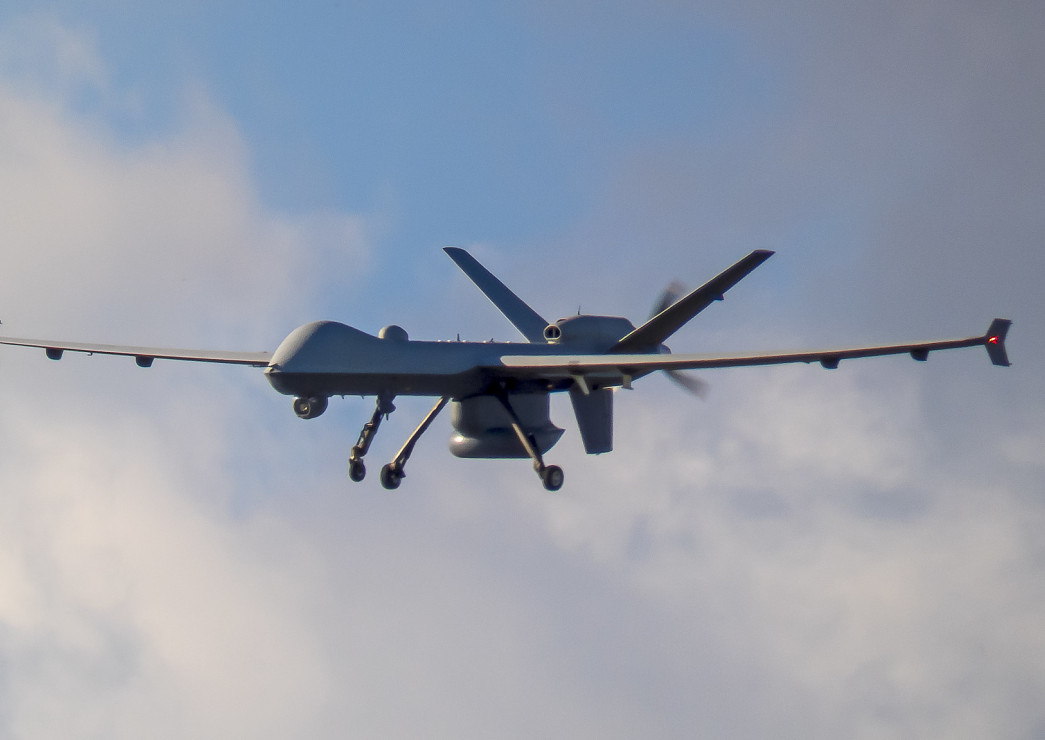
Table of Contents
- What the Shield AI Echodyne Deal Is
- The Deal in Numbers
- What Is Echodyne? The Radar Behind the Deal
- What Is Shield AI? Hivemind, V-BAT and X-BAT
- Why Shield AI Is Buying Echodyne
- How the $2.5 Billion Financing Works
- Shield AI Echodyne Valuation: From $5.3B to $28.8B
- The Counter-Drone Market: Why Radar Matters Now
- What Happens Next: Closing, Approvals and Integration
- Shield AI vs Palantir and Anduril: Where the Deal Fits
- What This Means for Investors
- Risks and Open Questions
- The Verdict
- FAQs About Shield AI Echodyne
What the Shield AI Echodyne Deal Is
The Shield AI Echodyne deal is a definitive agreement, announced on November 5, 2026, under which Shield AI will acquire Echodyne Corp. in a transaction valued at up to $5.3 billion. Of that headline figure, $4.8 billion will be paid and issued at closing, and up to a further $500 million is contingent on Echodyne meeting agreed financial performance targets after the deal closes. The acquisition is expected to close in early 2027, subject to regulatory approvals and other customary closing conditions — which means, as of today, it has been agreed but not completed.
That distinction matters. A definitive agreement is a signed contract, not a handshake, but deals of this size in the defence sector still have to clear government review, and either side can walk away if the conditions are not met. The Shield AI Echodyne announcement is therefore best read as a statement of intent backed by signed paperwork and committed financing, rather than as a done deal.
The acquisition expands Shield AI’s Mission Systems business into radar and counter-drone work. Echodyne’s compact, solid-state radars are built into hundreds of counter-unmanned-aircraft systems (C-UAS) and security systems used by defence, government and commercial customers in more than 40 countries. Shield AI’s own announcement describes the radars as software-defined systems that enable counter-drone operations — detecting, tracking and helping defeat drones — which is the sensing layer its autonomy software has so far had to buy from someone else.
There is also a name change tucked into the announcement. The November 5 statement refers to the company simply as “Shield”, dropping “AI” from its public name. The rebrand is a small detail, but it signals how the company wants to be seen: not as an AI startup that happens to sell to the military, but as a defence company whose product happens to be autonomy. For the rest of this article, “Shield AI” and “Shield” refer to the same company.
The Shield AI Echodyne deal is Shield AI’s fifth acquisition since 2021 and by far its largest. Two days before the announcement, chief executive Gary Steele had told Bloomberg that more acquisitions would follow — a remark that now reads less like ambition and more like a preview.
The Deal in Numbers
The headline numbers are striking, and they are worth setting out plainly before any analysis, because every judgement about the Shield AI Echodyne deal starts from them:
- Transaction value: up to $5.3 billion — $4.8 billion at closing, plus up to $500 million contingent on performance targets.
- New financing: $2.5 billion raised in connection with the deal.
- Series H equity: $1 billion at a $28.8 billion post-money valuation, co-led by Disruptive and Innovation X Capital.
- Structured equity: $1 billion from funds managed by Blackstone.
- Debt: $500 million in debt financing led by JPMorgan Chase Bank, N.A. as sole arranger.
- Previous valuation: $12.7 billion in March 2026 — so the new valuation is roughly 2.3 times higher in about eight months.
- Echodyne’s footprint: radars in hundreds of counter-drone and security systems across more than 40 countries.
- Echodyne’s factory: a newly opened $40 million plant in Kirkland, Washington, with capacity to produce about 30,000 radars a year.
- Expected close: early 2027, subject to regulatory approvals.
- Revenue: Shield AI’s co-founder Brandon Tseng says the company is on course for $540 million in revenue in 2026; independent estimates put 2025 revenue at about $400 million, up 49 percent year on year.
One number deserves a pause: the deal is worth roughly 18 percent of Shield AI’s new $28.8 billion valuation. That is an enormous share of the company to spend on a single acquisition, and it tells you how central Echodyne is to Shield AI’s plan. This is not a tuck-in purchase of a small team. It is a bet-the-company-scale move on the idea that the sensing layer — the radar that sees the drone — is as valuable as the autonomy layer that flies it.
The market backdrop adds another layer of context. The Shield AI Echodyne announcement landed on November 5, 2026, the same day the Nasdaq Composite fell 5.52 percent — its worst day since April 2025 — as investors sold AI and chip stocks after the US midterm elections. Nvidia fell more than 9 percent that day.
It has been a crowded month for AI news in general: the same week, LG opened free API access to its 750-billion-parameter K-EXAONE 2.5 model, and the defence deal still dominated the headlines. Shield AI, a private company, announced a $28.8 billion valuation on a day public AI stocks were being marked down sharply. That contrast is not causation — the deal was negotiated long before election day — but it is a reminder that private valuations and public markets were moving in opposite directions that week.
What Is Echodyne? The Radar Behind the Deal
Echodyne is a radar company, and understanding the Shield AI Echodyne deal means understanding what its radar actually does differently. Founded in Kirkland, Washington, Echodyne builds compact, solid-state radars around a patented technology called MESA — Metamaterials Electronically Scanned Array. The company had raised about $202 million in venture funding before the acquisition, and its investors, including Madrona Venture Group, are expected to become Shield AI shareholders as part of the deal.
MESA Radar: How Echodyne’s Technology Works
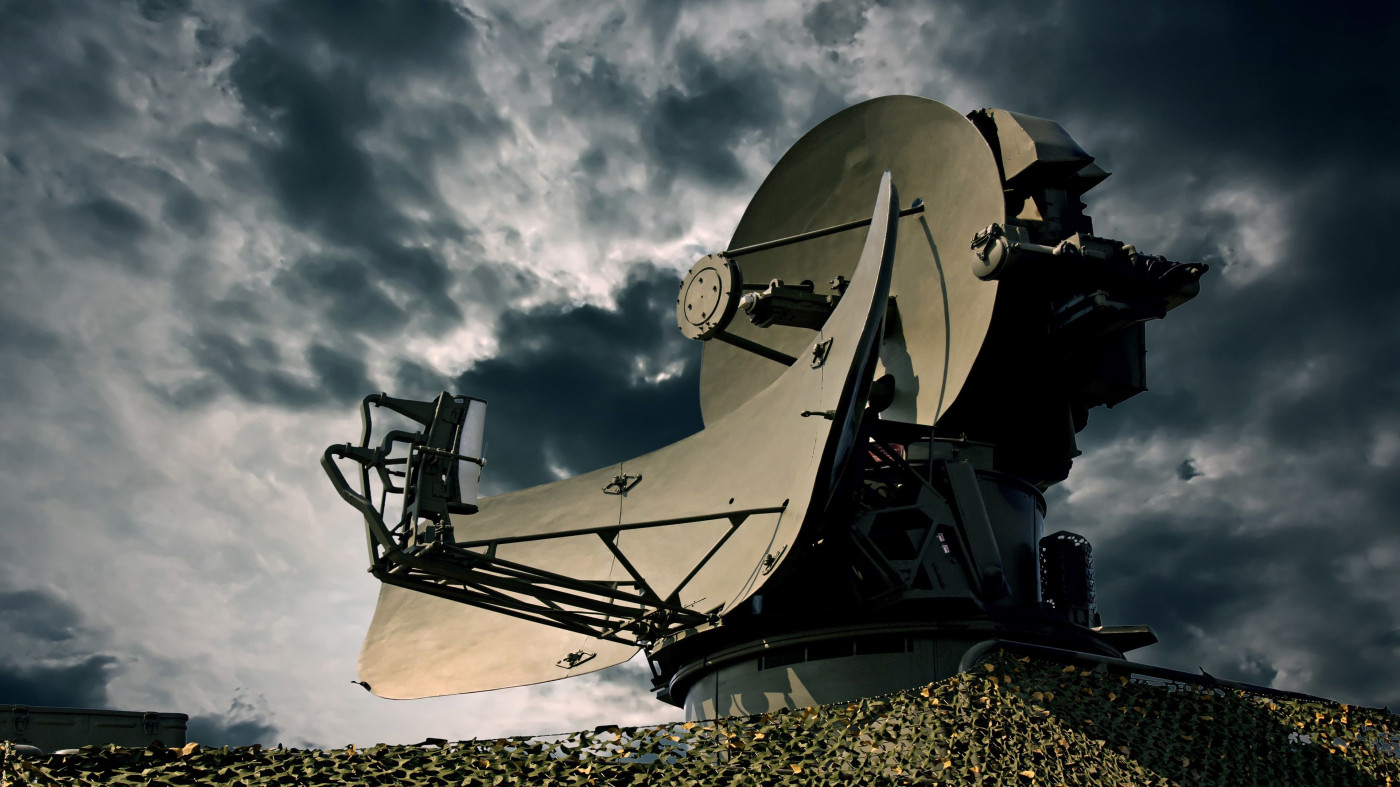
Traditional radar steers its beam mechanically, by physically moving an antenna, or with expensive phased-array electronics that shift the beam by adjusting the phase of the signal at each element. Echodyne’s MESA technology takes a different route. It uses metamaterials — engineered structures whose electromagnetic properties are designed rather than found in nature — to steer a radar beam electronically with no moving parts, in a unit small and light enough to mount on a vehicle, a building, or a portable mast.
The practical result is a radar that is compact, solid-state, and comparatively cheap to build at volume. That matters because the problem Echodyne solves is a volume problem.
Detecting a single large aircraft at long range is a job for big, expensive, fixed radars. Detecting dozens of small, slow, low-flying drones over a base, a border, a stadium or a power plant is a job for many small radars, spread widely, that can be produced in quantity and replaced when damaged. Echodyne’s bet — and now Shield AI’s — is that the second problem is the one that will define the next decade of air defence.
The radars are software-defined, which means their behaviour can be updated and reconfigured through software rather than by swapping hardware. In Shield AI’s telling, that makes them a natural fit for a company whose core skill is software: the radar becomes another node in a software system, not a standalone piece of hardware that happens to have a data port.
Where Echodyne Radars Are Already Deployed
Echodyne’s radars are already in the field, which is one reason the Shield AI Echodyne price is so high. The company’s systems are built into hundreds of counter-drone and security systems used by defence, government and commercial customers in more than 40 countries, according to Shield AI’s announcement. That installed base is the difference between buying a promising technology and buying a business: Echodyne arrives with customers, contracts, and a factory.
The contract that best illustrates the point came in September 2026, when Echodyne received a contract with a $250 million ceiling from Joint Interagency Task Force 401, a US government counter-drone organisation. A ceiling is not a guaranteed order — it is the maximum value the contract vehicle can carry — but a $250 million ceiling signals that a serious government buyer expects to keep ordering at scale.
The factory is the other half of the story. Echodyne recently opened a $40 million plant in Kirkland that can produce about 30,000 radars a year. That is manufacturing capacity, not current output — the distinction matters, and the announcement does not say how many radars the plant is producing today. But the capacity exists, and it is the kind of asset that is hard and slow to build from scratch. For Shield AI, buying the factory is buying time: years of production ramp that a competitor starting today would have to repeat.
Echodyne’s chief executive, Eben Frankenberg, will stay on after the acquisition and report to Shield AI chief executive Gary Steele. Keeping the founder-CEO in place is a deliberate choice, and a sensible one: in a deal where the value sits in a specialised technology and its customer relationships, losing the person who built both would be an expensive mistake.
What Is Shield AI? Hivemind, V-BAT and X-BAT
Shield AI was founded in San Diego in 2015 by brothers Brandon and Ryan Tseng, both former US Navy SEALs, with the stated goal of protecting service members and civilians with AI-powered autonomy. The company made its name on Hivemind, an AI pilot that flies aircraft without GPS, without communications, and without a human at the controls. The idea is simple to state and hard to build: an aircraft that can complete a mission in a place where the enemy is jamming satellite signals and cutting radio links, because the pilot is software running on board.
Hivemind: The Autonomy Brain
Hivemind is the centre of the Shield AI Echodyne story, because it is the product Echodyne’s radars will now serve. It is mission-autonomy software: it reads sensor data, decides where to fly, and executes the mission, including in contested environments where GPS and radio are denied. The software is designed to run across different aircraft, not just Shield AI’s own, which is why the company describes it as an autonomy layer rather than a drone product.
The clearest validation of Hivemind came in June 2026, when the US Air Force awarded Shield AI a production contract to implement Hivemind as the mission autonomy software for the Collaborative Combat Aircraft programme — the Air Force’s project to build unmanned aircraft that fly alongside crewed fighters.
A production contract, as opposed to a research contract, means the Air Force has decided to buy the thing, not just study it. For a private defence company, that is the kind of award that changes the revenue conversation from “if” to “how much”.
Hivemind’s relevance to the Shield AI Echodyne deal is straightforward. An autonomous aircraft is only as good as what it can sense. Hivemind needs to know where other aircraft are, including hostile drones, and it needs that information fast and reliably. A radar built by a sister company, designed from the start to feed an autonomy stack, is a tighter fit than a radar bought off the shelf from a supplier with its own roadmap.
V-BAT and X-BAT: The Aircraft
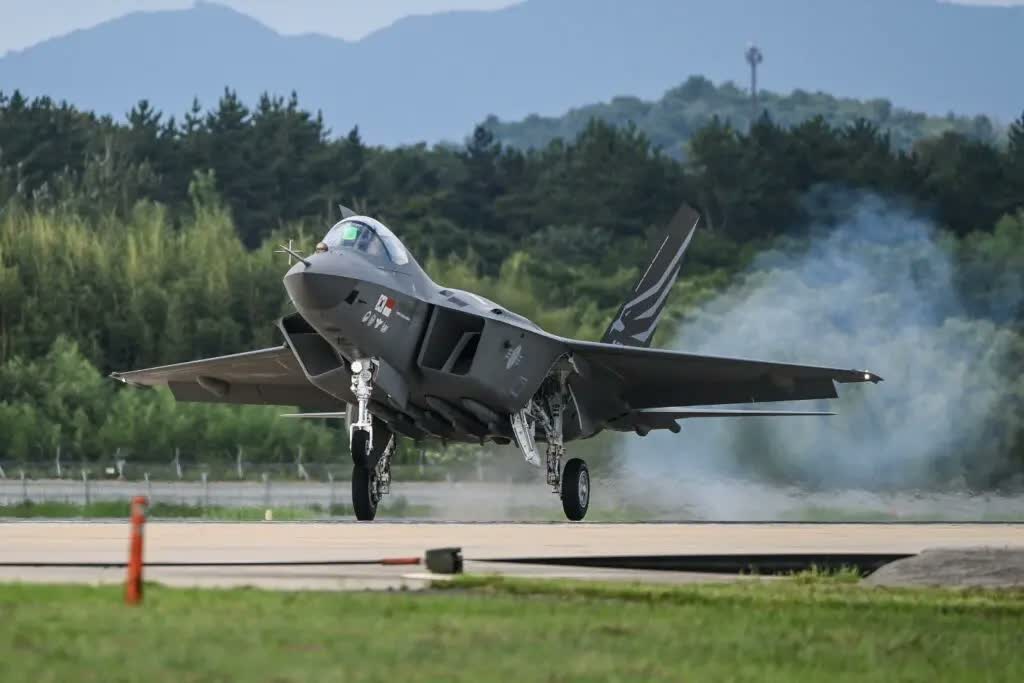
Shield AI also builds its own aircraft. The V-BAT is a vertical take-off and landing drone already in service — it takes off like a helicopter and flies like a fixed-wing aircraft, which makes it useful from ships and small clearings where runways do not exist. The X-BAT is the more ambitious project: a vertical take-off fighter jet, with a full-scale prototype already completed and production targeted for 2029.
The aircraft matter to the Shield AI Echodyne deal because they show the direction of travel. Shield AI is not content to sell software to other people’s aircraft. It wants to sell the aircraft, the autonomy that flies them, and now the sensors that find the threats. That is the shape of a prime contractor — the small club of companies, such as Lockheed Martin and Northrop Grumman, that deliver whole systems to governments rather than components. Shield AI’s ambition, stated plainly by its own actions, is to join that club.
The company also owns Aechelon, a simulation platform acquired in March 2026, which trains both drone pilots and drone flight systems in virtual environments. Simulation, autonomy, aircraft and now radar: the Shield AI Echodyne deal completes a stack that runs from training, through sensing, to flight.
Why Shield AI Is Buying Echodyne
The Shield AI Echodyne deal makes sense on several levels at once, and the strongest way to understand it is to separate the reasons into the strategic, the commercial, and the defensive.
First, the sensor and the brain belong together. Shield AI’s pitch has always been that autonomy is the product. But autonomy without sensing is a brain without eyes. Every mission Hivemind flies depends on knowing what is in the air around it, and counter-drone work — detecting, tracking and defeating hostile drones — is now one of the fastest-growing missions in defence. Buying Echodyne means Shield AI controls the sensing layer its software depends on, and can design the radar and the autonomy together instead of integrating two products built by two companies with different priorities.
Second, counter-drone is the market of the moment. The war in Ukraine turned small drones into the defining weapon of the decade, and every military in the world is now buying systems to detect and defeat them. Airports, power plants, borders and bases all need the same capability. Echodyne’s radars sit in the middle of that demand, and Shield AI’s announcement frames the acquisition explicitly as an expansion into the fast-growing radar and counter-drone sectors. The Shield AI Echodyne deal is, in that sense, a bet on a market that is still early and visibly expanding.
Third, Echodyne brings revenue, not just technology. Shield AI’s announcement says both companies expect triple-digit revenue growth this fiscal year. Buying a company with real customers, real contracts and a real factory is different from buying a research team. It adds revenue from day one, diversifies Shield AI beyond autonomy software, and gives the combined company a broader base to sell from: a customer who buys Echodyne radars can now be offered Hivemind autonomy, and a customer who buys Hivemind can now be offered Echodyne radars.
Fourth, the factory is a moat. Radar manufacturing at volume is hard. It needs specialised facilities, supply chains and skilled staff, and it takes years to build. Echodyne’s $40 million Kirkland plant, with capacity for about 30,000 radars a year, is the kind of asset that cannot be copied quickly. In a market where governments are asking for thousands of sensors, owning the production line is a genuine competitive advantage.
Fifth, the timing fits Shield AI’s own trajectory. The company has spent 2026 stacking up milestones: a $2 billion raise in March, the Aechelon acquisition, the Air Force production contract in June, and now the Shield AI Echodyne deal in November. Each step has made the company bigger, more credible, and more like a prime contractor. The Echodyne acquisition is the step that adds hardware scale to a software story — and hardware scale is what prime contractors are measured by.
How the $2.5 Billion Financing Works
The Shield AI Echodyne deal is paid for with a $2.5 billion financing package, and the structure of that package is almost as interesting as the deal itself, because it shows how a private company funds a $5.3 billion acquisition without going public.
The package has three parts. The first is $1 billion of Series H equity at a $28.8 billion post-money valuation, co-led by Disruptive and Innovation X Capital, with participation from Advent, the Strategic Investment Group of JPMorganChase’s Security and Resiliency Initiative, Snowpoint Ventures, Apandion, Center15 Capital and others. Series H means this is the company’s eighth major venture round — a sign of how much capital the defence-AI boom is now absorbing. Shield AI says the Series H proceeds will principally fund the Echodyne acquisition.
The second part is a $1 billion structured equity investment from funds managed by Blackstone. Structured equity sits between ordinary shares and debt: it typically carries protections for the investor, such as priority in a sale, in exchange for a lower return than pure equity. Blackstone is a repeat backer — it also put $500 million of preferred equity into Shield AI in March 2026 — and its return at this scale is a signal that large institutional investors now treat defence autonomy as a mainstream asset class, not a niche bet.
The third part is $500 million of debt financing led by JPMorgan Chase Bank, N.A. as sole arranger. Debt is the cheapest form of capital for a company with real revenue and real contracts, and its presence in the package suggests the lenders are comfortable with Shield AI’s cash flow. Taken together, the three parts split the $2.5 billion as 40 percent equity, 40 percent structured equity, and 20 percent debt — a balanced structure that spreads the risk across three different kinds of investor.
One thing the financing does not do is pay the whole bill. The deal is worth up to $5.3 billion, and the raise is $2.5 billion. The gap is bridged by the $4.8 billion payable at closing being part cash and part equity — Echodyne’s investors, including Madrona Venture Group, are expected to become Shield AI shareholders — and by Shield AI’s own balance sheet. The $500 million earnout, payable only if Echodyne hits its targets, is a further bridge: it lets Shield AI pay less now and more later, but only if the business performs.
Shield AI Echodyne Valuation: From $5.3B to $28.8B
The most eye-catching number in the Shield AI Echodyne announcement is not the $5.3 billion price. It is the $28.8 billion valuation — and the speed at which Shield AI got there.
In March 2026, Shield AI raised $2 billion at a $12.7 billion post-money valuation. Eight months later, the same company is valued at $28.8 billion — roughly 2.3 times higher, an increase of $16.1 billion. Reporting from the Motley Fool notes that as recently as 2025, the company was worth only about $5.3 billion, which would mean the valuation has roughly doubled twice in about a year.
Those figures come from the company’s own announcements and press reporting, not from a public market, and they should be read as the price at which private investors were willing to buy in — not as a settled market value.
What justifies the jump? The honest answer is a mix of real progress and real enthusiasm. On the progress side: the Air Force production contract for Hivemind in June, the Aechelon acquisition, the Echodyne deal itself, and revenue that CB Insights estimates at about $400 million in 2025, up 49 percent, with co-founder Brandon Tseng saying the company is on course for $540 million in 2026.
On the enthusiasm side: defence AI is one of the few sectors where investors are still paying up, and Shield AI is one of the few private companies in it with production contracts, a flying product, and a credible path to becoming a prime contractor.
The valuation math is worth a pause. At $540 million of expected 2026 revenue, a $28.8 billion valuation is about 53 times sales. That is a very high multiple by any normal standard, and it only makes sense if investors believe revenue will keep growing at triple-digit rates for years. Both companies say they expect triple-digit growth this fiscal year — but that is the companies’ own expectation, not a guarantee, and it is the number the whole valuation rests on.
The comparison that frames the Shield AI Echodyne story for many readers is the private-company valuation wave of 2026. Anthropic’s leaked financials, covered in our Anthropic IPO explainer, showed a company growing revenue at an extraordinary rate while burning cash on compute — and investors still queued up.
Shield AI is a different business in a different market, but the pattern rhymes: a private company, growing fast, valued on what it might become rather than what it earns today. The difference is that Shield AI sells to governments with multi-year budgets, which makes its revenue more predictable than a consumer AI company’s — and that predictability is part of what the $28.8 billion is paying for.
The Counter-Drone Market: Why Radar Matters Now
To understand why the Shield AI Echodyne deal is worth $5.3 billion, it helps to understand the problem it is aimed at. A counter-drone system has three jobs: detect the drone, track it, and defeat it. Defeat gets the headlines — jamming, nets, interceptors — but detection is the hard part, and it is the part radar does.
Small drones are difficult to detect because they are small, slow, and fly low. A radar built to spot a fighter jet at 100 kilometres may not notice a quadcopter at 500 metres, because the drone’s radar cross-section is tiny and it flies below the clutter of buildings, trees and terrain. That is why counter-drone work needs a different kind of radar: small, numerous, and tuned to small, slow, low targets. Echodyne’s MESA radars are built for exactly that job, and that is why they are in hundreds of systems in more than 40 countries.
The demand is not theoretical. Ukraine’s war made drone warfare the central fact of modern combat, and every NATO military has since accelerated its counter-drone programmes. But the market is not only military. Airports have shut down after drone sightings. Power plants, prisons, borders and stadiums all need the same capability. The US government has created dedicated counter-drone organisations — Joint Interagency Task Force 401, which gave Echodyne its $250 million-ceiling contract, is one of them — and the budgets behind them are growing.
For Shield AI, the Shield AI Echodyne deal also opens a second market: its own aircraft need radar too. A V-BAT flying a surveillance mission, or an X-BAT flying alongside a crewed fighter, needs to see the drones around it. An autonomy stack that can sense, decide and act without waiting for a ground station is the product Shield AI has been building toward since 2015. Owning the radar makes that product complete.
What Happens Next: Closing, Approvals and Integration
The Shield AI Echodyne deal is expected to close in early 2027, and the months between now and then are where the real work happens. Three things have to go right.
First, regulatory approval. The acquisition is subject to applicable regulatory approvals, which in a defence deal of this size means review by US government bodies that examine foreign ownership, competition, and national-security implications. Both companies are American, which removes the foreign-ownership question, but a $5.3 billion consolidation in the defence sector will still be examined. The announcement does not name a specific review process or timeline beyond “early 2027”, and readers should treat that date as a plan, not a promise.
Second, financing completion. The $2.5 billion package has been announced, but the Series H, the Blackstone structured equity and the JPMorgan-led debt all have to close on their own terms. In a week when public AI stocks fell sharply, the appetite of private investors for a $28.8 billion valuation is the question to watch. The participation of repeat backers such as Blackstone and Advent is reassuring, but it is not a guarantee.
Third, integration. This is the part that decides whether the Shield AI Echodyne deal creates value or destroys it. Shield AI has to combine a San Diego autonomy company with a Kirkland radar manufacturer, keep Echodyne’s customers and engineers, and build products that neither company could build alone. Keeping Eben Frankenberg in place helps. So does the fact that the two companies’ products are complementary rather than overlapping — there is little duplication to cut, which means fewer of the layoffs and turf wars that sink integrations.
But combining hardware manufacturing with software development is a genuinely hard management problem, and Shield AI has never attempted an integration at this scale. Its previous acquisitions were far smaller.
If the deal closes as planned, the combined company will be a defence business with software, aircraft, simulation and radar under one roof, revenue growing at triple-digit rates by its own account, and a valuation that demands it keeps growing. The next milestones to watch are the regulatory clearance, the close in early 2027, and the first joint product — a counter-drone system that pairs Echodyne radar with Hivemind autonomy — which is the proof that the Shield AI Echodyne logic works in the field rather than only on a slide.
Shield AI vs Palantir and Anduril: Where the Deal Fits
The Shield AI Echodyne deal only makes full sense in the context of the race Shield AI is running. Defence technology now has a clear set of new challengers to the old primes, and each one is defined by a different strength.
Palantir is the data company. Its software turns battlefield data into decisions, and its valuation — and its public listing — make it the benchmark every private defence company is measured against.
Motley Fool’s coverage of the Shield AI Echodyne deal explicitly frames Shield AI as a potential “new autonomy giant” in the Palantir mould, and notes that at 53 times expected 2026 revenue, Shield AI is valued far more richly than Palantir on a sales multiple. That comparison cuts both ways: it shows how much investors believe in the story, and how much the story has to deliver.
Anduril is the closest parallel. Founded in 2017, Anduril also sells autonomy and hardware to the military, also grew fast on venture capital, and also talks about becoming a prime.
The difference is emphasis: Anduril built its name on surveillance towers and its Lattice operating system, while Shield AI built its name on aircraft autonomy. The Shield AI Echodyne deal narrows that gap by giving Shield AI a hardware and sensing business of its own. Where Anduril’s pitch is “software that runs the battlefield”, Shield AI’s is becoming “the aircraft, the autonomy, and the radar, together”.
Then there are the old primes — Lockheed Martin, Northrop Grumman, Raytheon. They still win the biggest contracts, and they have something the newcomers do not: decades of relationships, manufacturing at scale, and the ability to deliver whole platforms over decades. Shield AI’s bet is that the next generation of contracts will reward speed and software, and that a company that can ship an autonomous aircraft with its own radar in months rather than years has an edge the primes cannot match. The Shield AI Echodyne deal is the clearest statement of that bet so far.
What This Means for Investors
Shield AI is a private company, which means ordinary investors cannot buy its shares directly. That has not stopped the market from finding a way in. The Defiance Drone & Modern Warfare ETF (NYSE: JEDI) has held exposure to Shield AI since August 2026, when it became the first US-listed ETF to offer investors exposure to the company, through a special-purpose vehicle. As of November 6, 2026, that exposure represented about 7.0 percent of the fund’s net assets.
That route comes with caveats that matter. ETF exposure through a special-purpose vehicle is not the same as owning the shares: the price you pay reflects the vehicle’s own structure, fees and liquidity, and the valuation of a private company inside it is an estimate, not a market price. The Shield AI Echodyne deal may change the value of that exposure, but it does not change the structure. Anyone considering it should read the fund’s disclosures, not just the headline.
The more common question is whether Shield AI will go public. The company has not announced IPO plans, and the $2.5 billion private raise suggests it does not need to yet — it has just raised more money privately than many IPOs raise publicly.
But the pattern is familiar: a private company raises at a high valuation, uses the money to buy scale, and then lists when the story is complete. The Shield AI Echodyne deal, if it closes in early 2027, would be the kind of event that precedes an IPO filing. That is speculation, not reporting — but it is the speculation the market will be doing, and readers should know it is happening.
For the rest of us, the investor angle is simpler. The Shield AI Echodyne deal is a sign of where capital is flowing in defence: toward autonomy, toward counter-drone systems, and toward companies that can deliver both software and hardware. Whether or not you can buy the shares, the direction of travel is worth watching, because it shapes what the next decade of defence spending will buy.
Risks and Open Questions
A $5.3 billion deal announced on a day the Nasdaq fell 5.5 percent deserves a clear-eyed look at what could go wrong. The Shield AI Echodyne story has real risks, and they are worth stating plainly.
The deal has not closed. A definitive agreement is not a completed acquisition. Regulatory review, financing conditions and customary closing conditions all have to be satisfied, and the expected close in early 2027 is a target, not a certainty. If any of those conditions fail, the deal can be renegotiated or abandoned.
The valuation is demanding. At roughly 53 times expected 2026 revenue, Shield AI’s $28.8 billion valuation assumes years of triple-digit growth. If growth slows — because a contract slips, a programme is cut, or the counter-drone market grows more slowly than expected — the valuation will be hard to defend, and the next raise will be harder than this one.
Integration is the hardest part. Shield AI has made five acquisitions since 2021, but none remotely this large. Combining a radar manufacturer with an autonomy software company means merging different engineering cultures, different sales cycles, and different supply chains. The history of defence acquisitions is full of deals that looked good on announcement day and disappointed on delivery.
The earnout cuts both ways. Up to $500 million of the price depends on Echodyne hitting performance targets. That protects Shield AI if the business underperforms, but it also means the two companies’ interests can diverge after closing: Echodyne’s team may optimise for the earnout targets rather than for the combined company’s long-term strategy.
The market is cyclical. Defence spending is political, and the same week that produced the Shield AI Echodyne announcement also produced a sharp sell-off in AI stocks on fears that a new Congress would slow the data-centre build-out. Shield AI’s business is defence, not data centres, but the episode is a reminder that investor sentiment can turn quickly, and that private valuations are not immune to public-market mood.
The technology risk is real, too. Autonomy in contested environments is genuinely hard, and the security of AI systems is a live concern across the industry. The same week Shield AI was announcing its deal, the security world was digesting the news that Claude had helped find critical Xen hypervisor flaws — our Claude Xen vulnerability explainer covers that story — a reminder that AI systems are both a tool for finding vulnerabilities and a surface that needs defending. Shield AI’s aircraft fly in contested airspace; the security of their software is not a footnote.
The Verdict
The Shield AI Echodyne deal is the most significant defence-AI transaction of 2026, and it is significant for a simple reason: it is the moment a software company bought its way into hardware at prime-contractor scale. Shield AI is no longer just the company with the clever autonomy pilot. If the deal closes, it will be a company that builds the aircraft, writes the autonomy that flies it, and makes the radar that finds the threats — a full stack, under one roof, with a factory that can produce 30,000 radars a year.
Whether that stack is worth $5.3 billion depends on execution. The revenue growth both companies promise is company-reported, the valuation is demanding, and the integration has never been attempted at this scale. But the logic is sound, the market is real, and the assets — a proven radar, a production contract for the autonomy software, and a factory — are the kind that take years to build and cannot be bought twice.
For readers, the practical takeaway is narrow and useful. The Shield AI Echodyne deal is not a product you can buy or a tool you can try. It is a signal: counter-drone systems are now a first-class defence market, autonomy and sensing are converging into single products, and the companies that control both will set the terms. Watch for the regulatory clearance, watch for the close in early 2027, and watch for the first joint product. That is when the Shield AI Echodyne story stops being an announcement and starts being a business.
FAQs About Shield AI Echodyne
Is the Shield AI Echodyne deal closed yet?
No. Shield AI and Echodyne signed a definitive agreement on November 5, 2026, and the acquisition is expected to close in early 2027, subject to regulatory approvals and other customary closing conditions. Until it closes, the two companies remain separate.
How much is Shield AI paying for Echodyne?
Up to $5.3 billion. Of that, $4.8 billion will be paid and issued at closing, and up to a further $500 million is contingent on Echodyne meeting agreed financial performance targets after closing.
What is Shield AI worth after the Shield AI Echodyne deal?
Shield AI raised $1 billion of Series H equity at a $28.8 billion post-money valuation in connection with the deal. That is roughly 2.3 times the $12.7 billion valuation set in March 2026, and it reflects private investors’ pricing — not a public market value.
What is Echodyne’s MESA radar technology?
MESA stands for Metamaterials Electronically Scanned Array. It is a patented technology that steers a radar beam electronically using engineered metamaterials, with no moving parts, in a compact solid-state unit. Echodyne’s radars are used to detect small, low-flying drones in counter-drone and security systems.
What is Hivemind, and how does it relate to the deal?
Hivemind is Shield AI’s mission-autonomy software — an AI pilot that flies aircraft without GPS, communications, or a human at the controls. In June 2026, the US Air Force awarded Shield AI a production contract to use Hivemind in its Collaborative Combat Aircraft programme. The Shield AI Echodyne deal gives Hivemind a radar built to feed it, instead of relying on third-party sensors.
Can I invest in Shield AI?
Shield AI is a private company, so its shares are not available on a stock exchange. The Defiance Drone & Modern Warfare ETF (NYSE: JEDI) has held exposure to Shield AI through a special-purpose vehicle since August 2026, but that is indirect exposure with its own structure and fees. Shield AI has not announced IPO plans.
Sources: Shield AI’s official announcement, “Shield to acquire Echodyne in a transaction valued at $5.3 billion and raise $2.5 billion at a $28.8 billion valuation” (November 5, 2026), via shield.ai; Washington Technology’s coverage of the deal; and November 2026 reporting from CB Insights, DroneXL, GlobeNewswire and the Motley Fool. Valuation, revenue-growth and deployment figures are company-reported or press-reported as noted in the text; the acquisition has not yet closed.